



20x20 Tent Guide: Capacity, Layouts, and Smart Setup Choices
A 20x20 tent sits right in the middle of “small but limiting” and “large but overwhelming.” It’s one of the most versatile tent sizes because it offers enough room to feel intentional, while still being manageable for transport, setup, and staffing. When planned correctly, a 20x20 tent can function like a real venue rather than just temporary cover.
This guide walks through how to use a 20x20 tent properly—how many people it realistically fits, which layouts work best, what styles to consider, and the setup decisions that quietly affect costs over time.
What a 20x20 Tent Actually Gives You
A 20x20 tent provides 400 square feet of usable space. That number sounds straightforward, but how that space feels depends entirely on layout, furniture, and flow.
This size works well because it allows separation of areas. You can seat guests and still leave room for movement, service, or displays. Unlike smaller tents, you’re not forced to pack everything tightly just to make it fit.
How Many People Fit in a 20x20 Tent
Capacity depends far more on layout than on the tent itself. A 20x20 tent can feel comfortable or cramped depending on how the interior is planned.
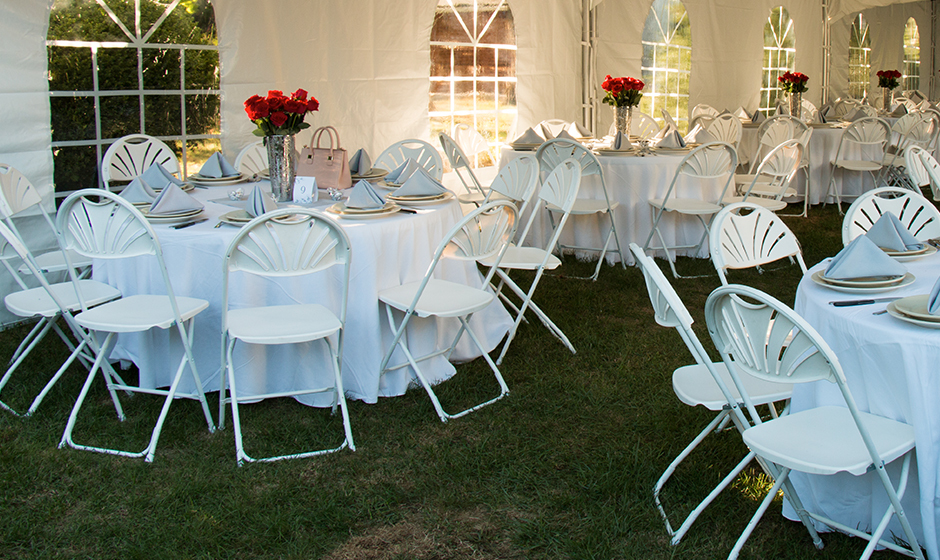
For standing or cocktail-style events, it generally works well for around 35 to 50 people, especially when high-top tables are used sparingly. For seated events, 24 to 32 guests is a realistic range if you want proper walkways and breathing room.
Trying to push beyond those numbers often leads to tight aisles, awkward movement, and a space that feels more stressful than enjoyable.
Common Ways a 20x20 Tent Is Used
Small Receptions and Social Events
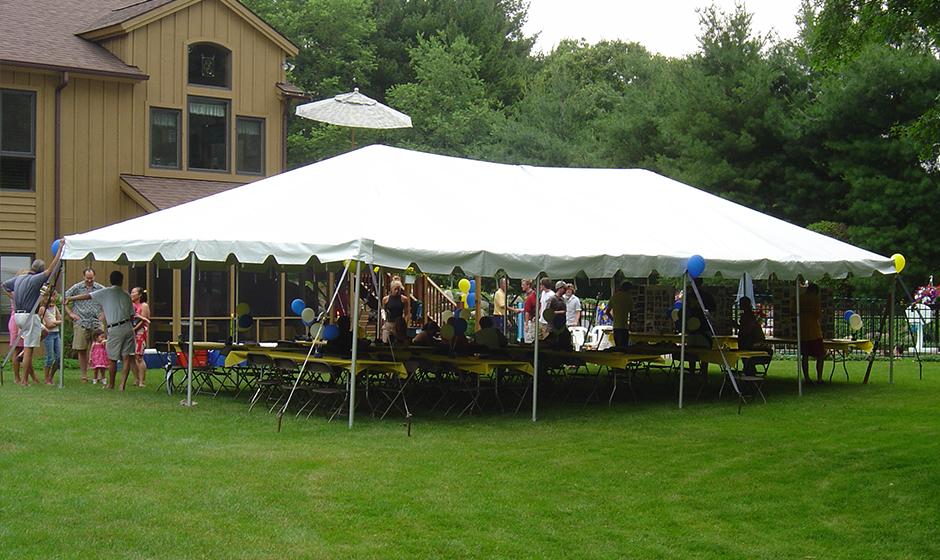
A 20x20 tent is popular for intimate weddings, anniversary parties, and private celebrations. It’s large enough to feel special without feeling empty.
Many hosts use it for dinner seating, dessert stations, or cocktail hours rather than trying to squeeze everything into one space. When paired with lighting and thoughtful layout, it can feel polished and intentional.
Vendor Booths and Brand Activations
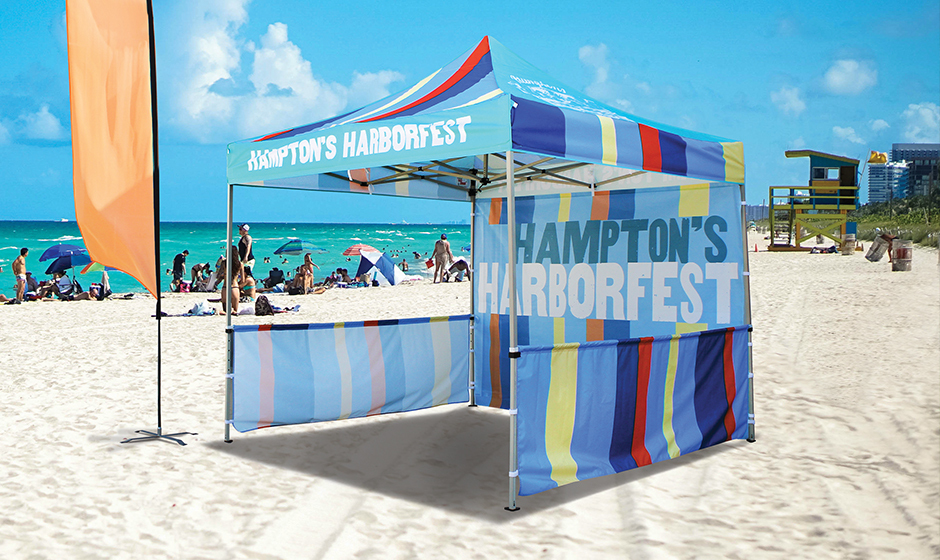
For vendors or brands, a 20x20 tent allows more than just a table. You can create zones—display space, consultation area, checkout, or product storage.
This size makes it easier to invite people in rather than forcing them to hover at the entrance. It also supports stronger branding and cleaner presentation.
Training, Workshops, and Corporate Use
A 20x20 tent works well for outdoor training sessions, workshops, or check-in areas. Classroom-style seating or small group tables fit comfortably without feeling cramped.
The extra square footage compared to a 10x10 allows for better circulation and less distraction during longer sessions.
Choosing Between Frame and High Peak Styles
Frame Tent Style
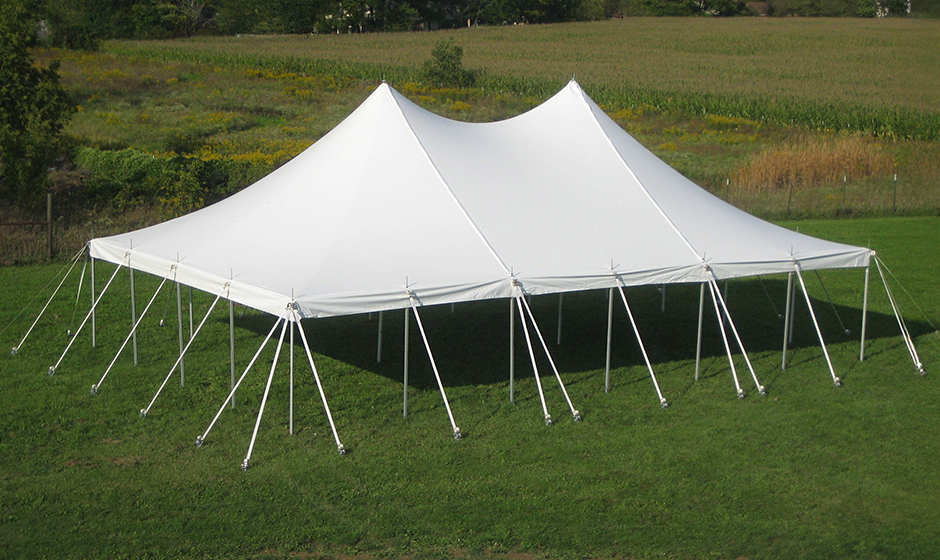
Frame tents offer clear interior space with no center poles. This makes layout planning easier and more flexible, especially when you need to place tables or displays precisely.
They’re often chosen for repeat use because crews become familiar with the system, which speeds up setup and reduces small alignment issues over time.
High Peak Frame Tent Style
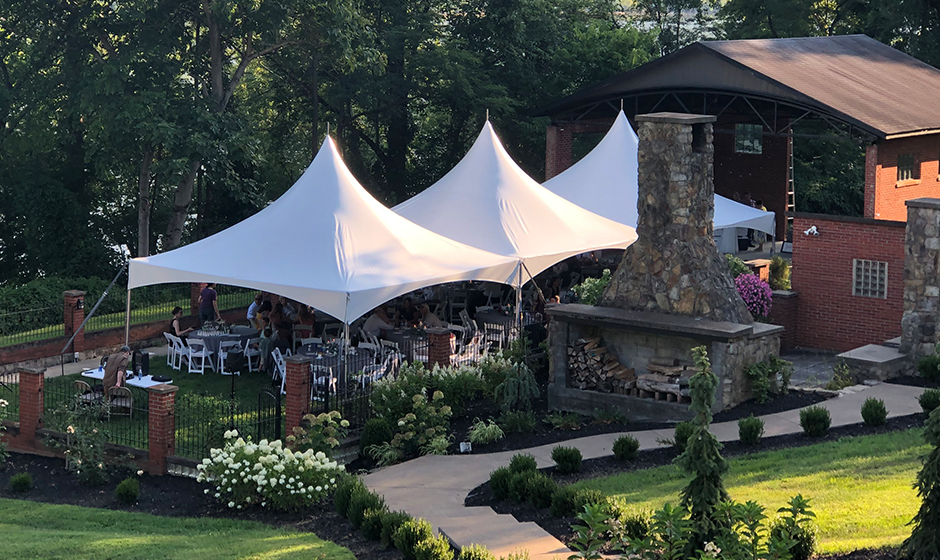
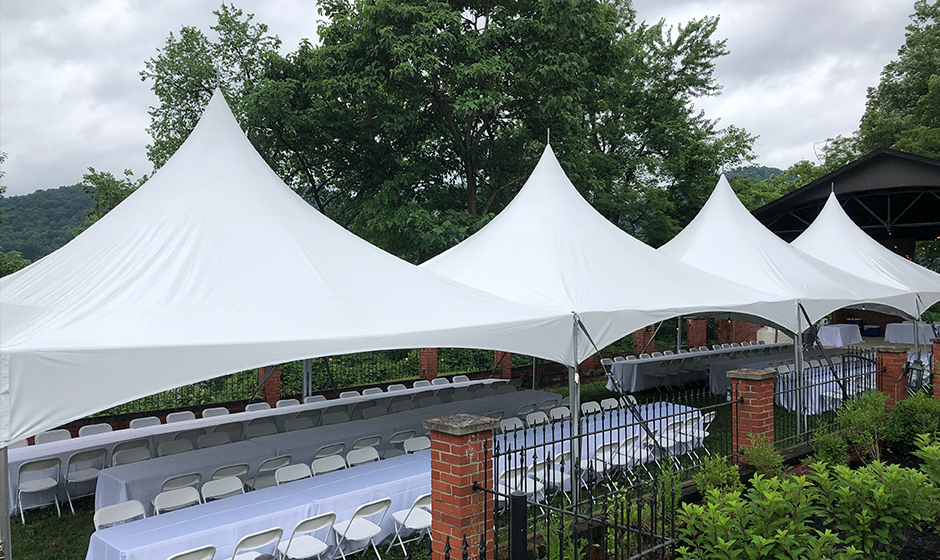
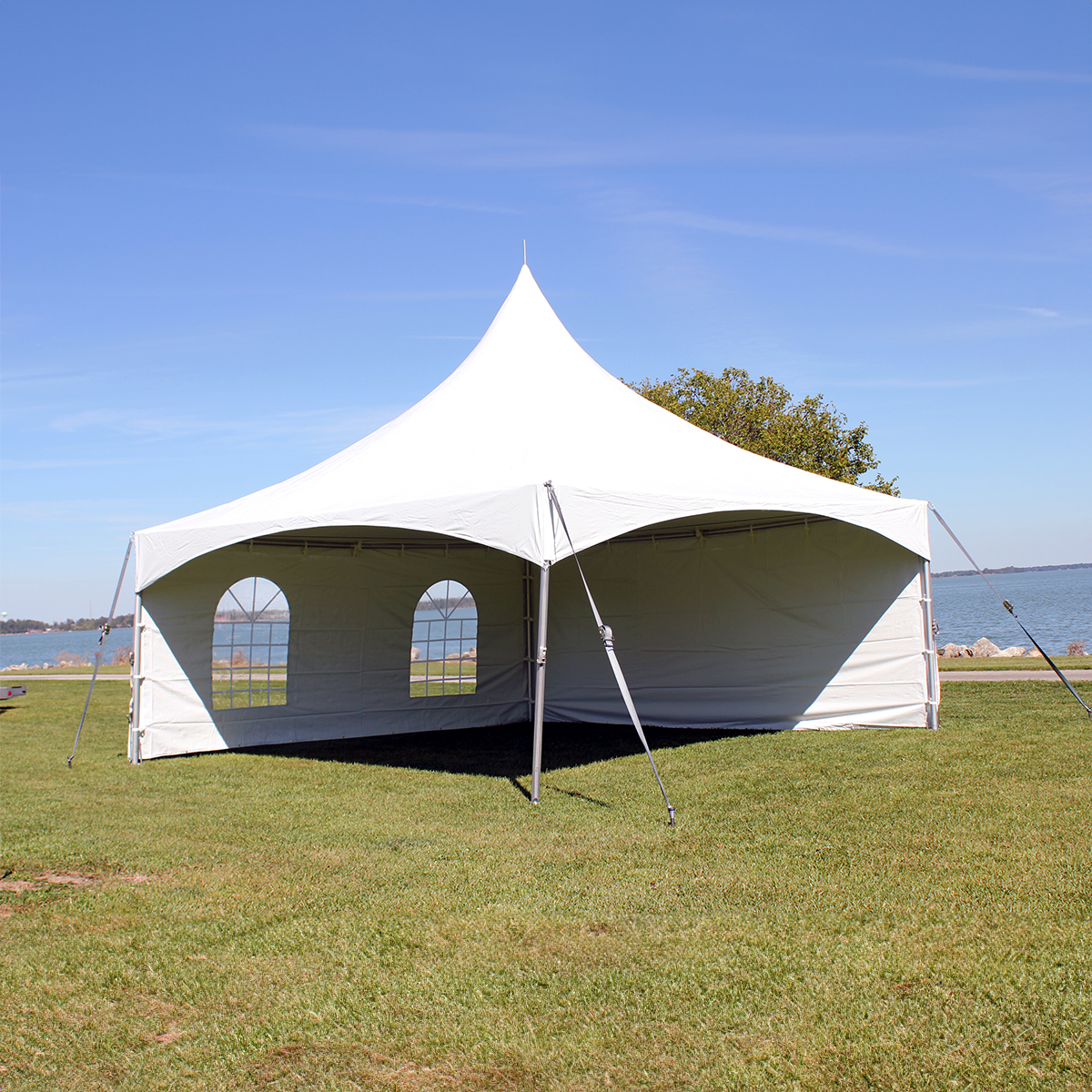
High peak tents add visual height and a more elegant roofline. This style is often chosen when appearance matters, such as weddings or corporate events.
The higher peak draws the eye upward and can make the space feel larger than it actually is, especially when combined with lighting.
One-Piece vs. Sectional Tent Tops
Tent tops in this size are commonly available as either one-piece or sectional designs, and the choice affects handling more than appearance.
One-piece tops tend to look seamless when installed correctly, but they can be heavier and harder to manage during setup and teardown. Sectional tops break the fabric into smaller pieces, which can make storage, handling, and partial replacement easier.
If your team values speed and easier handling, sectional designs often make day-to-day operations smoother.
Layout Choices That Improve Flow
A well-planned layout makes a 20x20 tent feel larger than it is.
For seated events, keeping tables away from the edges creates space for movement and service. Leaving at least one clear path through the tent prevents congestion.
For vendor or brand use, using the back wall for displays and keeping the front open makes the space feel inviting instead of closed off.
Corners are often wasted space. Planning intentionally for corners—storage, lighting, or décor—helps you use the full footprint.
Setup Mistakes That Increase Long-Term Costs
Poor Tensioning
Uneven tension leads to sagging, flapping, and water pooling. Over time, this stresses seams and stretches fabric, shortening the life of the tent top.
Rushed Installations
When setups are rushed, small alignment issues get ignored. Those small issues often turn into bigger problems during wind or rain.
Improper Anchoring
A tent that isn’t anchored correctly will move. Movement causes friction at contact points and increases wear on both the frame and fabric.
Why Fit Matters More Than People Expect
A tent top that “almost fits” can still be installed, but it creates uneven stress across the structure. One corner might be over-tightened while another stays loose.
Proper fit ensures even tension, faster setup, and fewer long-term issues. It also makes the tent look cleaner and more professional during events.
Using Sidewalls Without Overdoing It
Sidewalls can completely change how a 20x20 tent feels.
Using all four walls creates a defined interior, which is useful for wind, rain, or temperature control. Partial sidewalls often work better in warm weather, providing shelter while maintaining airflow.
Strategic use of sidewalls helps avoid that boxed-in feeling while still protecting guests.
Maintenance Habits That Make a Difference
Simple habits extend the life of a 20x20 tent significantly. Cleaning fabric after events prevents dirt from wearing down coatings. Drying the tent fully before storage reduces mildew and odor.
Regularly checking corners, seams, and hardware allows small issues to be addressed before they turn into expensive repairs.
When a 20x20 Tent Makes More Sense Than Going Bigger
Many people assume they need a larger tent when what they really need is better layout planning.
A 20x20 tent works well when you want defined space without the logistics of larger structures. It’s easier to transport, quicker to set up, and often more cost-effective for recurring events.
For rentals and repeat use, it’s one of the most practical sizes to keep in inventory.
Why Many Professionals Rely on CELINA for 20x20 Tents
Professionals value consistency. A tent system that fits together properly, installs predictably, and holds tension well saves time and reduces stress on event days.
CELINA designs tents as complete systems rather than standalone parts, which helps reduce fit issues and improves long-term reliability for repeat setups.
Making a 20x20 Tent Feel Like a Real Venue
A tent feels like a venue when it supports comfort, flow, and confidence.
With the right layout, proper tensioning, thoughtful sidewall use, and solid anchoring, a 20x20 tent can host events that feel intentional rather than temporary.
Need a 20x20 Tent That Sets Up Clean and Holds Tension?
If you’re using a 20x20 for weddings, activations, rentals, or repeat events, consistency matters. CELINA’s 20x20 systems are engineered as complete packages—frame, top, and hardware built to fit together—so installs feel predictable and professional.
Explore 20x20 Tent Options at CELINAFAQ
How many people fit comfortably in a 20x20 tent?
A 20x20 tent gives you 400 square feet, but comfort depends on the layout you choose. For cocktail or standing events, 35–50 people is usually a comfortable range when you keep walkways open. For seated dinners, 24–32 guests works best if you want proper aisles and service space. Pushing capacity too far often makes the tent feel tight and stressful. If you want help planning a clean layout, CELINA can guide you based on your event style.
Is a 20x20 tent a good size for a wedding?
Yes—especially for smaller receptions, ceremonies, cocktail hours, or dedicated zones like a lounge or dessert area. It feels intimate without being cramped when you keep furniture spacing intentional. Many couples use a 20x20 to create a polished “feature space” rather than forcing every event element into one tent. Lighting, sidewalls, and thoughtful placement make a big difference in how elevated it feels. CELINA’s 20x20 options are designed to help the space look clean and professional during key moments.
What’s the difference between a 20x20 frame tent and a 20x20 high peak tent?
A frame tent prioritizes interior flexibility, because you get clear space with no center poles and predictable layout options. A high peak frame tent adds visual height and a more elegant roofline, which is often preferred for weddings and brand-forward events. The higher peak can also make the tent feel larger and more open, especially with lighting. Both styles perform well when tensioning and anchoring are done correctly. CELINA can help match the style to your event goals and setup preferences.
Do I need sidewalls for a 20x20 tent?
Not always, but sidewalls can dramatically improve comfort depending on weather and event flow. Full sidewalls help with wind, rain, and temperature control, and they create a more defined interior for private events. Partial sidewalls are a great option in warm weather, giving protection while keeping airflow and avoiding that boxed-in feel. Many planners keep extra panels available so they can adapt if conditions change. CELINA offers sidewall options that integrate cleanly with the tent system for a more finished look.
Why does water pooling happen on a 20x20 tent?
Pooling almost always comes from uneven tension, stretched fabric, or a rushed installation that leaves low spots. Once water collects, the added weight increases stress on seams and can pull the canopy out of shape over time. Fixing tension early—before the first rain—is the best prevention, along with regular checks on high-wear corners. If pooling keeps happening, it can also point to a fit issue between the top and frame. CELINA’s systems are engineered for proper fit and tension so you’re not constantly fighting the canopy.
Is a 20x20 tent hard to set up?
With the right system and a trained crew, a 20x20 setup is very manageable. Most frustrations come from mismatched parts, inconsistent hardware, or a team using equipment they don’t know well. Once a crew is familiar with a consistent tent system, the install becomes faster and more predictable event after event. Planning your layout and anchoring points ahead of time also reduces onsite stress. CELINA’s complete packages help simplify setup by keeping fit and components consistent.
How long does a 20x20 tent typically last?
Lifespan depends on materials, frequency of use, and how it’s stored between events. A well-built tent used regularly can last many seasons when it’s cleaned, dried fully, and stored properly. Rushed teardowns, damp storage, and poor tensioning shorten life quickly by stressing seams and wearing down coatings. Routine inspections help you catch small issues before they become expensive repairs. For repeat use and rental environments, CELINA systems are designed to hold up under consistent setup cycles.
Is a 20x20 tent better than using two smaller tents?
Often, yes—because one 20x20 creates a unified space and avoids awkward gaps where wind and rain can slip through. It also makes layout planning simpler and improves the overall “venue” feel, especially for weddings and brand activations. Two smaller tents can work when flexibility matters, like splitting areas into separate zones or fitting unique footprints. The best choice comes down to flow, weather risk, and how you want guests or customers to move through the space. If you’re unsure, CELINA can help you compare options based on your event needs.