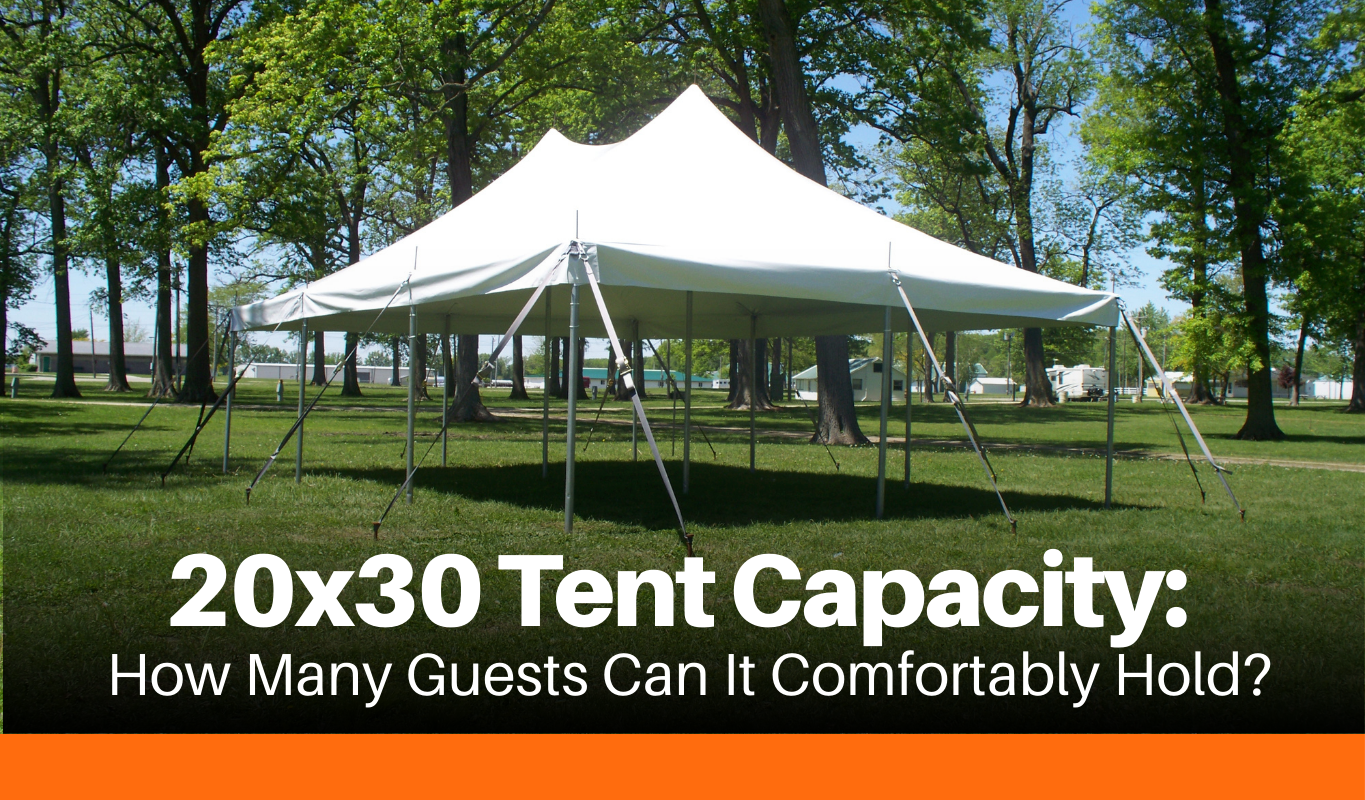




20x30 Tent Capacity: How Many Guests Can It Comfortably Hold?
When planning an outdoor event, one of the first questions people ask is about 20x30 tent capacity. How many guests can it hold? Will it feel crowded? Is it enough space for tables and a dance floor?
A 20x30 tent provides 600 square feet of usable coverage. On paper, that sounds simple. In practice, capacity depends on layout, table configuration, service style, and how much open space you want guests to have.
The difference between “maximum capacity” and “comfortable capacity” is significant. And understanding that difference is what prevents cramped layouts, blocked walkways, and underwhelming event flow.
Let’s break it down properly.
The Math Behind 600 Square Feet
A 20x30 tent gives you 600 square feet of space. Capacity planning often starts by calculating square footage per guest.
For standing-room events, you can estimate roughly 6 to 8 square feet per person. For seated events with tables, the requirement increases dramatically.
As a general guideline:
- Theater-style seating (chairs only): 70–90 guests
- Banquet seating (long tables): 60–75 guests
- Round tables (60-inch): 48–60 guests
- Cocktail style (high-top tables): 75–100 guests
But those numbers only tell part of the story.
Seated Dinner Capacity: What Feels Right
For weddings or formal dinners, comfort matters more than maximum density.
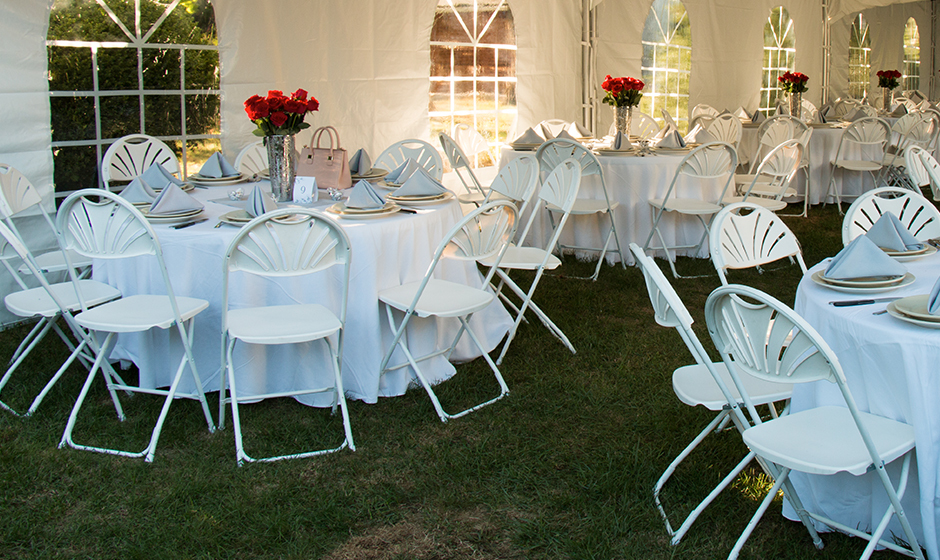
With 60-inch round tables seating eight guests each, a 20x30 tent comfortably holds about 6 to 7 tables while maintaining walkways. That translates to roughly 48 to 56 guests.
If you push tighter spacing, you may reach 60 guests, but circulation becomes limited. Servers struggle to move efficiently. Guests have difficulty accessing seats without disrupting others.
A better approach is to think in zones rather than raw numbers. Allow 3 to 4 feet of walking space between tables. Leave room for a head table or sweetheart table. Plan for entry flow.
Capacity should support experience — not strain it.
Banquet-Style Seating
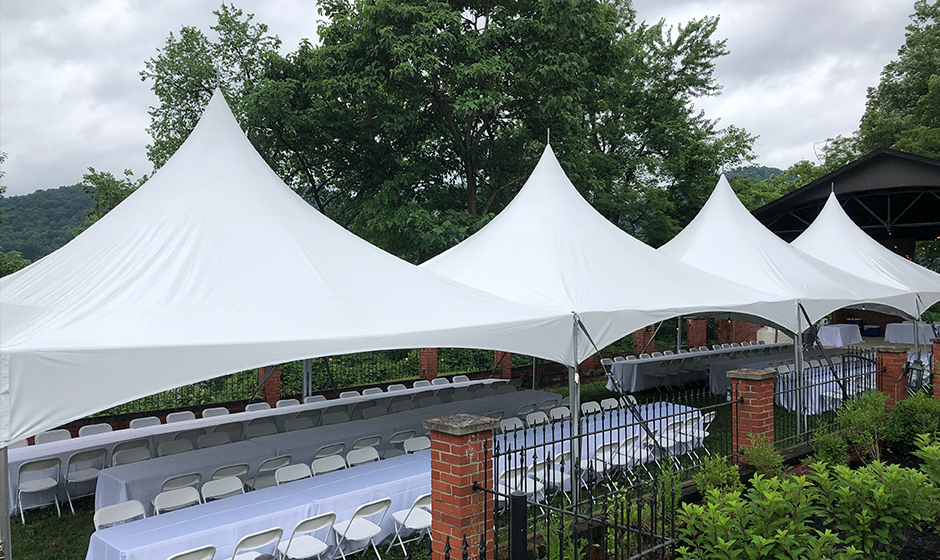
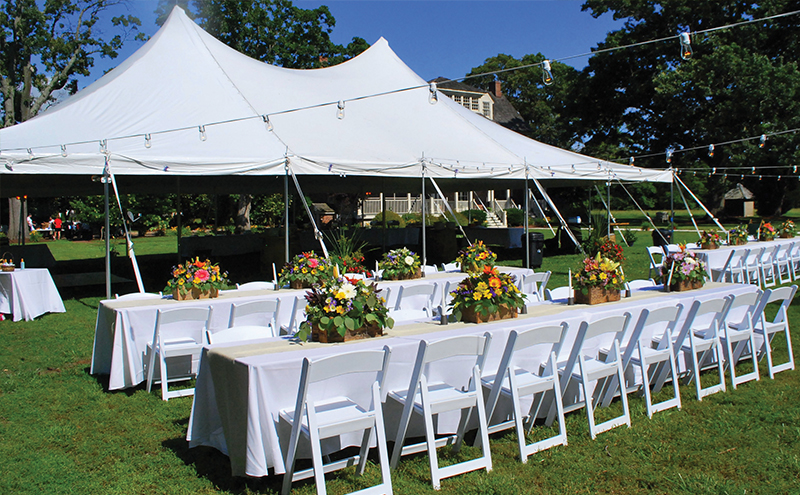
Long rectangular tables increase seating efficiency. Because banquet tables seat guests along both sides with less perimeter space wasted, you can increase capacity slightly.
In a 20x30 tent, banquet layouts can typically seat 60 to 75 guests depending on table arrangement.
This configuration works especially well for:
- Family-style meals
- Graduation parties
- Corporate dinners
- Community events
However, banquet layouts reduce flexibility for dance floors and entertainment zones. You gain seats but sacrifice open space.
Cocktail-Style Events: Maximum Movement
Cocktail receptions dramatically increase 20x30 tent capacity because chairs and large tables are removed.
With high-top tables and lounge clusters, you can comfortably host 75 to 100 guests depending on layout.
Guests stand, circulate, and interact rather than remain seated. This reduces the square footage required per person.
This setup works well for:
- Engagement parties
- Corporate mixers
- Birthday celebrations
- Networking events
But even in cocktail layouts, thoughtful spacing improves flow. Overcrowding reduces comfort quickly.
Adding a Dance Floor Changes Everything
One of the most common planning mistakes is forgetting to subtract dance floor space from total square footage.
A standard dance floor for 50 guests might require 12x12 feet or more. That alone consumes nearly 150 square feet — one quarter of the tent’s total footprint.
If you include a dance floor inside a 20x30 tent, realistic seated capacity drops closer to 40–50 guests for comfortable spacing.
When music and movement are priorities, guest count should be adjusted accordingly.
Buffet Tables and Service Areas
Buffet tables require linear space along one side of the tent. Catering prep tables, dessert displays, beverage stations, and bar setups all consume usable square footage.
Two 8-foot buffet tables placed end to end take up 16 linear feet and require clearance space for guest flow.
When planning 20x30 tent capacity, service areas must be accounted for before counting chairs.
A tent that “fits” 60 guests may only comfortably accommodate 50 once buffet stations are included.
Ceremony-Only Layout
For wedding ceremonies without reception seating, a 20x30 tent can accommodate 70 to 90 guests with rows of chairs arranged theater-style.
This configuration uses space efficiently because no tables are required.
However, aisle width must be considered. A central aisle typically reduces overall capacity slightly but improves visual impact and accessibility.
Ceremony-only layouts are one of the highest-capacity uses of this tent size.
Frame vs Pole Tent and Capacity
The structure type affects usable interior space.
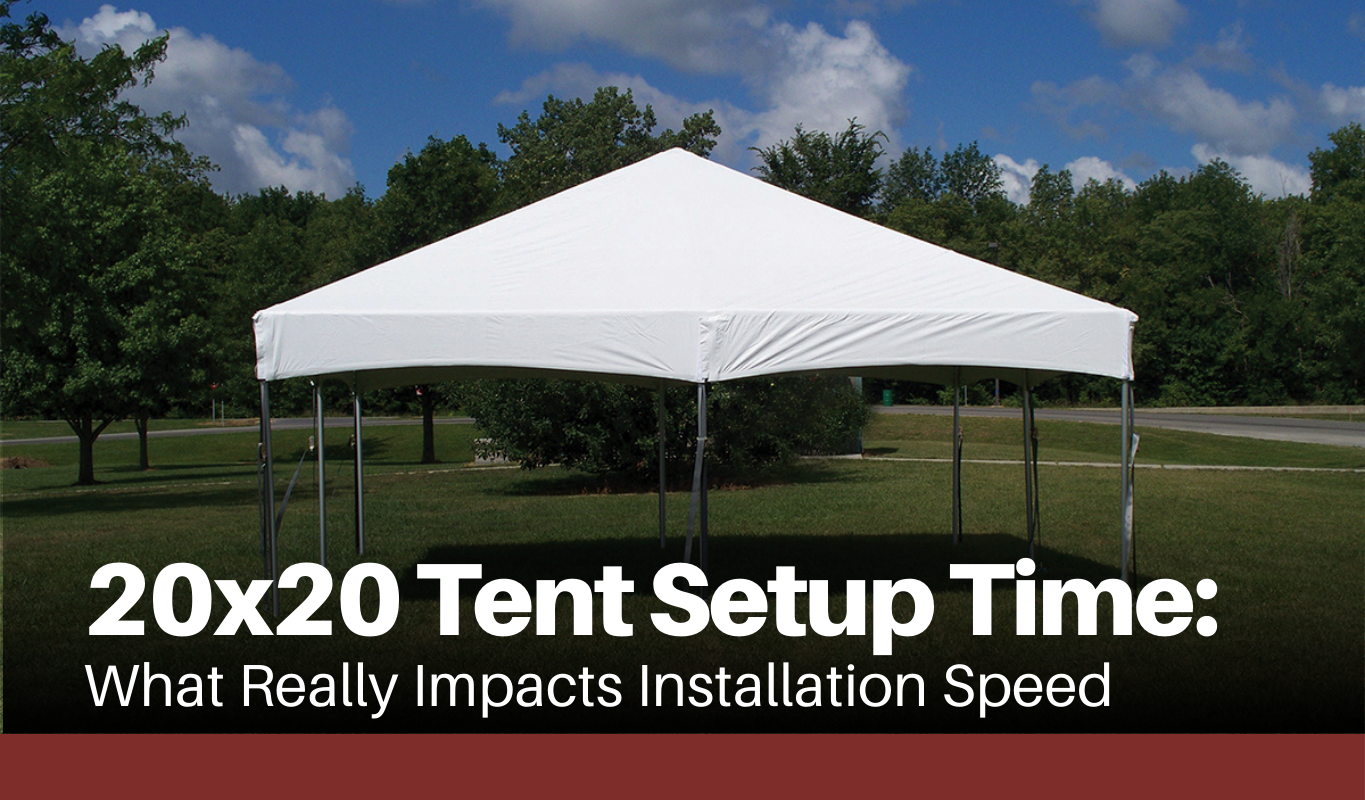
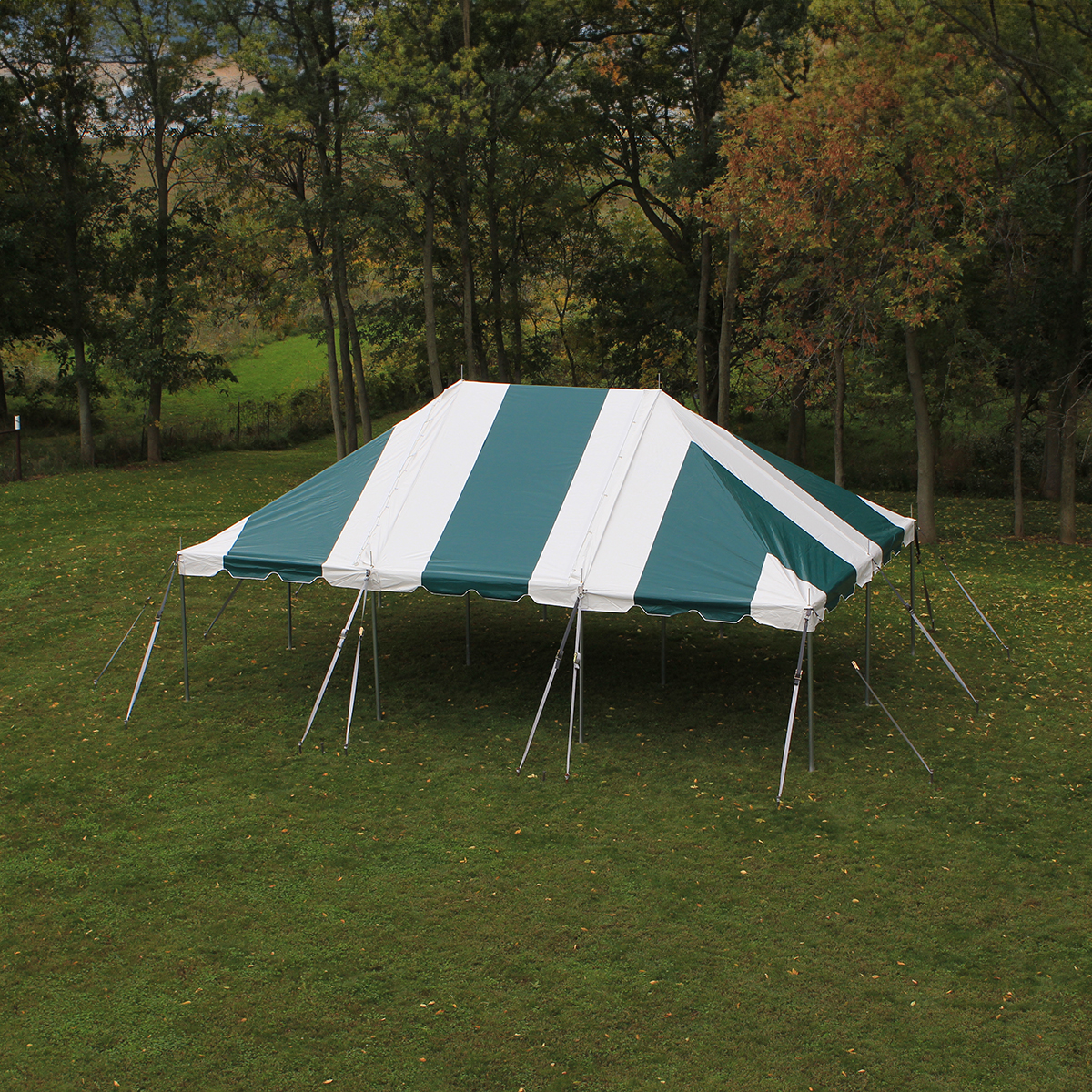
A 20x30 frame tent has no center poles. All 600 square feet are usable. This allows maximum layout flexibility.
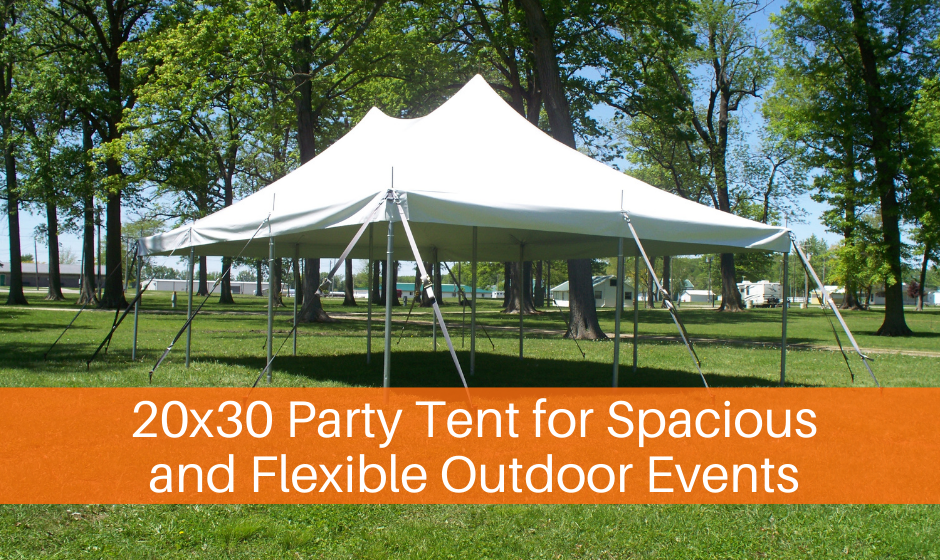
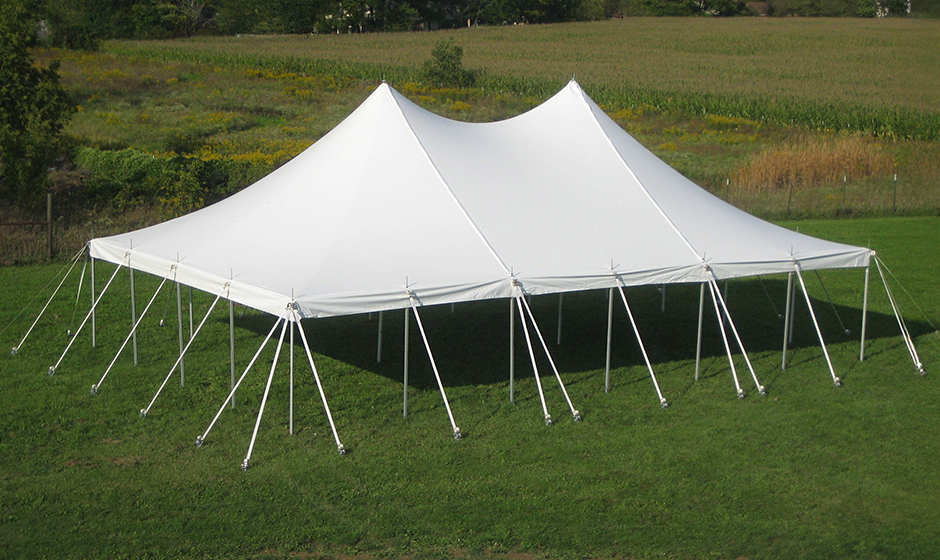
A pole tent includes one or more center poles depending on design. These poles slightly restrict table placement and traffic flow.
For tight capacity planning, frame tents offer a small but meaningful advantage.
Comfort vs Maximum Capacity
The temptation to maximize guest count is understandable. But capacity should reflect comfort, not just possibility.
A 20x30 tent technically “fits” more people than most hosts realize. The better question is how many guests can move freely, enjoy conversation, and access amenities without congestion.
For seated dinners with dancing, 40–55 guests is typically ideal.
For seated dinners without dancing, 55–65 guests is realistic.
For cocktail events, 75–100 guests works well.
The most successful events are rarely those that push maximum density.
Real-World Examples
Let’s look at how this plays out in common event types.
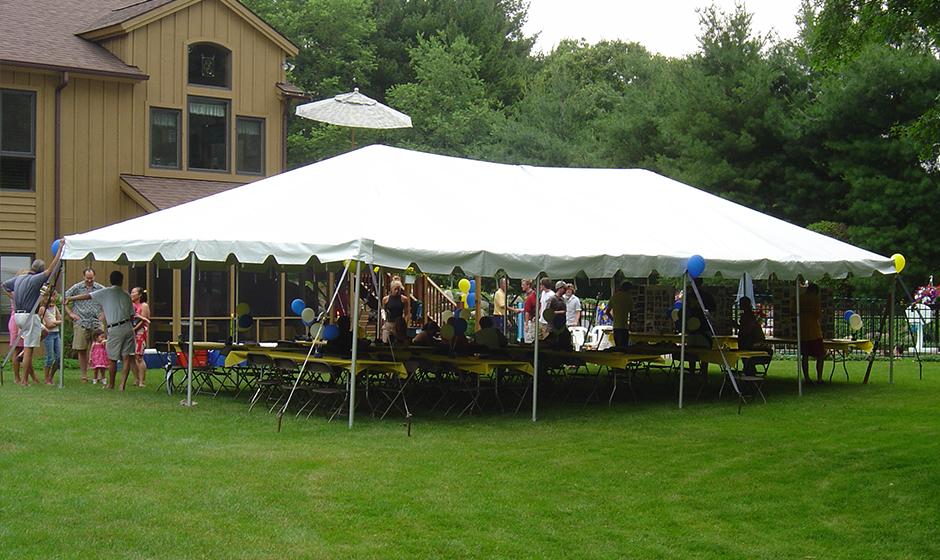
A backyard wedding with 50 guests, 6 round tables, a sweetheart table, and a small dance floor fits beautifully inside a 20x30 tent.
A graduation party with buffet service and 65 guests seated banquet-style works well when tables are arranged lengthwise with clear perimeter flow.
A networking mixer with 90 guests, cocktail tables, and minimal seating feels energetic and spacious.
Each event uses the same tent — but capacity feels completely different depending on layout choices.
When 20x30 Is Not Enough
If guest count exceeds 75 seated guests with dining and dancing included, space becomes limited.
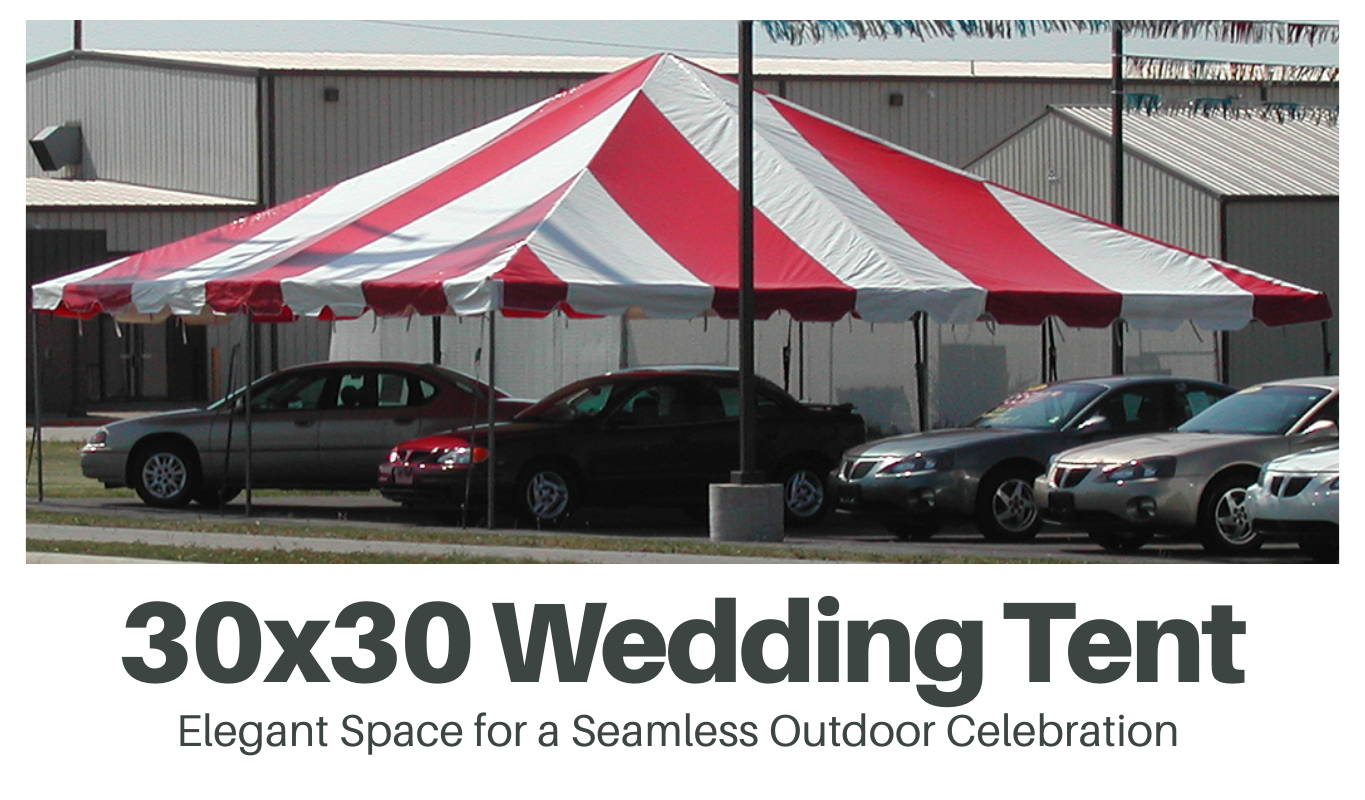
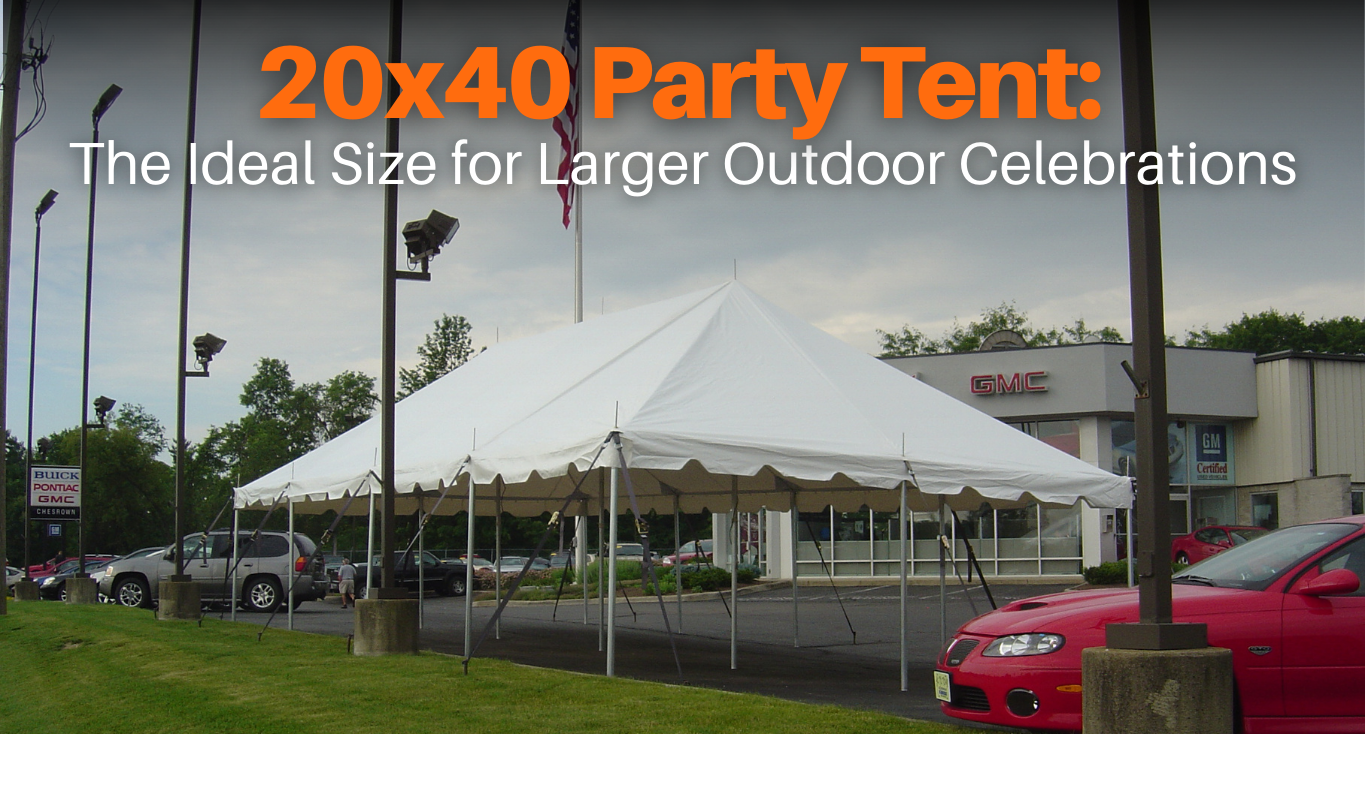
If the event requires large staging, extended catering prep areas, or multiple lounge zones, upgrading to a 20x40 or 30x30 tent may provide better comfort.
Choosing the right tent size is about anticipating flow, not squeezing numbers.
Planning Capacity Early Prevents Stress
Many capacity issues arise late in planning when guest lists expand unexpectedly.
Confirm your estimated guest count before finalizing tent size. Consider RSVP fluctuation. Add buffer space when possible.
It is easier to decorate slightly open space than to solve overcrowding on event day.
Proper planning transforms 20x30 tent capacity from a guessing game into a confident decision.
Plan Your Outdoor Event With Confidence
Explore professional-grade tent solutions designed for flexible layouts, reliable performance, and seamless installation.
Browse 20x30 TentsDurable | Flexible | Event-Ready
FAQ
How many people can fit in a 20x30 tent?
A 20x30 tent can seat approximately 48 to 60 guests at round tables, 60 to 75 banquet-style, or 75 to 100 for cocktail-style events. Actual capacity depends on layout and whether space is reserved for dancing or buffet service.
Can I fit a dance floor inside a 20x30 tent?
Yes, but including a dance floor reduces overall seating capacity. A typical 12x12 dance floor will reduce seated capacity to around 40–50 guests for comfortable spacing.
Is a 20x30 tent big enough for a wedding reception?
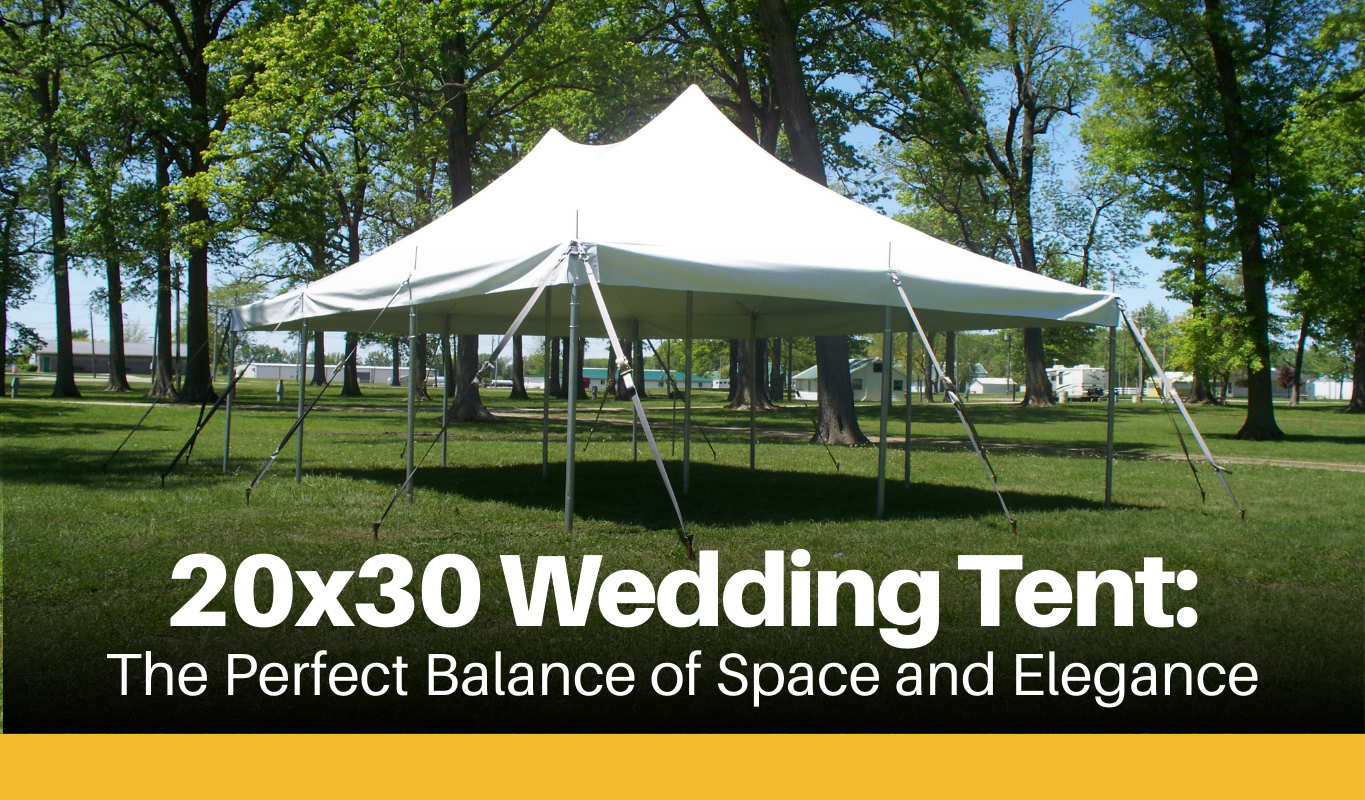
For intimate weddings with 40 to 60 guests, yes. Larger guest counts may require a 20x40 or 30x30 tent to maintain comfort and proper flow.
Does table shape affect tent capacity?
Yes. Banquet tables increase seating efficiency compared to round tables. However, round tables often improve guest interaction and visual balance.
What is the most comfortable capacity for this size tent?
For seated events with room to move, 50 to 60 guests is generally ideal. For cocktail-style receptions, 75 to 90 guests feels comfortable and energetic without overcrowding.