



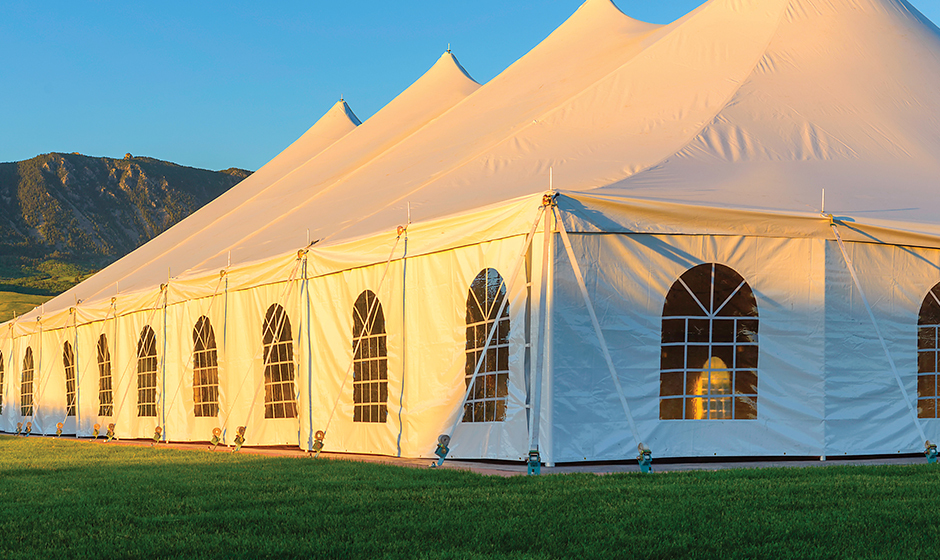
Commercial Event Tents – The Complete Buyer Guide
Commercial event tents are not impulse purchases. They are working assets that influence safety, logistics, guest experience, and long-term costs. While many tents may look similar at a glance, the difference between a consumer-grade shelter and a true commercial event tent becomes obvious after the first few installs. This level of engineering is what separates a backyard hobbyist from a professional rental operation or a high-capacity venue.
This guide is designed to help buyers understand what actually matters before committing to a commercial event tent system. Whether you are launching a new rental venture or purchasing tents for corporate events, public gatherings, or long-term use, the right choice affects far more than just coverage. A tent is a significant capital investment, and understanding the nuances of fabric, frame, and physics is the only way to protect that investment.
Commercial event tents must perform consistently, integrate with accessories, scale over time, and withstand repeated setup and teardown. This buyer guide breaks down how commercial tents are built, how they are used, and how to evaluate options with confidence. We will dive deep into the technical specifications, the logistical hurdles, and the revenue-generating potential of these massive structures.
What Makes an Event Tent Commercial Grade
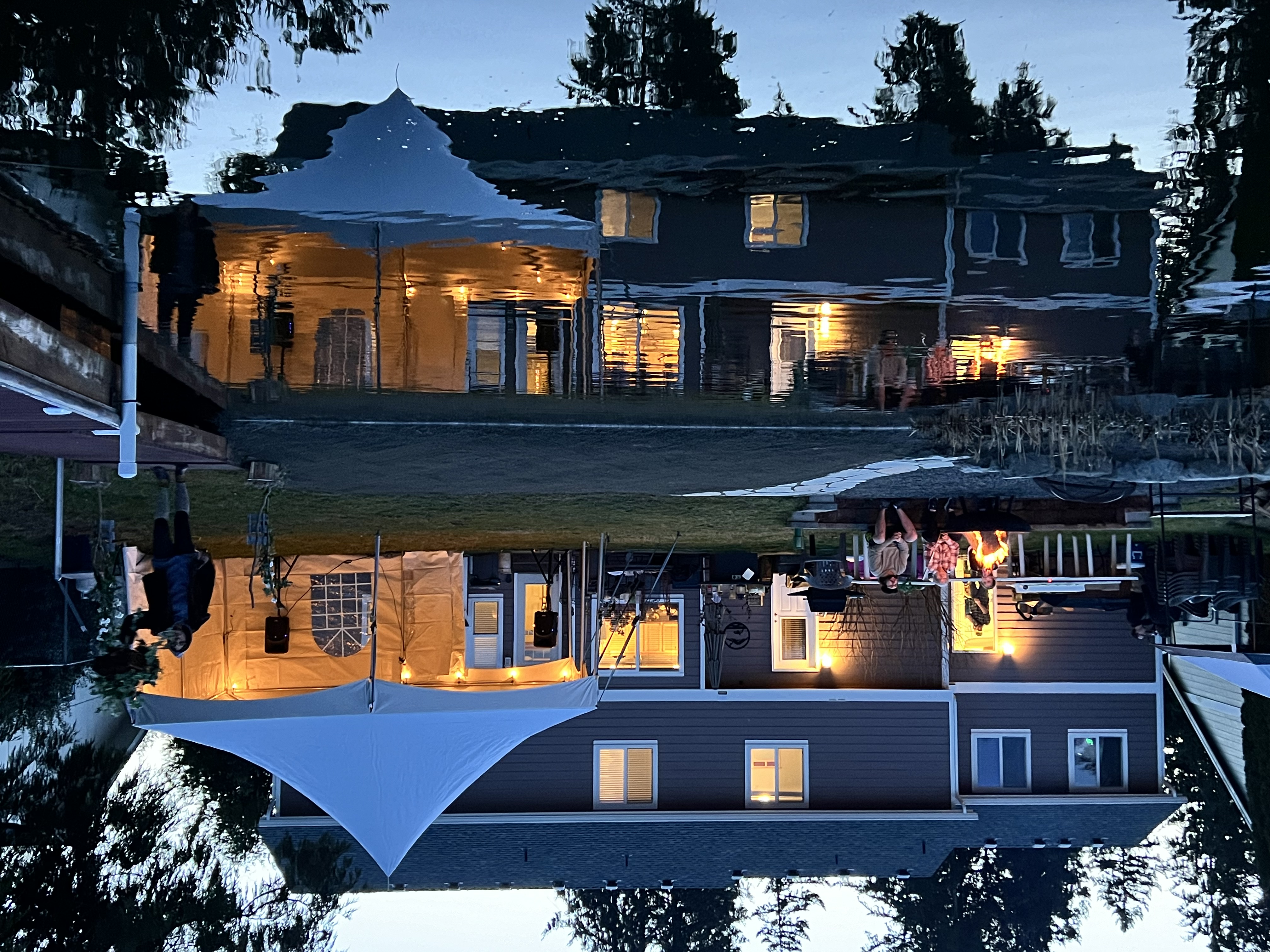
A commercial event tent is designed for repeated use, professional installation, and predictable performance. These tents are engineered as systems rather than standalone products. When we talk about "commercial grade," we are referring to the industrial resilience of the materials and the precision of the manufacturing process.
Commercial-grade tents use heavier fabrics, reinforced seams, engineered structural systems, and standardized sizing. They are built to be installed dozens or hundreds of times without compromising structural integrity or appearance. The vinyl is typically 14oz to 16oz in weight, treated with UV inhibitors and anti-wicking properties.
Commercial tents are designed with replacement parts, accessories, and long-term ownership in mind. They are tools, not temporary solutions. Every grommet, lace line, and tensioning buckle is a point of engineering designed to handle the stresses of high-wind environments.
Commercial Event Tents vs Consumer Event Tents
One of the most common and costly mistakes buyers make is assuming that all event tents are essentially the same product with different price tags. At a glance, a tent is a tent. It creates shade, offers cover, and defines a space. But in practice, consumer event tents and commercial event tents are built for entirely different realities.
Consumer tents are designed for occasional, short-term use. Think backyard parties, one-day gatherings, or personal use a few times a year. They prioritize convenience above all else. Lightweight frames, thin fabrics, compact storage, and fast setup are the selling points. Cost is kept low by minimizing materials, simplifying construction, and accepting a shorter lifespan.
Commercial event tents, by contrast, are built for repeated deployment in demanding environments. They are intended to be installed dozens or even hundreds of times over their lifespan, often by professional crews, often under time pressure, and often in public-facing settings where safety, reliability, and predictability matter. This is why many entrepreneurs choose these tents when starting their own tent rental business.
The difference becomes obvious once you look past appearance.
Commercial tents use heavier fabric weights that resist tearing, stretching, and UV degradation. Stress points are reinforced because they are expected to carry load over time, not just survive one weekend. Engineered structural systems and specialized anchoring hardware are standard, not improvised, and are designed to meet safety expectations for wind and weather exposure according to standards set by the Advanced Textiles Association.
Another key distinction is compatibility. Commercial tent systems are standardized. Components are designed to work together across standardized dimensions and configurations. Replacement parts are available years later. Accessories are engineered to integrate without compromising structural performance. There are also compliance considerations. Commercial event tents are typically manufactured with professional tent tops made of flame-retardant fabrics that meet local or regional safety requirements for public events. Consumer tents often do not, which can create issues for permits, insurance, or venue approval.
For any buyer planning repeated use, rental operations, or public-facing events, commercial-grade tents are not an upgrade or a luxury. They are the baseline requirement. Choosing consumer-grade equipment for commercial use almost always results in higher long-term costs, more failures, and avoidable risk. Understanding the math of tent ownership and ROI proves that the commercial investment pays for itself quickly.
Common Uses for Commercial Event Tents
Commercial event tents are used anywhere a temporary structure must perform reliably while accommodating people, equipment, and movement. What varies is not just the type of event, but the operational demands behind it.
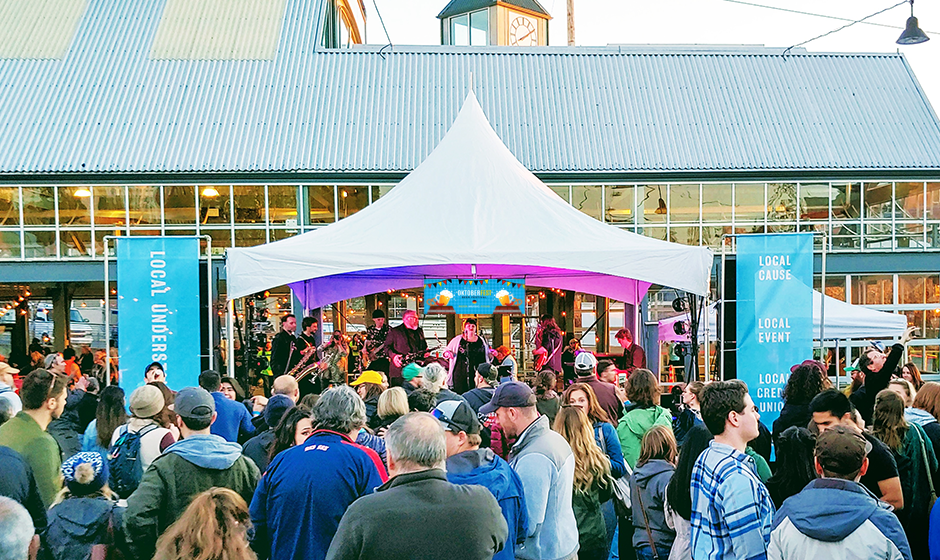
Typical uses include wedding receptions, corporate functions, branded activities, festivals, community events, trade shows, fundraisers, sporting events, and seasonal installations. Each of these applications places different demands on the tent system.
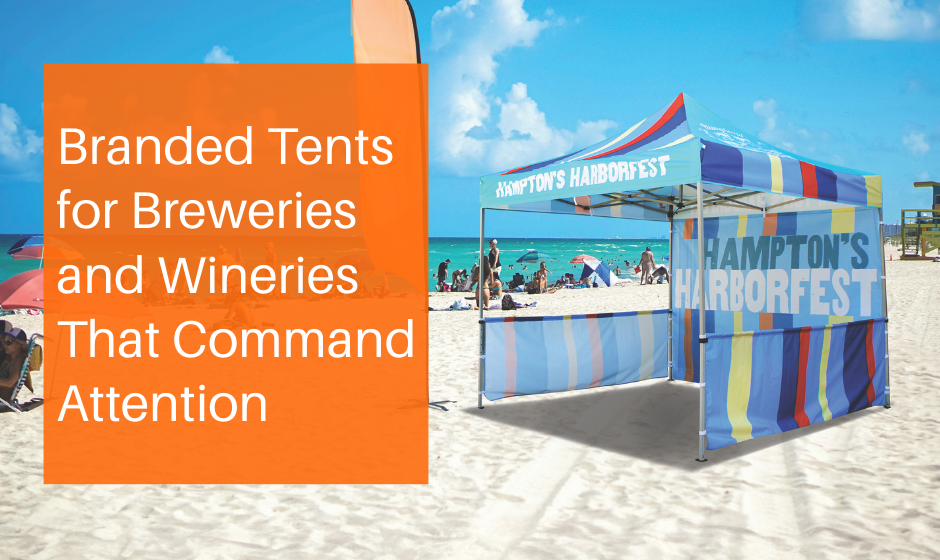
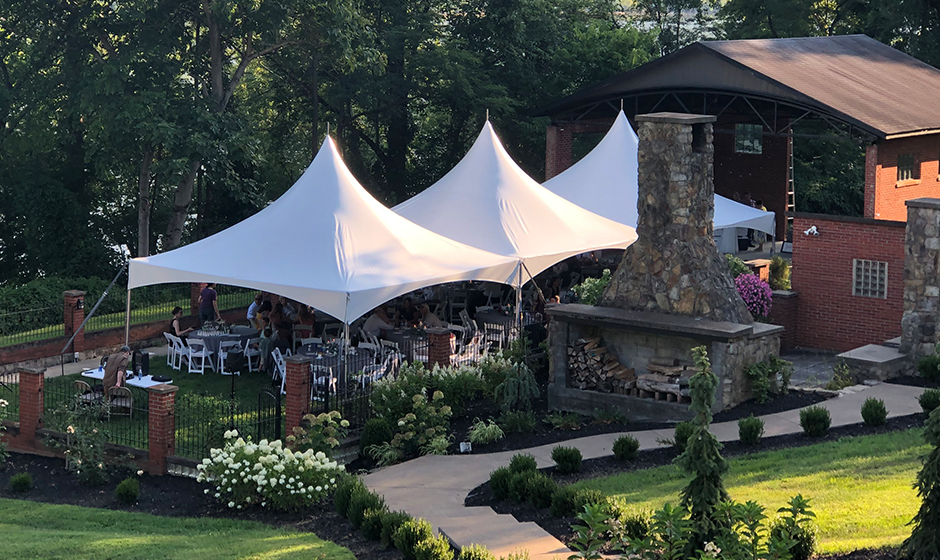
A wedding reception may prioritize aesthetics, interior flow, and the ability to support professional lighting and décor. A corporate event may require clean lines, branding opportunities, and predictable layouts. A festival may emphasize durability, weather resistance, and fast setup across multiple party tents. Rental inventory must survive transport, storage, and constant reinstallation without degrading, which is why operators focus on tracking the most replaced rental items to maintain high standards.
Understanding how a tent will be used is more important than focusing on how it looks in photos. Frequency of use, duration of installation, site conditions, audience size, and environmental exposure all influence which tent system is appropriate.
A tent used once a month on grass has very different requirements than a tent installed weekly on asphalt or concrete using specialized anchoring hardware. A tent used for daytime markets may never see lighting loads, while an evening event tent might carry chandeliers, heaters, and sound equipment.
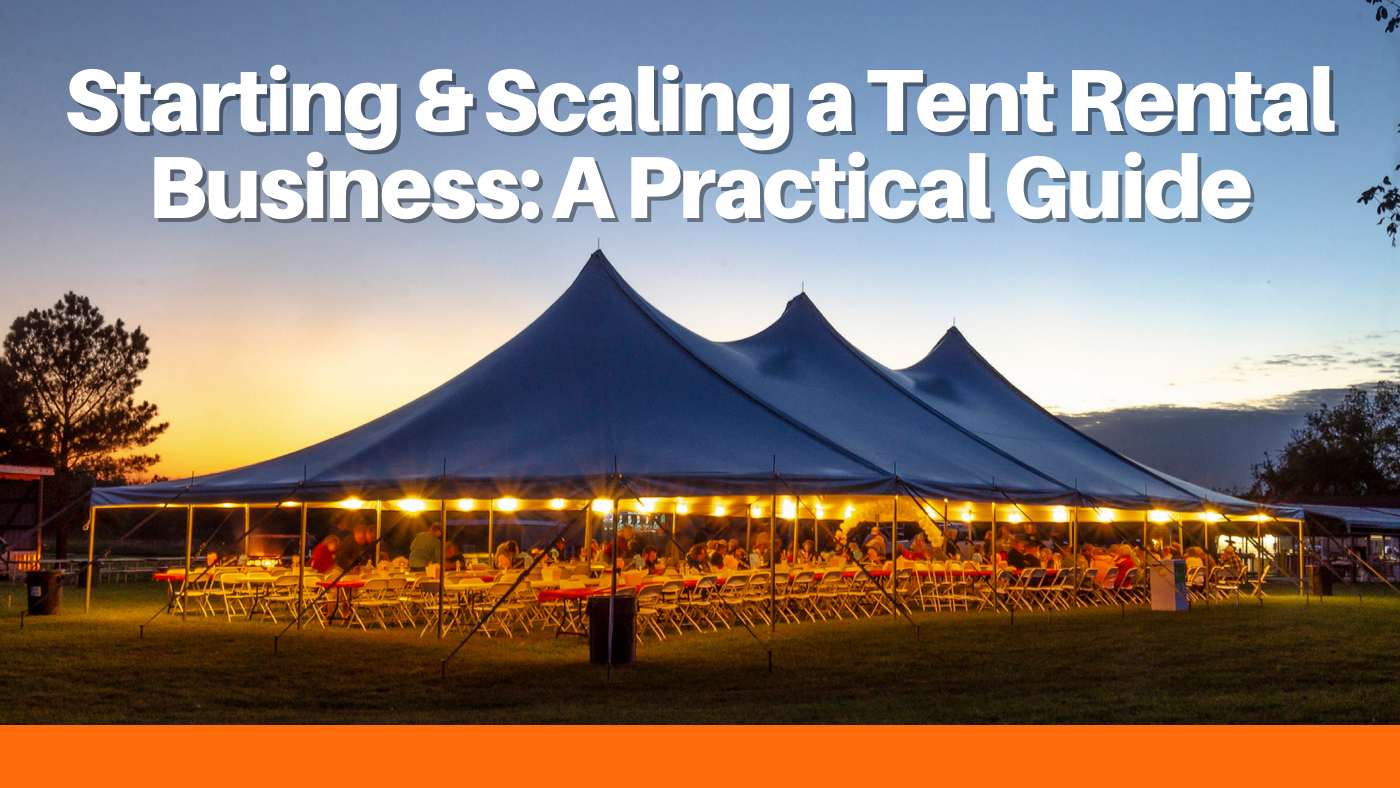
Buyers who clearly define use cases before purchasing avoid mismatches that lead to frustration later. The right tent is not the one that looks best in isolation, but the one that performs best within its intended context. Whether you are starting your own tent rental business or upgrading a venue, smart inventory planning ensures your assets remain profitable for years.
Major Types of Commercial Event Tents
Commercial event tents are typically categorized by how they are supported and anchored. While appearance influences many decisions, performance is determined by structure. Choosing the wrong structure for your terrain or your crew size can lead to massive logistical headaches.
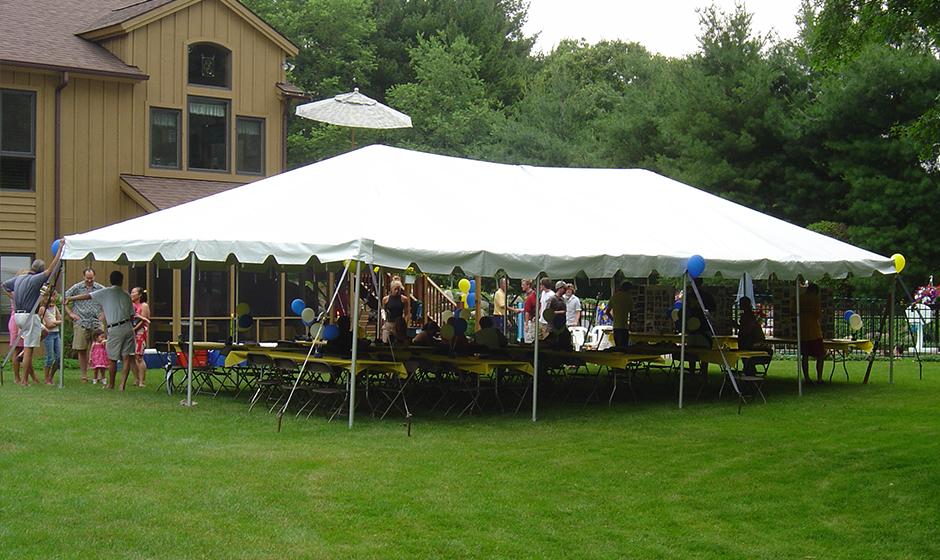
Pole Tents
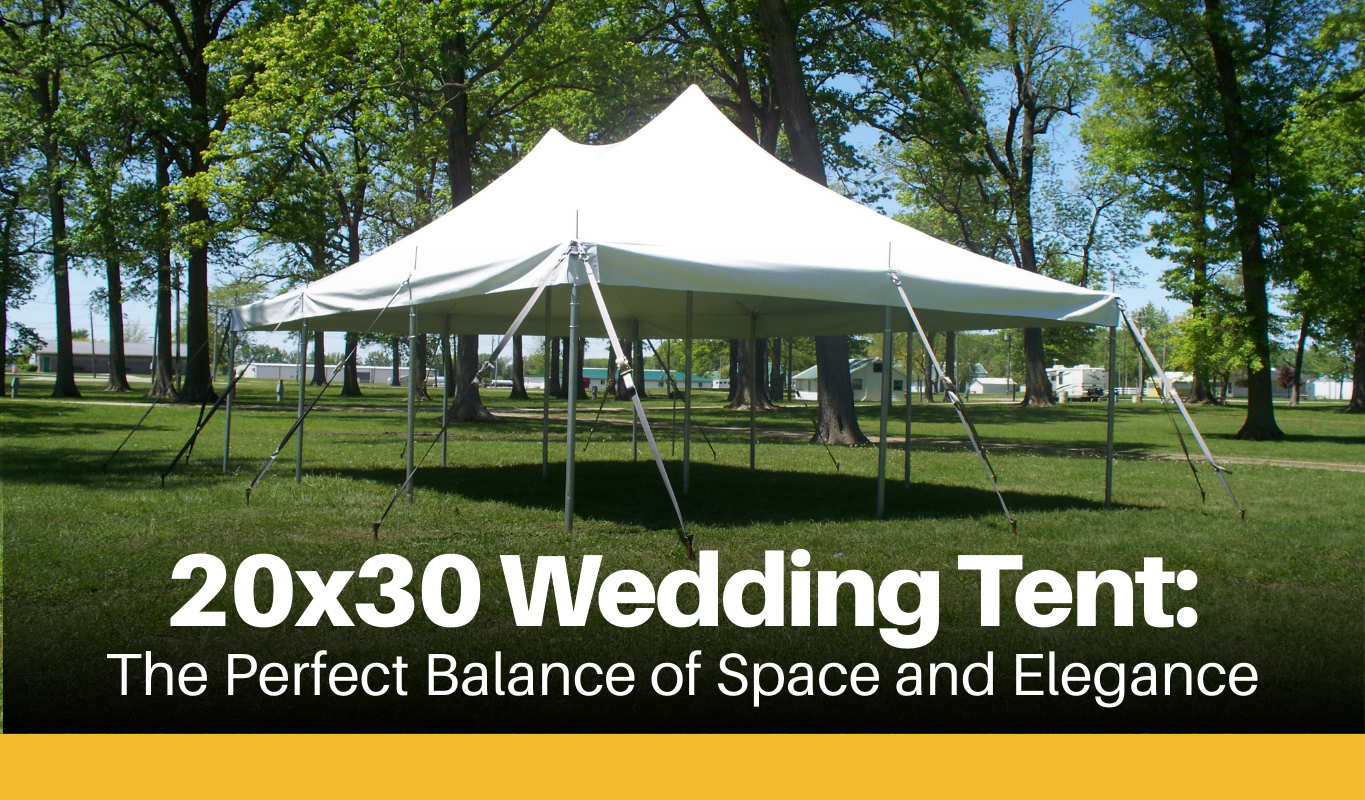
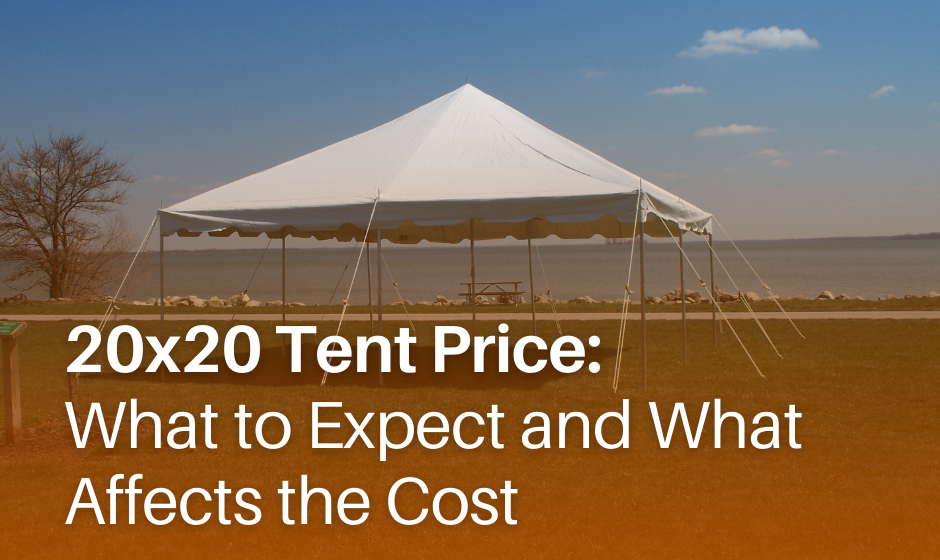
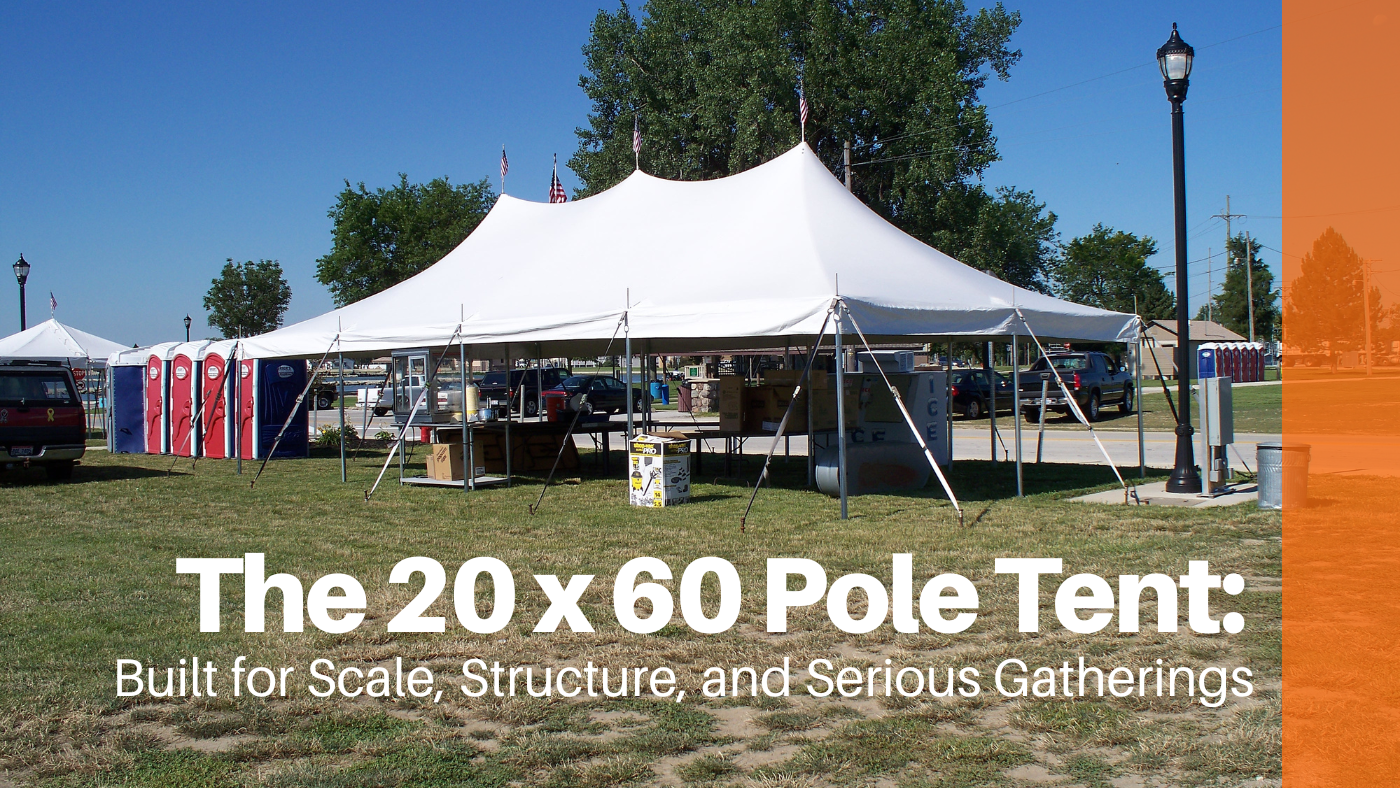
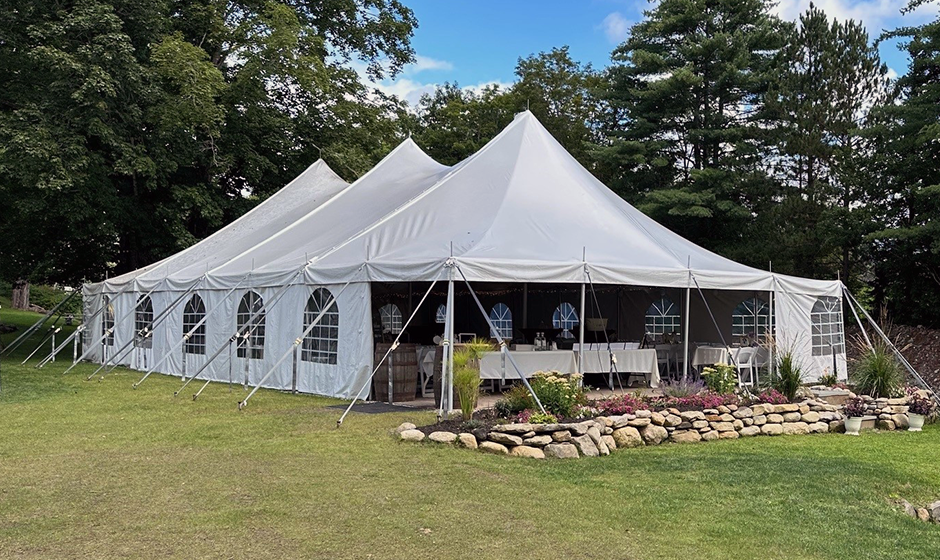
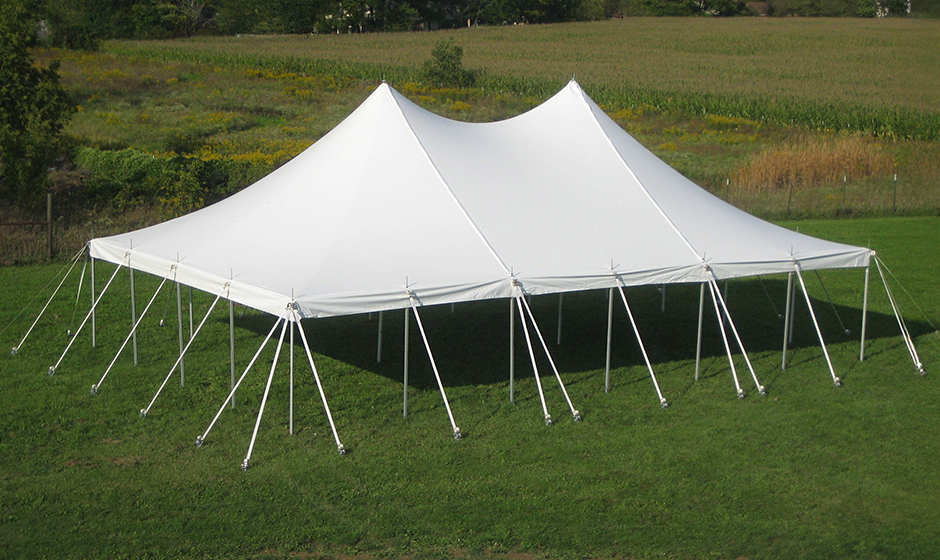
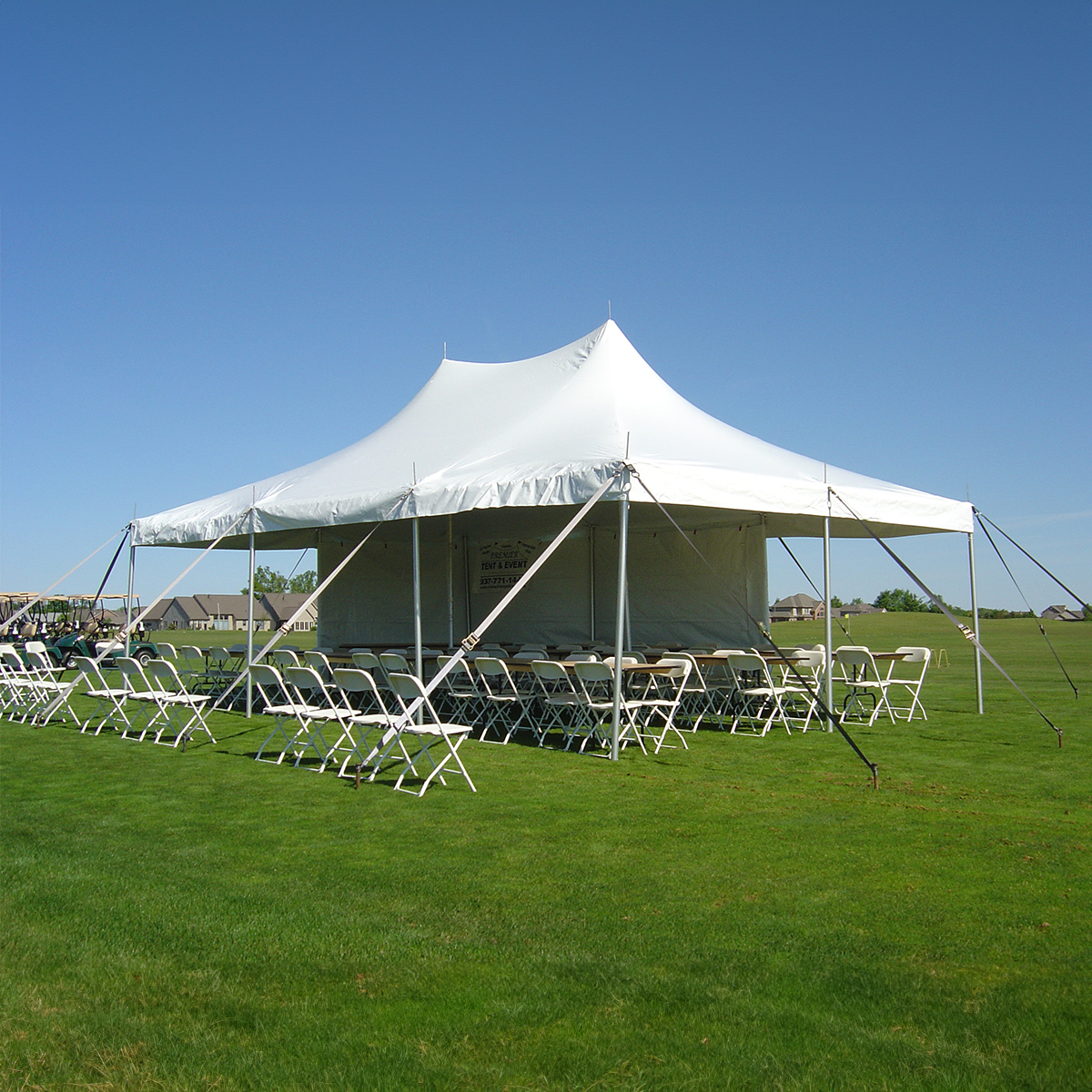
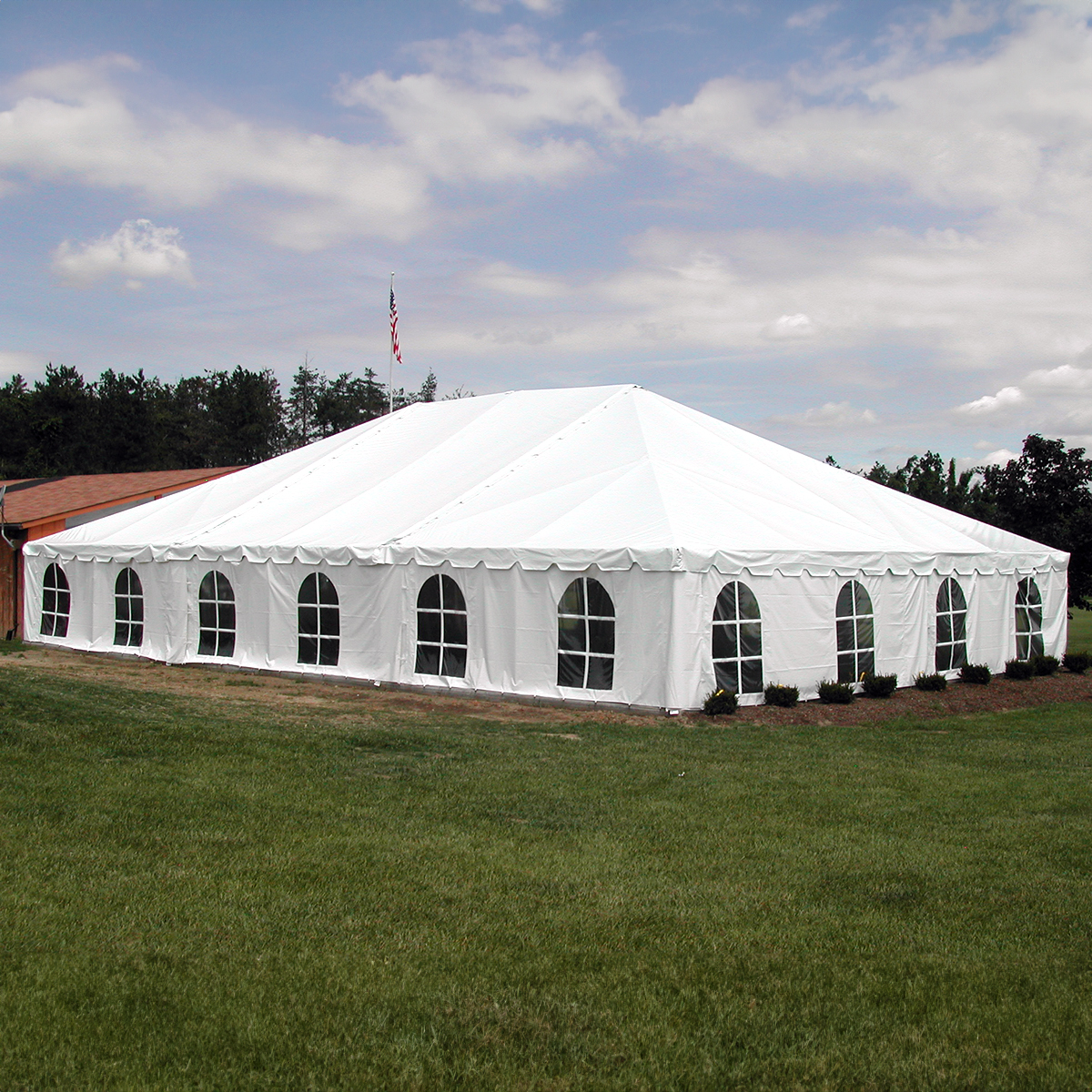
Pole tents rely on center poles and perimeter anchoring to create tension-based structure. Their sweeping peaks and flowing fabric lines make them a classic choice for outdoor celebrations. Because they use the tension of the fabric to stay upright, they require a balanced pull from all sides.
They require adequate staking space and are best installed on grass or soil. Proper installation is critical, as the structure depends on even tension. A sagging pole tent is not only an eyesore but a significant safety risk during a rainstorm, as water can "pool" on the top and collapse the structure.
When to Use a Pole Tent
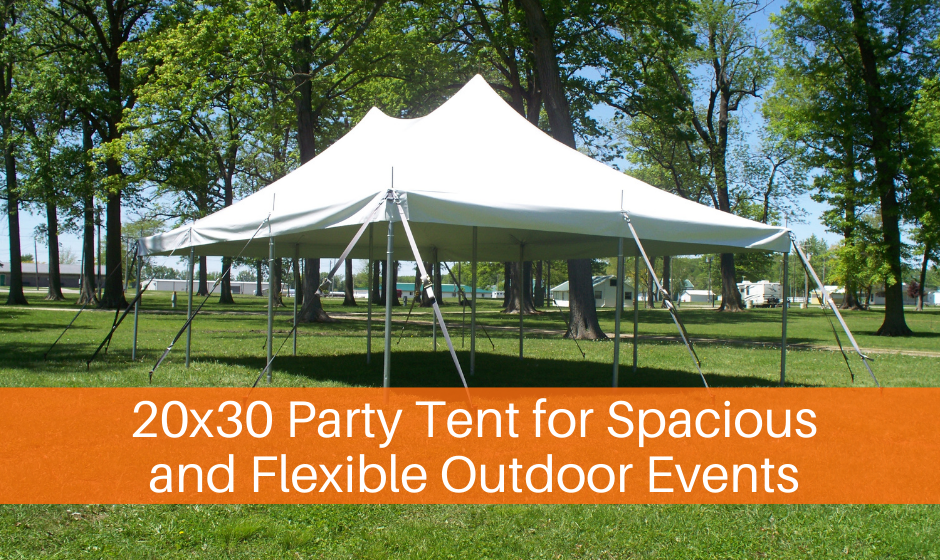
Pole tents are ideal for weddings, formal receptions, church gatherings, and community events where aesthetics matter and staking is permitted. They work best when center poles do not interfere with layouts and when the site allows proper anchoring. For mid-sized gatherings, the 20x40 configuration is a versatile choice, whereas the 20x60 configuration is better for larger guest counts. Pole tents are generally more cost-effective per square foot and take up less room in a transport truck compared to frame tents.
Frame Tents
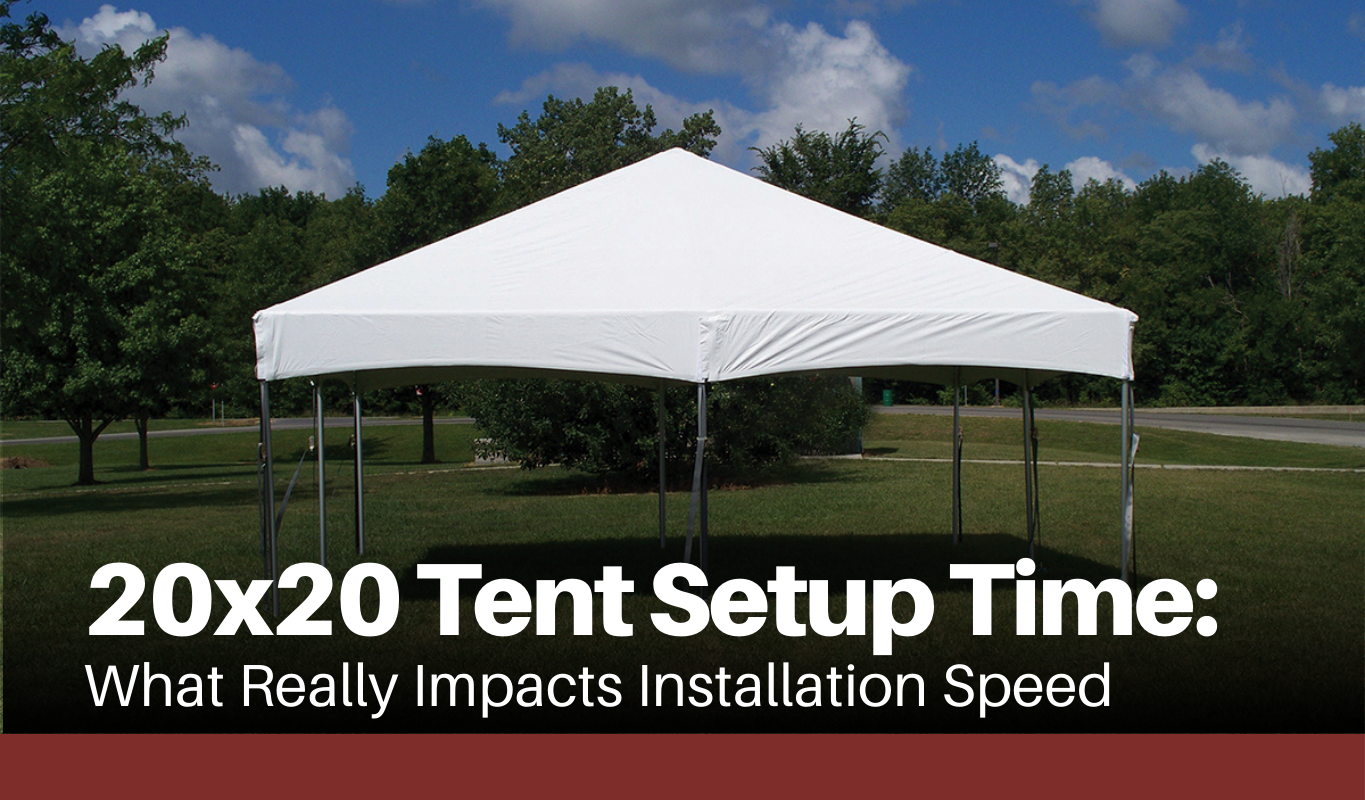
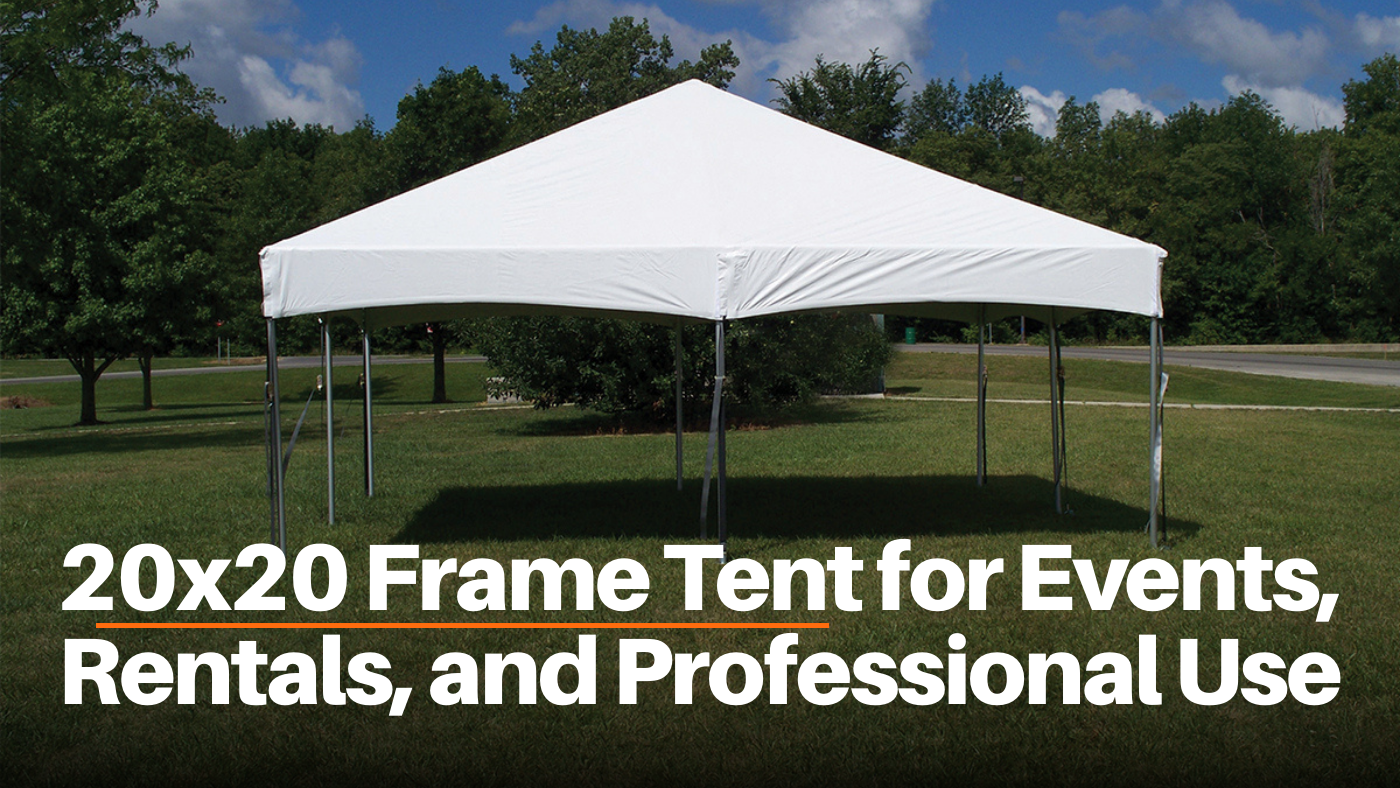
Frame tents use a rigid metal framework to support the canopy, eliminating the need for center poles. This creates a fully open interior and allows installation on a wider range of surfaces. The "clear span" environment is a massive advantage for planners who need to place stages, dance floors, or long banquet tables without navigating around poles.
Frame tents are modular and adaptable, making them a popular choice for commercial use. They can be joined together to create complex shapes or "L" configurations to fit specific venue footprints.
When to Use a Frame Tent
Frame tents are best used on hard surfaces or in locations where staking is restricted. They are commonly chosen for corporate events, trade shows, long-term installations, and layouts that require interior flexibility. Because the frame supports itself, they can also be safely weighted with concrete ballast where stakes cannot be driven into the ground.
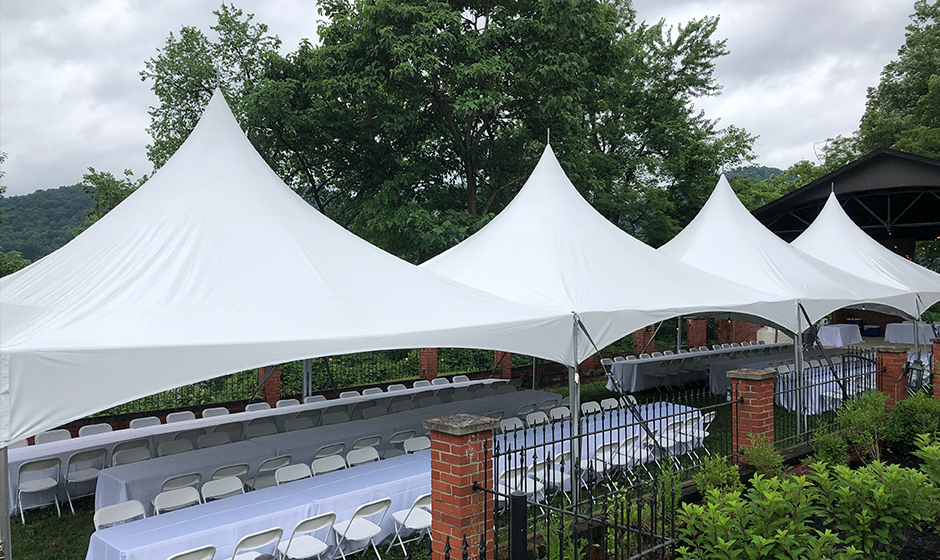
High Peak Tents
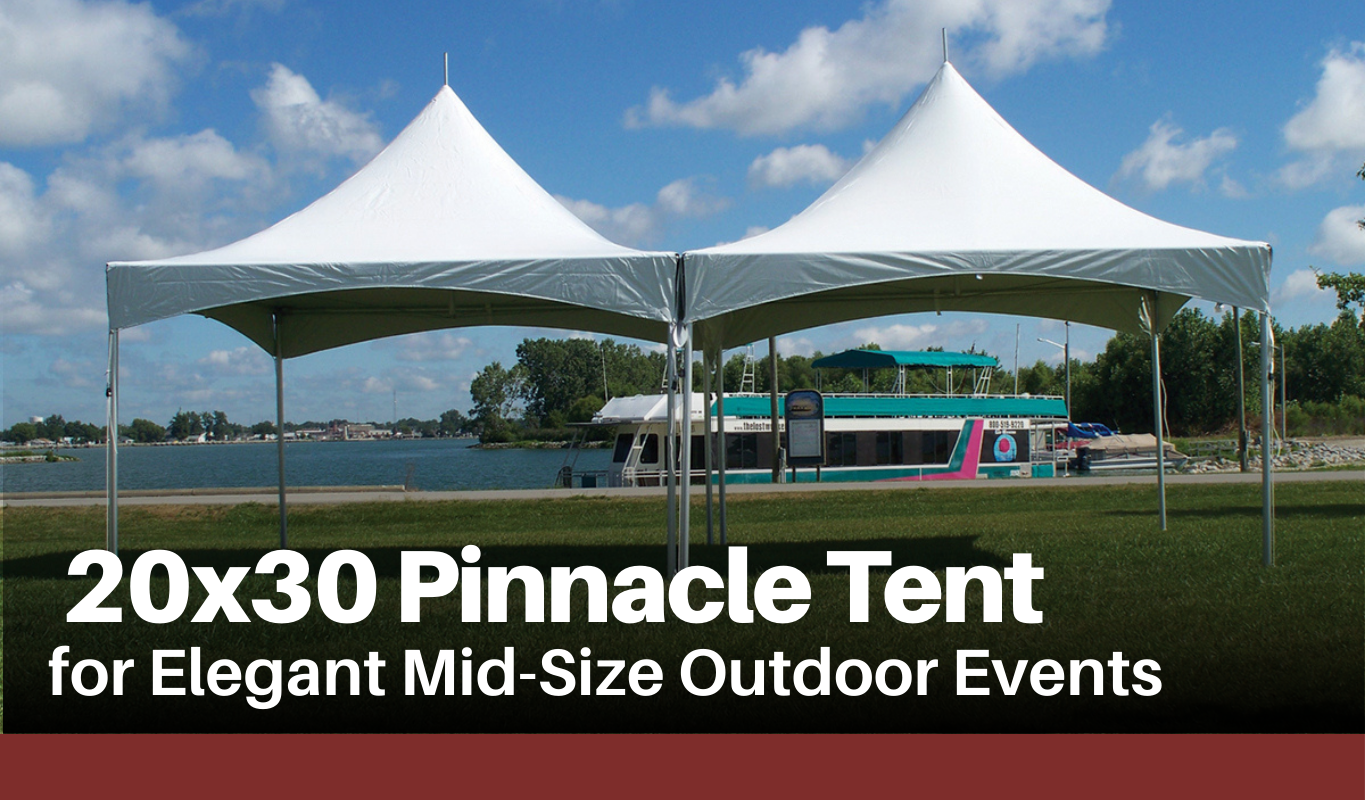
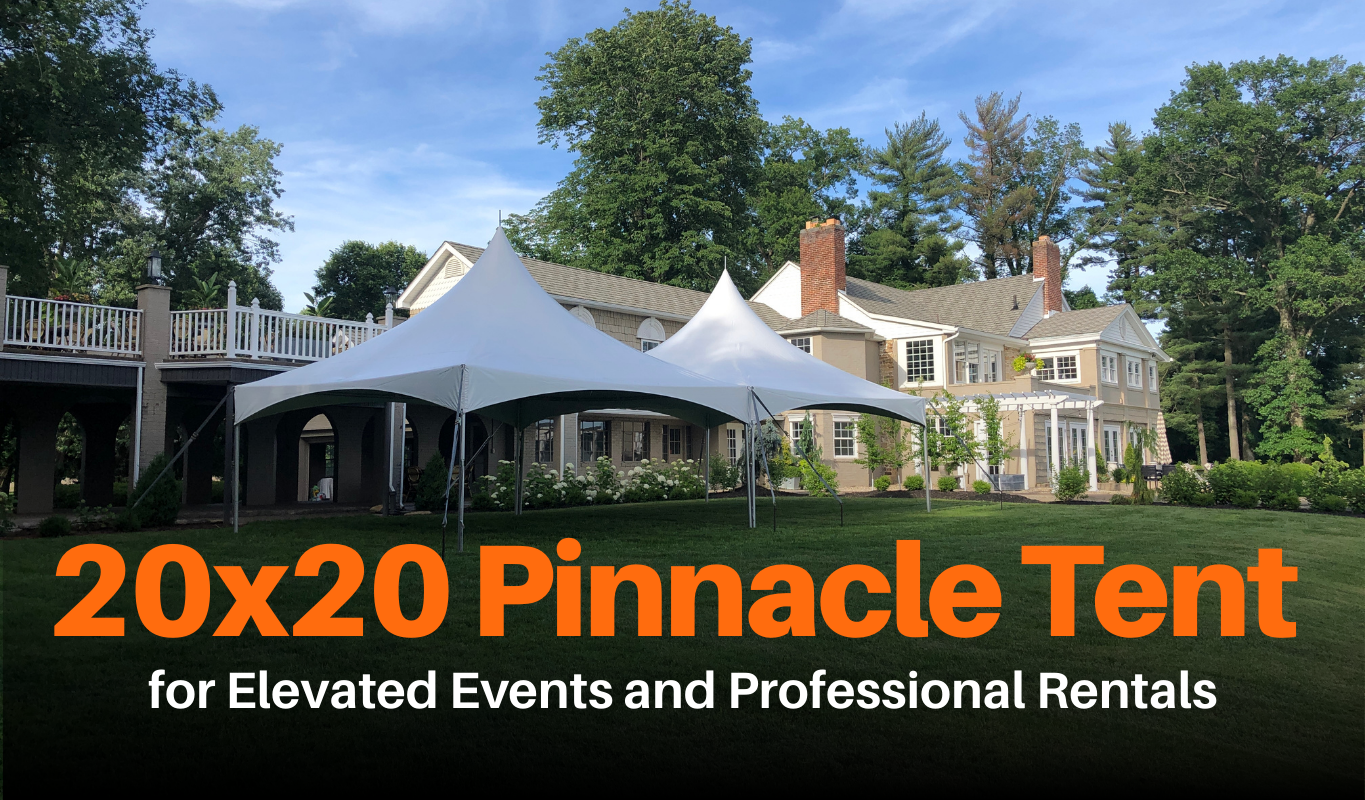
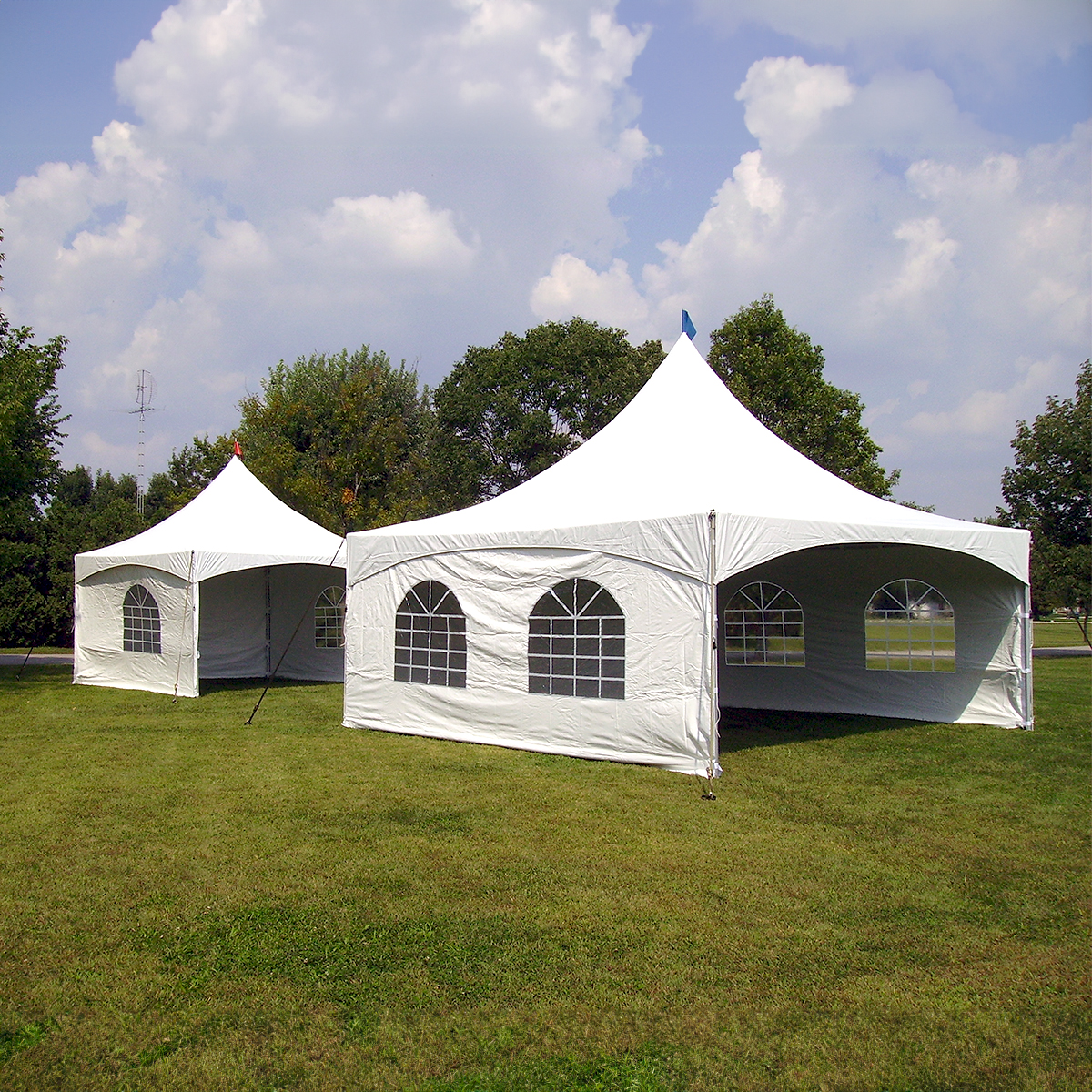
High peak tents combine the open interior of a frame tent with elevated peaks for added visual impact. They utilize a cross-cable system to support the center peak, giving you the classic "wedding look" without the intrusive center pole.
When to Use a High Peak Tent
High peak tents are ideal when presentation plays a central role. They are often used for upscale weddings, corporate gatherings, and branded events where the tent itself contributes to the experience. They are also very popular for small "vendor" footprints at festivals where the extra height makes the booth more visible from a distance.
Pop-Up and Instant Tents
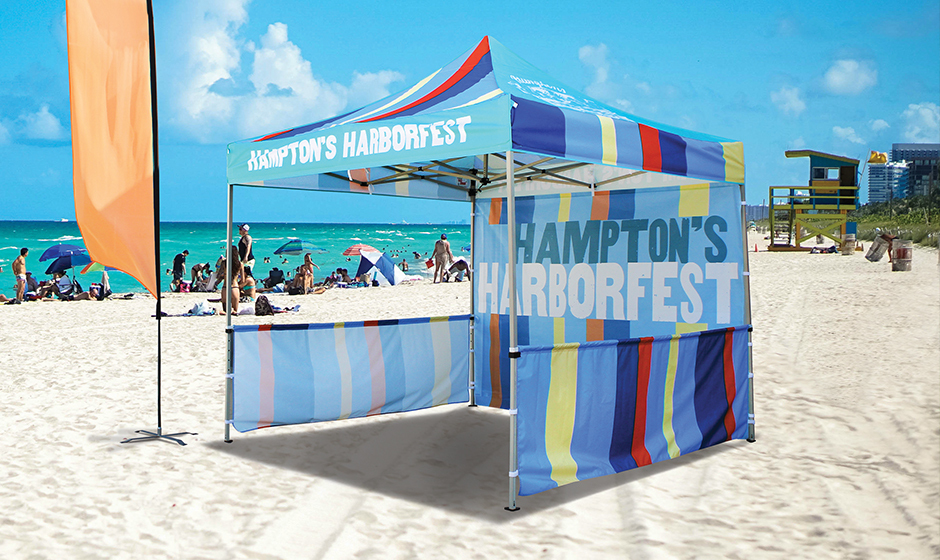
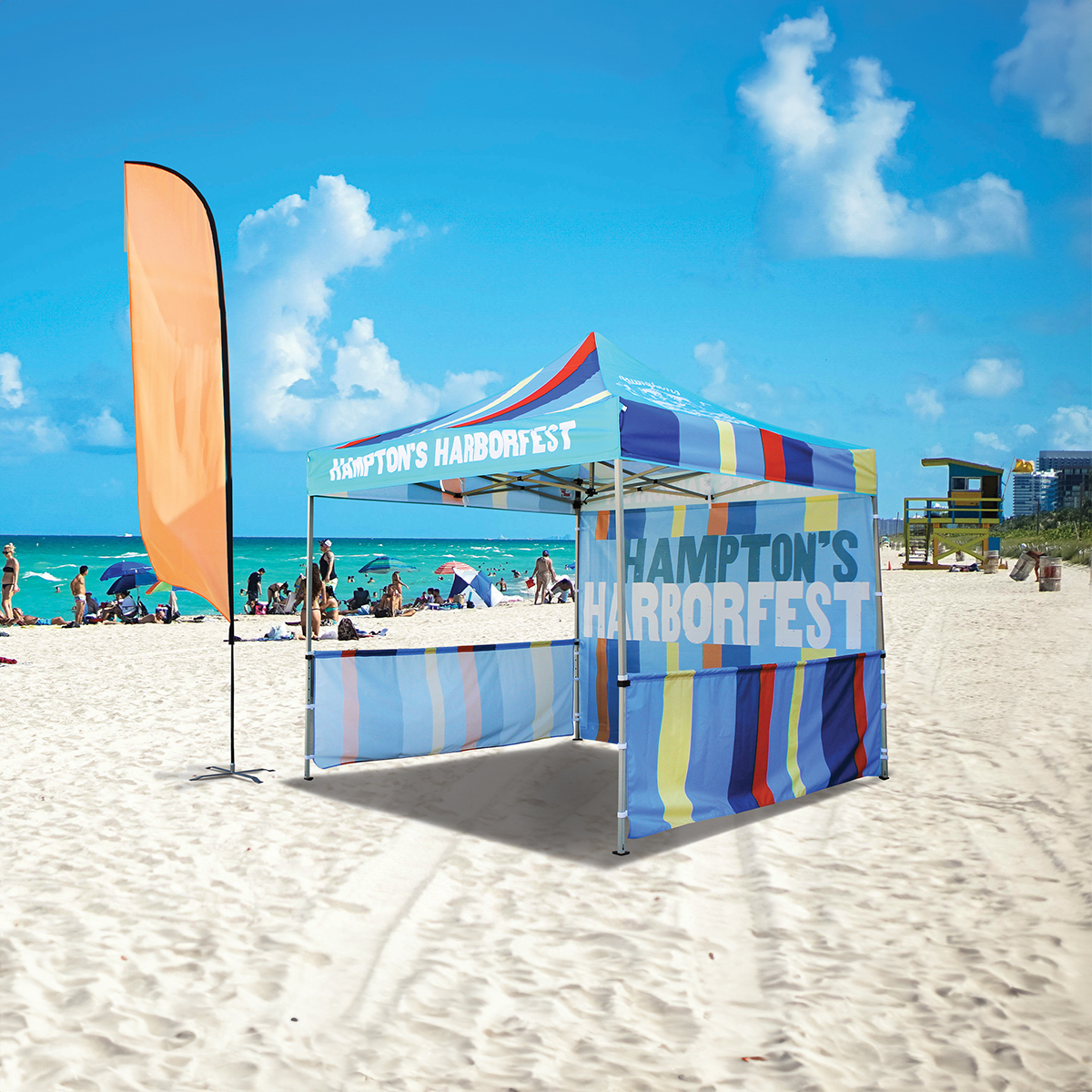
Commercial-grade pop-up tents are designed for speed and repetition. They feature reinforced frames and heavier fabric compared to consumer versions. While they are smaller than traditional event tents, they are the bread and butter of marketing activations and sports events.
When to Use a Pop-Up Tent
Pop-up tents are best for markets, trade shows, promotional events, registration areas, and short-duration activations where fast setup and teardown are essential. A commercial pop-up can be deployed by a single person in under 60 seconds.
Detailed Fabric Science: Vinyl vs. Polyester
The fabric is the most expensive part of your tent, and understanding its composition is vital for long-term ROI. In the commercial world, we deal almost exclusively with PVC-coated polyester. This is a layered material where a high-strength woven polyester "scrim" is sandwiched between layers of liquid PVC (polyvinyl chloride).
The scrim provides the tensile strength — the ability to resist stretching and tearing under wind load. The PVC layers provide the waterproof barrier, the color, and the UV protection. In a high-quality professional tent top, the PVC is infused with titanium dioxide to create a blockout effect.
Without blockout technology, a white tent acts like a frosted lightbulb. While it looks bright, the sun's energy passes through the fabric, creating a heat trap for your guests. Blockout vinyl reflects this energy, keeping the interior significantly cooler. Furthermore, "anti-wicking" technology is a treatment applied to the polyester scrim. If the vinyl coating is scratched, anti-wicking prevent the polyester from acting like a straw and soaking up dirty water, which leads to permanent internal stains that cannot be cleaned.
Structural Engineering: Aluminum Alloys and Steel
The skeleton of your tent must be both rigid and flexible. For complete tent kits, most manufacturers utilize 6061-T6 aluminum. This is the same grade of aluminum used in aircraft and bridge construction. It offers incredible strength while remaining light enough for a three-person crew to handle without heavy machinery.
Steel is often used for joint fittings (the corners and peaks) or for the heavy-duty center poles of large pole tents. While steel is stronger, it is prone to oxidation (rust). Professional-grade steel components should always be hot-dip galvanized or zinc-plated to ensure they don't leave rust stains on your expensive white vinyl during storage.
Understanding Tent Sizes and Footprints
Choosing the correct size is one of the most important buying decisions. Size affects guest comfort, layout efficiency, and safety. If a tent is too small, the event feels cramped and dangerous; if it is too large, the event can feel empty and lose its atmosphere.
Commercial tents are typically offered in standardized dimensions, allowing buyers to plan layouts consistently and scale inventory over time. You should always account for "dead space" taken up by buffet lines, bars, and AV equipment.
Space Planning and Occupancy Tables
To help you visualize your needs, we have compiled a standard occupancy table for the most popular party tents in the industry.
| Tent Size | Total Sq. Ft | Standing Crowd | Buffet Dinner | Ceremony Seating |
|---|---|---|---|---|
| 10x10 | 100 | 15 | 8 | 12 |
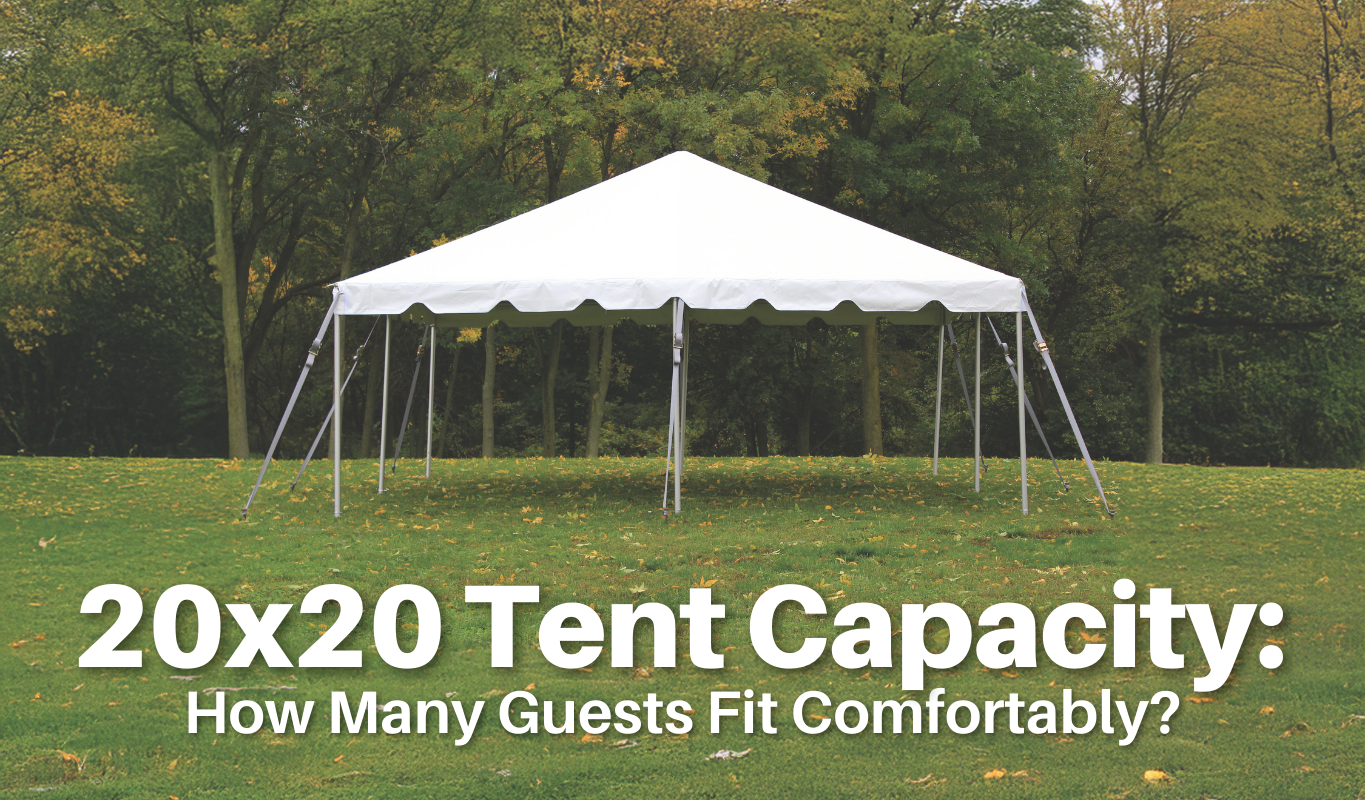
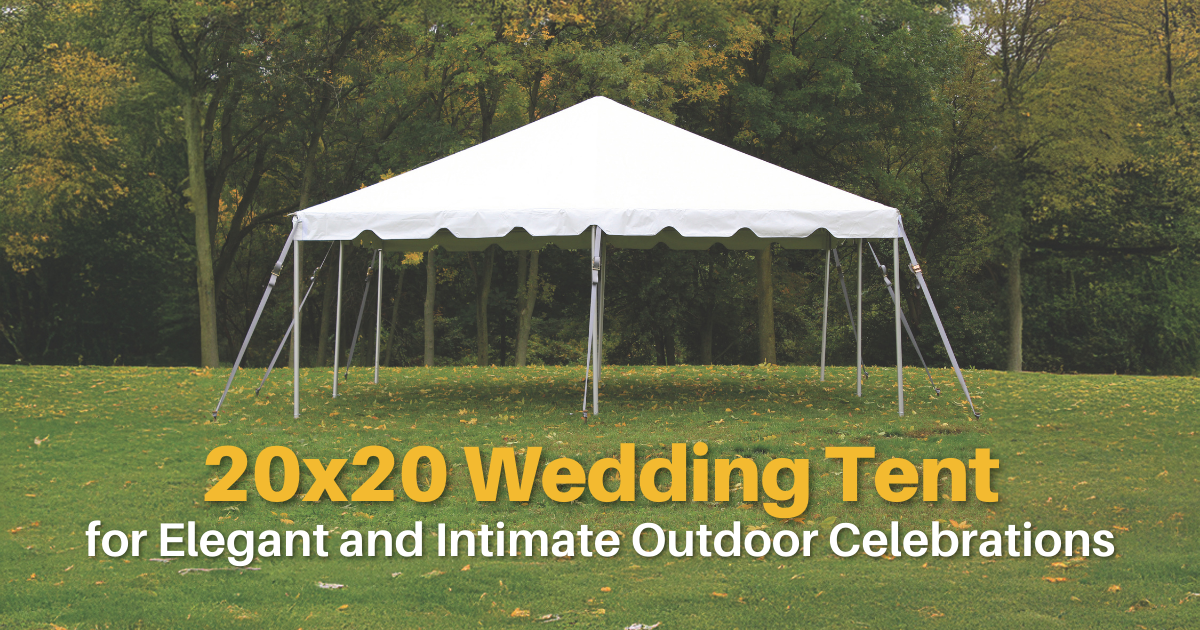
| 20x20 | 400 | 65 | 32 | 40 |
| 20x30 | 600 | 100 | 50 | 60 |
| 20x40 | 800 | 130 | 65 | 80 |
| 30x60 | 1,800 | 300 | 150 | 180 |
| 40x60 | 2,400 | 400 | 200 | 240 |
Actual capacity depends on layout, furniture, and circulation needs. A formal sit-down dinner requires significantly more space per person (approx. 12-15 sq. ft) than a standing cocktail mixer (approx. 6-8 sq. ft).
Layout Planning and Guest Flow
Commercial event tents shape how people move and interact. Poor layout leads to congestion and discomfort. Proper spacing improves flow and guest experience. You must consider where the "gravity" of the event is — usually the bar or the stage — and ensure there is enough breathing room around those areas.
Consider aisle width, service access, entry points, and buffer zones between activities. Efficient setup coordination allows events to function smoothly rather than reactively. Always leave at least 5 feet of clearance around the perimeter of the tent for anchoring lines.
Anchoring Methods and Safety
Anchoring is critical for safety. The correct method depends on surface conditions, tent type, and regulations. A tent is effectively a giant sail; even a 20x20 tent can exert thousands of pounds of lift in a 40mph gust.
Common anchoring options include heavy-duty stakes, concrete anchors, ballast systems, and hybrid solutions. Guidelines from the American Rental Association emphasize that improper anchoring is one of the most common causes of tent-related issues. If you are staking, always call 811 to have underground utilities marked before driving steel into the earth.
Video: Frame Tent Basics - Lifting, Tensioning, and Staking (via Celina Tent)
Sidewalls and Enclosures
Sidewalls extend tent functionality and adaptability. They turn a simple canopy into a weather-proof room.
| Sidewall Type | Best Use Case | Benefit |
|---|---|---|
| Solid White | Kitchen prep / Privacy | Blocks unsightly views |
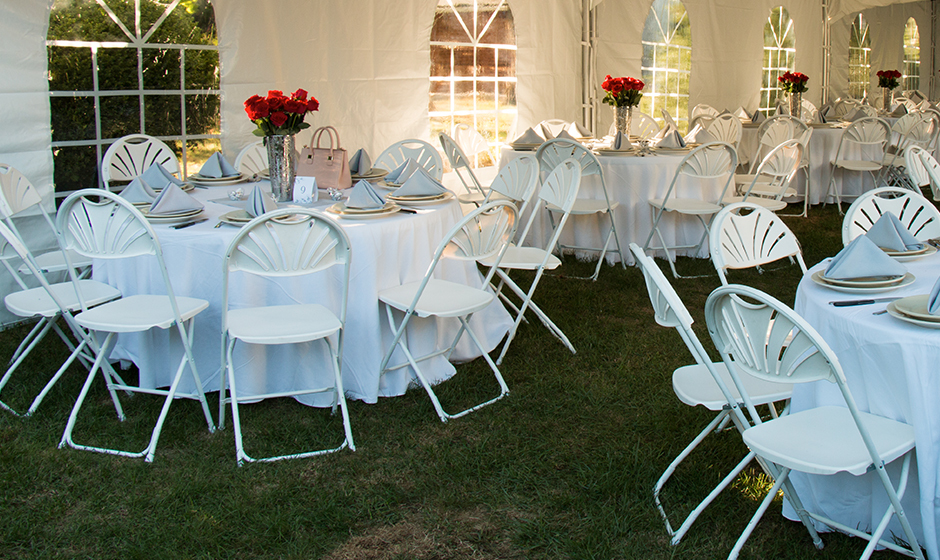
| Cathedral Window | Weddings / Galas | Allows light while looking upscale |
| Clear Vinyl | Winter Events | "Glass room" feel with maximum light |
| Mesh / Screen | Summer Festivals | Keeps bugs out while allowing airflow |
Selecting the right enclosure allows tents to adapt without structural changes, protecting guests from driving rain or harsh winds.
Accessories That Support Commercial Use
Accessories turn tents into functional spaces. They are also the highest margin items for rental companies. For many operators, the tent gets the customer in the door, but the accessories pay the bills.
Common accessories include tent liners for a formal draped look, professional lighting such as cafe strings or chandeliers, flooring, climate control, and rain gutters for joining two tents together. Compatibility and ease of installation should be considered during purchase to ensure your crew can set them up quickly.
Weather Performance and Environmental Planning
Commercial event tents must perform in varying conditions. Wind, rain, heat, and cold all affect comfort and safety. You must have an evacuation plan for any event where wind speeds are forecast to exceed the tent's rated capacity.
Proper installation, anchoring, and accessory selection play a major role in weather readiness. In high-heat environments, the "blockout" vinyl mentioned earlier can reduce interior temperatures by as much as 10-15 degrees compared to standard translucent tops.
Logistics: Transport and Crew Management
A common mistake new buyers make is forgetting how they will actually move the gear. A 20x60 frame tent system can weigh over 1,500 lbs and requires significant truck space.
When building your inventory, consider smart inventory planning to ensure you have the right vehicles for the job. You also need to train your crew on "the fold." If a vinyl top is folded incorrectly, it can create permanent creases or "crazing," where the PVC coating cracks and allows light to shine through in thin lines.
Storage, Transport, and Handling
Commercial tents are long-term investments. Proper storage, transport, and handling directly impact lifespan. Vinyl is extremely durable but can be easily damaged by "pinholing" if it is dragged across gravel or concrete.
Dry storage, correct folding, adequate transport space, and trained crews all extend usable life. Keeping a maintenance schedule ensures gear stays in top shape. Always use drop cloths during installation to keep the white vinyl pristine for the customer.
Rental Inventory vs Direct Ownership
Rental operators prioritize durability, standardization, and replacement availability. They often focus on the items that wear out fastest to keep a clean fleet. If you are a venue owner, you may prioritize a specific "look" or color scheme to match your branding.
Understanding your ownership model clarifies priorities early. Rental companies need gear that is "crew-proof," while venue owners might prioritize a more delicate, high-end aesthetic.
Revenue Potential: The Math of Tent Ownership
To understand why so many people are starting their own tent rental business, you have to look at the ROI.
If you purchase a 20x40 pole tent configuration, your investment might be around $3,500 to $5,000 depending on accessories. If the average rental rate in your area for that tent is $800 per weekend, you have paid for the asset in just six rentals. Given that a well-maintained tent lasts for years, the profit potential is staggering.
Advanced Soil Mechanics and Staking Physics
The science of keeping a tent on the ground is more complex than just "hitting a stake with a hammer." To be a professional operator, you must understand soil holding power. A stake driven into moist, sandy soil has only a fraction of the holding power of one driven into tight, compacted clay.
Commercial pole tents exert an upward lift and a lateral pull. To combat this, pros often use "double-staking" or "gang-staking," where two or more stakes are connected by a heavy-duty ratchet strap to increase the surface area of the anchor. You should also consult the Handheld Pull-Out Test (P.O.T.) guidelines to verify that your anchors will hold in specific soil types.
Fire Safety and Regulatory Compliance
Every commercial tent top should come with a permanently attached label certifying that it meets or exceeds NFPA 701: Standard Methods of Fire Tests for Flame Propagation of Textiles and Films. This is a life-safety requirement. If you are operating in California, you also need to meet CSFM (California State Fire Marshal) Title 19.
Fire marshals don't just care about the fabric; they care about the layout. You must ensure that your tent exits are clearly marked with illuminated signs and that there is a clear path of egress. In many jurisdictions, any tent over 400 square feet requires a specific permit and an inspection by the local fire department before the public is allowed inside.
Video: Flame Specifications Explained - NFPA 701, CPAI 84, and ASTM Standards
Managing Long-Term Material Degradation
Even the best commercial vinyl has a shelf life. Over time, the plasticizers in the PVC begin to migrate to the surface. This is what causes old vinyl to feel "sticky" or "tacky." Once this happens, the vinyl becomes brittle and is much more likely to crack or tear under stress.
To prevent premature degradation, avoid using harsh chemicals like bleach to clean your tops. Bleach strips away the UV protective layer. Instead, use specialized vinyl cleaners and conditioners. If you notice "crazing" — small spiderweb-like cracks in the blockout layer — it’s a sign that the fabric is reaching the end of its structural life and should be demoted to "B-grade" inventory or replaced entirely.
The Environmental Impact of Commercial Tents
In today's market, sustainability is becoming a selling point. Commercial tents are inherently more sustainable than "single-use" structures, but the manufacturing of PVC does have an environmental footprint. Look for manufacturers that utilize sustainable practices or offer recycling programs for old vinyl.
Additionally, using a tent for an event significantly reduces the environmental load compared to a traditional building. Tents require less energy to heat and cool, and they leave almost no permanent trace on the land once they are removed. This "leave no trace" philosophy is a major advantage when working in protected parks or historic sites.
Advanced Inventory Software and Tracking
As your inventory grows, you can no longer manage it with a spreadsheet. Professional rental operations utilize specialized software like Goodshuffle Pro or Point of Rental. These systems allow you to track the location of every pole, stake, and sidewall in real-time.
They also help with "conflict management," ensuring you don't rent the same 20x40 tent to two different customers on the same weekend. More importantly, they track the "utilization rate" of your gear, helping you identify which sizes are your biggest moneymakers and which are just sitting in the warehouse taking up space.
Labor Efficiency: The Hidden Cost of Tents
Your biggest ongoing expense isn't the tent itself; it's the labor required to set it up. A poorly designed tent system that requires an extra two hours to install can eat your profit margins over a single season.
Look for frame systems with "snap-button" or "pin-less" connections that allow your crew to move faster. Invest in power equipment like stake drivers and tent jacks to reduce the physical toll on your team. A happy, efficient crew is the secret to a scalable and profitable business.
Engineering for Snow Loads and Permanent Structures
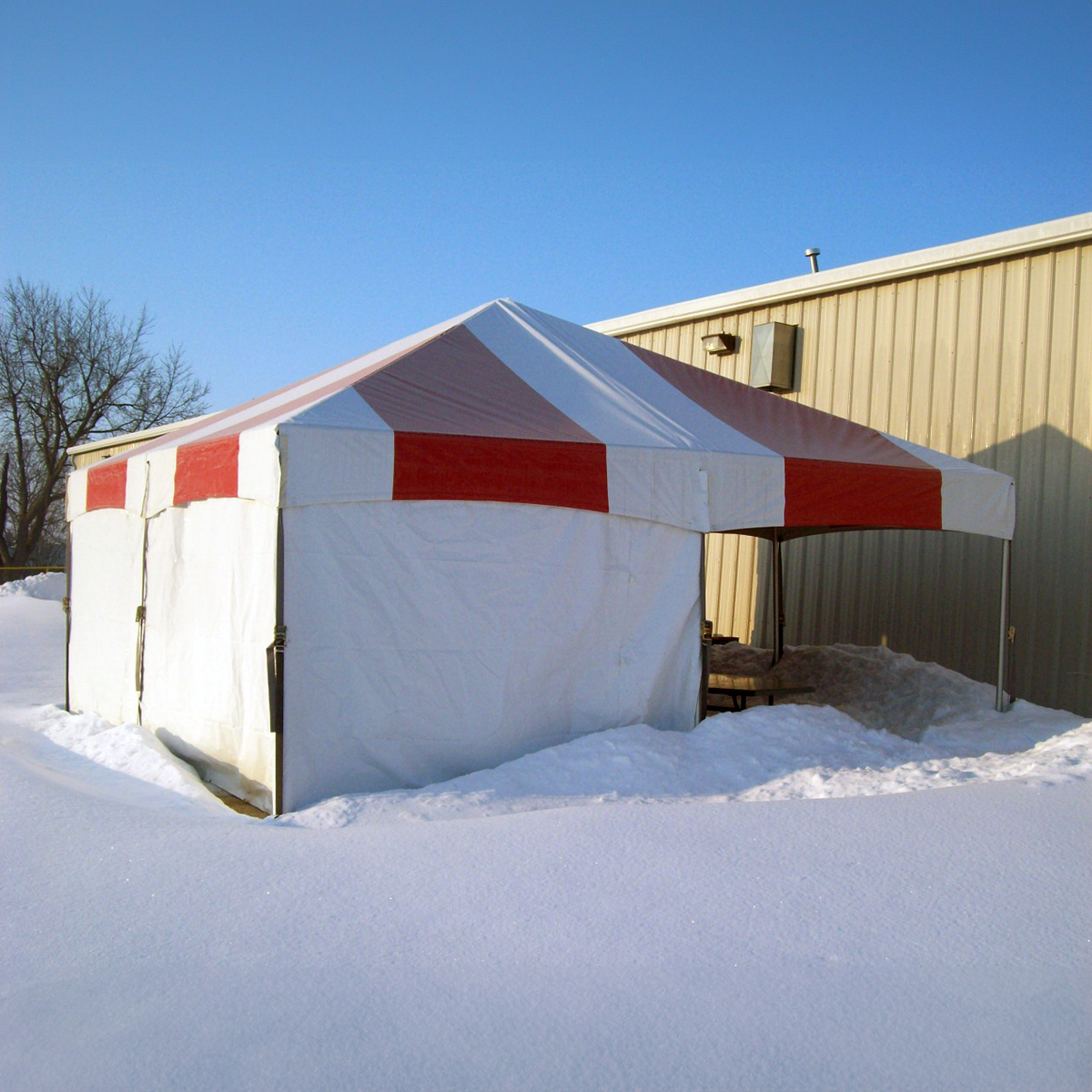
Most commercial tents are "temporary structures" not designed for snow. However, if you are looking for a semi-permanent solution for a restaurant or a warehouse, you must look into Heavy-Duty Clear Span Structures. These are engineered with much larger aluminum profiles and are capable of meeting specific building codes for snow and sustained wind.
These structures are significantly more expensive and often require a permanent foundation, but they bridge the gap between a tent and a traditional building. If you are in a northern climate, never allow snow to accumulate on a standard event tent; the weight of just 2 inches of wet snow can cause a catastrophic structural failure.
The Future of Tent Technology: Automation and IoT
The industry is currently seeing a shift toward "smart tents." Some high-end clear span structures are being equipped with sensors that monitor wind speed and tension in real-time, sending an alert to the owner's phone if a stake begins to pull or if wind speeds exceed safe limits.
We are also seeing advancements in "self-cleaning" coatings (hydrophobic layers) that shed water and dirt more effectively, reducing the labor required for cleaning. While these technologies are currently expensive, they represent the future of the professional event industry.
Total Cost of Ownership (TCO) Case Study
Let's look at a 5-year TCO for a premium 20x20 frame tent.
Initial Purchase: $2,800
Cleaning Supplies/Labor (5 years): $1,200
Minor Repairs/Patching: $300
Replacement Parts (Pins/Ratchets): $400
Total Investment: $4,700
Revenue Potential: At $400 per rental, 15 rentals per year.
5-Year Gross Revenue: $30,000
Net Profit per Tent: $25,300
This case study shows that while the initial $2,800 feels high compared to a $400 "pop-up," the commercial asset is a profit center that sustains a business.
Common Buying Mistakes to Avoid
Common mistakes include underestimating size needs, ignoring anchoring requirements, choosing non-standard systems that don't allow for replacement parts, and prioritizing appearance over performance. Many buyers forget to factor in the cost of transport and specialized labor.
Avoiding these pitfalls saves time, money, and stress. Always buy from a reputable manufacturer who offers technical support and documentation for fire marshals and building inspectors. Ensure you have a strategy for handling inventory wear and tear before your first big event.
Final Considerations
Commercial event tents are tools designed for real-world demands. Buyers who prioritize structure, compatibility, and planning make decisions that pay off season after season. Whether you are building an empire or hosting the event of a lifetime, your tent is the foundation of your success. Ensure you are following a strict pre-season checklist to keep your assets in peak condition.
Ready to Scale Your Rental Inventory?
Don't settle for consumer-grade equipment. Invest in engineered structures that offer real ROI and professional reliability.
Shop Commercial Tent Kits NowStandardized Parts | Fire Rated | Fast Shipping
Frequently Asked Questions
How long does a commercial tent top typically last with regular use?
A well-maintained commercial vinyl top can last between 5 to 10 years depending on the environmental exposure and frequency of use. Professional 16oz blockout vinyl is highly resistant to UV rays and tearing, but lifespan is heavily influenced by how the fabric is cleaned, folded, and stored. Using specialized vinyl cleaners and avoiding harsh chemicals like bleach will preserve the protective coatings and prevent the material from becoming brittle over time.
Can I safely install a commercial tent on asphalt or concrete without stakes?
Yes, frame tents are specifically designed for installation on hard surfaces where driving steel stakes into the ground is impossible or restricted. In these scenarios, you must use a certified ballast system, such as concrete weights or water barrels, to provide the necessary downward force to counteract wind lift. It is vital to consult wind load charts and professional anchoring guidelines to ensure you have sufficient weight to meet safety regulations for temporary structures.
Are all commercial tents required to be fire-resistant for public gatherings?
In almost every jurisdiction, any temporary structure used for public events must meet NFPA 701 or CSFM Title 19 standards for flame propagation. Commercial-grade tent tops come with a permanently attached fire tag that provides this documentation for local fire marshals and building inspectors during site visits. Using a non-certified tent for a public event can lead to liability issues, insurance denial, and the immediate closure of the event by local authorities.
What is the benefit of choosing blockout vinyl over standard translucent fabric?
Blockout vinyl contains an internal opaque layer that completely stops sunlight from passing through the fabric, which helps maintain a much cooler interior temperature during hot summer days. Beyond climate control, blockout fabric also hides the shadows cast by trees or structural components on the roof, providing a cleaner and more professional aesthetic for photos. This is the industry standard for high-end weddings and corporate events where guest comfort and visual presentation are top priorities.
Why is standardization important when building a rental inventory?
Investing in standardized tent systems ensures that your components—such as frame pipes, fittings, and sidewalls—are cross-compatible across your entire fleet, which simplifies logistics and training for your crew. When parts are interchangeable, you can easily repair damaged sections or scale up your configurations without needing unique, one-off hardware that complicates inventory management. This approach also guarantees that you can source replacement parts years later, protecting the long-term ROI of your initial capital investment.