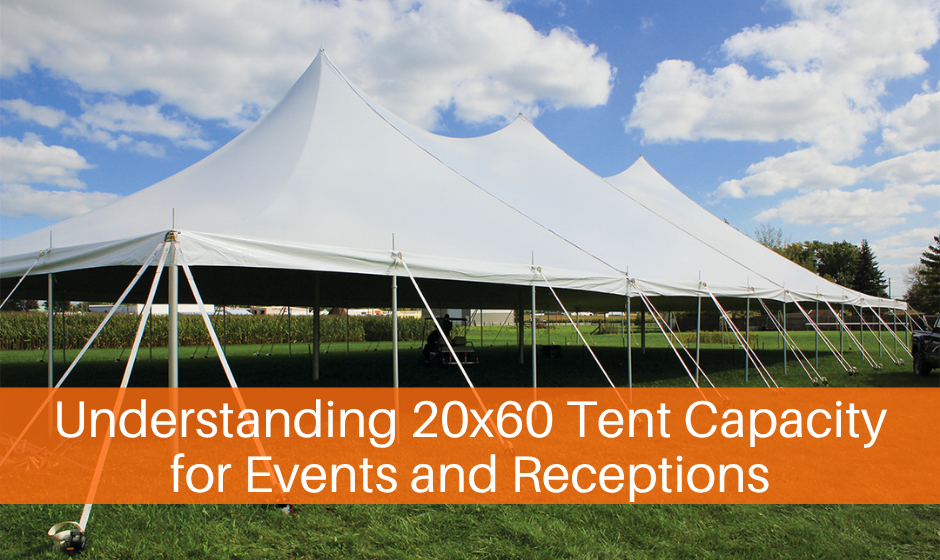




Understanding 20x60 Tent Capacity for Events and Receptions
When planning an outdoor event, one of the first practical questions is simple: how many people will actually fit?
Understanding 20x60 tent capacity helps you make confident decisions about guest lists, table layouts, and overall flow. With 1,200 square feet of covered space, a 20x60 tent offers more flexibility than smaller backyard options while still fitting comfortably in residential properties and mid-size venues.
But capacity is not just about square footage. It depends on how the tent is used — seated dinner, cocktail-style reception, corporate event, or dance-focused celebration. The layout choices you make directly influence how spacious or crowded the event feels.
Let’s break it down in a practical way so you can plan with clarity.
What 1,200 Square Feet Really Means
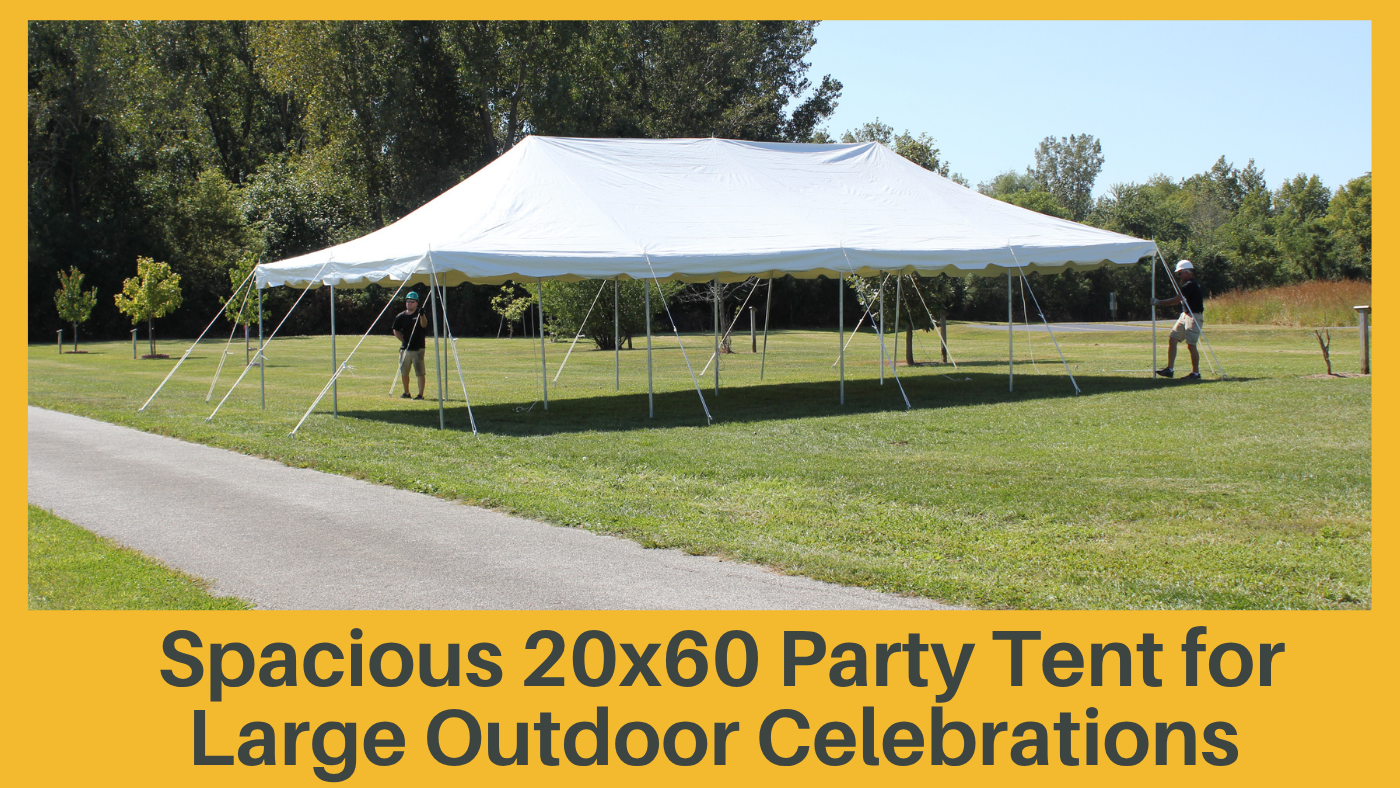
A 20x60 tent gives you 20 feet of width and 60 feet of length. That long rectangular footprint matters more than most people realize.
The 20-foot width typically allows for two rows of round tables with a center aisle, or banquet tables arranged lengthwise with efficient spacing. The 60-foot length allows the tent to be divided naturally into zones — dining toward one end, dancing toward the other, and buffet or bar service along the perimeter.
When laid out thoughtfully, the space feels structured rather than crowded. While 1,200 square feet may not sound enormous, smart layout design makes it feel surprisingly capable.
Seated Dinner Capacity
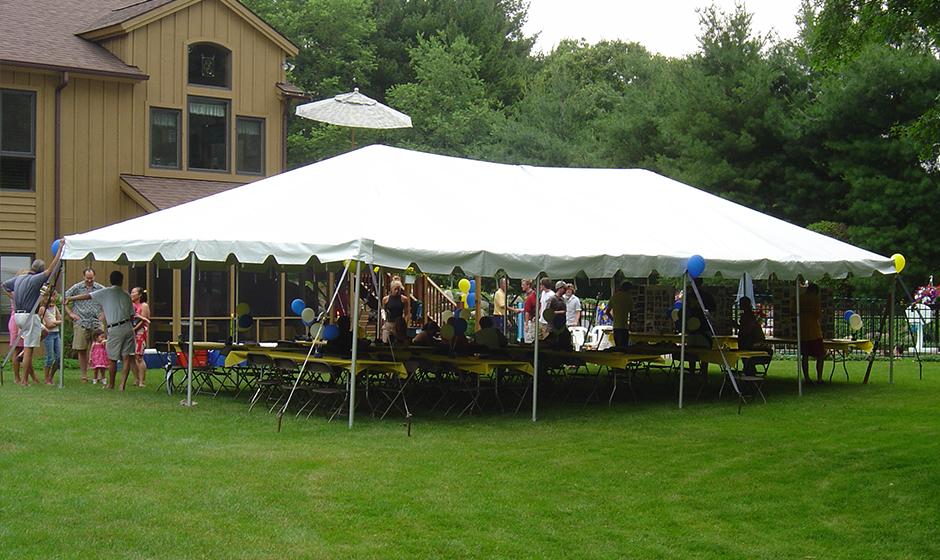
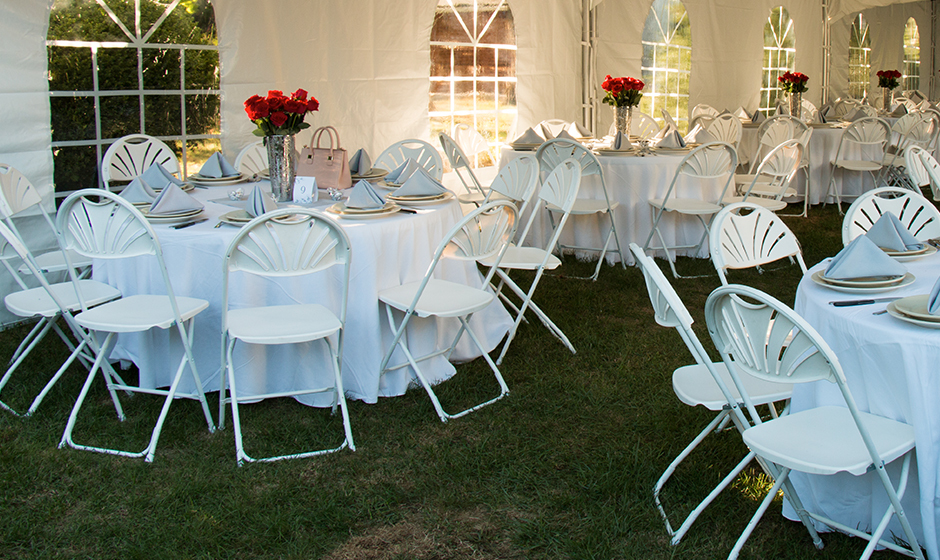
For traditional seated events with round tables, 20x60 tent capacity generally supports 100 to 120 guests depending on spacing.
In real-world event planning, most organizers find that 100 to 110 guests feels most comfortable if you want proper aisle space, room for servers, and space for décor elements such as floral installations or a sweetheart table.
While it is technically possible to push beyond 120 seats, doing so begins to reduce circulation space. Guests may feel closer together than intended, and vendor movement becomes tighter.
For weddings and formal dinners, comfort almost always outweighs squeezing in extra chairs.
Banquet-Style Seating Capacity
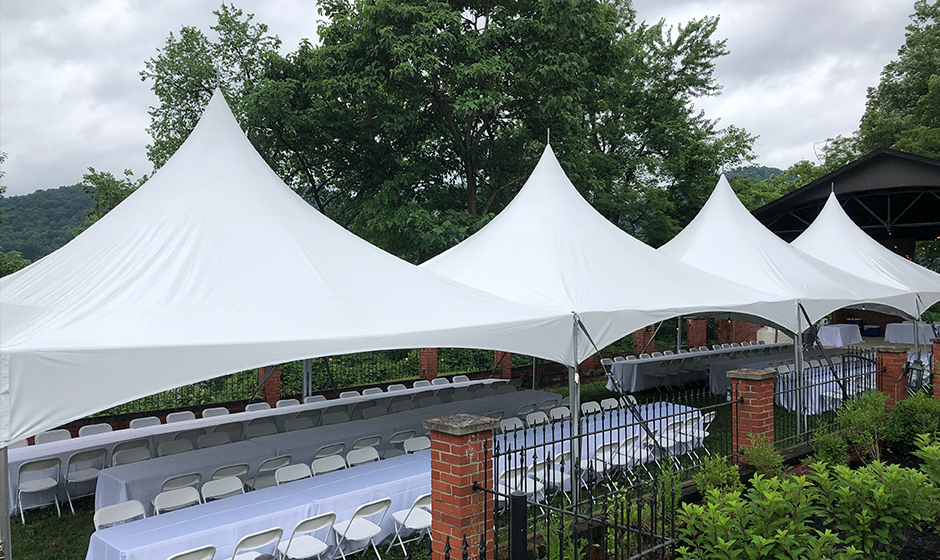
Switching from round tables to rectangular banquet tables increases efficiency slightly. Banquet tables align lengthwise, minimizing unused gaps between seating clusters.
In this configuration, a 20x60 tent can often support 120 to 140 guests.
This style works particularly well for graduation parties, corporate dinners, community events, and more casual receptions. However, banquet seating can limit central dance floor placement unless one end of the tent is reserved exclusively for dancing.
Cocktail-Style Capacity
Standing events dramatically increase capacity. Without full dining tables occupying space, guests require less square footage per person.
In a cocktail-style layout, a 20x60 tent can accommodate approximately 150 to 180 guests.
High-top tables can be positioned along the perimeter while the center remains open for circulation. This layout works well for networking events, fundraisers, anniversary celebrations, and open-house formats.
The atmosphere becomes energetic and fluid rather than seated and structured.
How a Dance Floor Changes Capacity
Dance floors are one of the biggest variables affecting 20x60 tent capacity.
A 12x12 dance floor occupies 144 square feet. A 15x15 dance floor uses 225 square feet. In a 1,200-square-foot tent, that represents a meaningful portion of usable space.
When adding a dance floor to a seated layout, comfortable capacity often adjusts to around 90 to 110 guests depending on placement.
If dancing is central to the celebration, plan capacity around the dance floor rather than trying to compress tables around it. Energy needs space.
Buffet, Bar, and Catering Space
Food service areas require their own footprint. A buffet table can require 6 to 8 feet of length plus surrounding clearance. A bar area may require 8 to 12 feet depending on configuration.
If you dedicate 10 to 12 feet of tent length to catering, your effective seating area becomes closer to 20x48 or 20x50. That adjustment can shift comfortable seated capacity closer to 90 to 105 guests.
Ignoring catering space during planning often leads to tighter layouts than expected. It is always better to subtract service space early in the design process.
Pole Tent vs Frame Tent and Capacity Impact
Tent structure also influences usable space.
Pole Tent Capacity
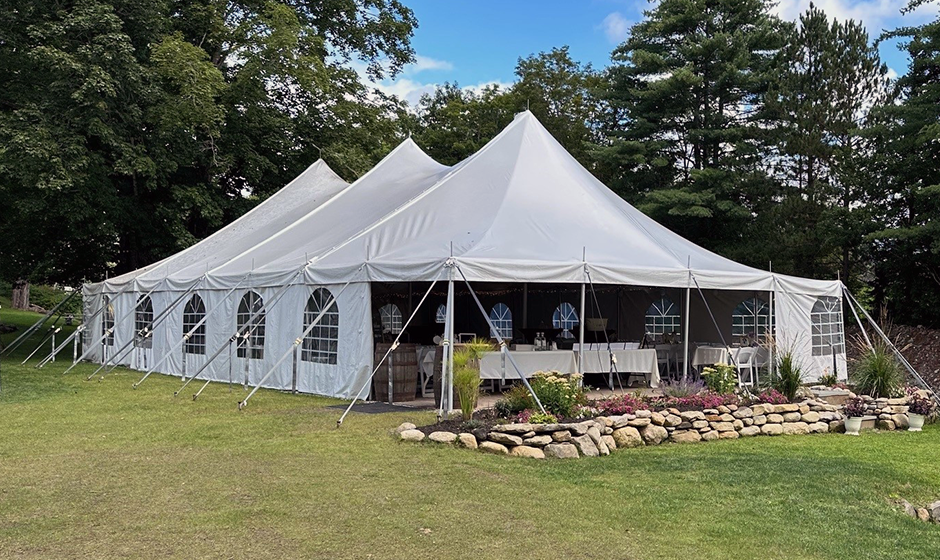
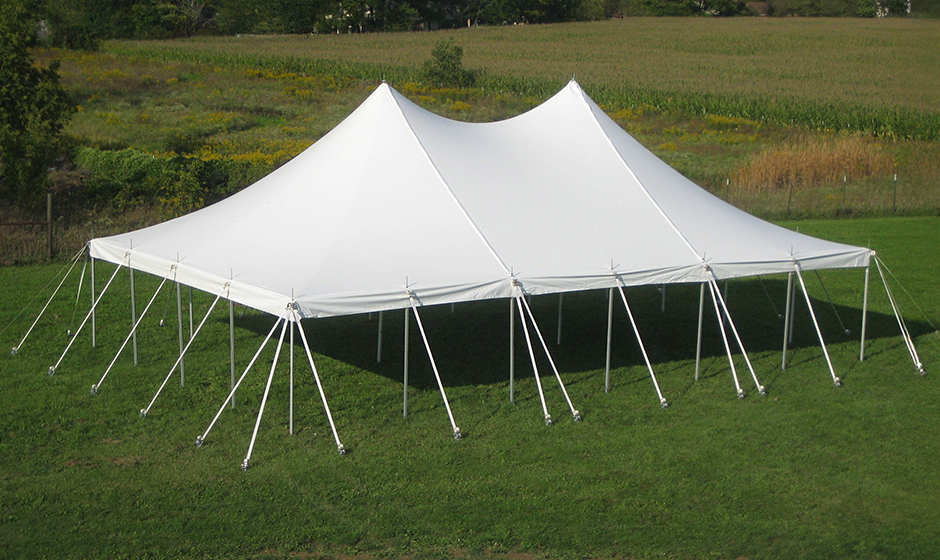
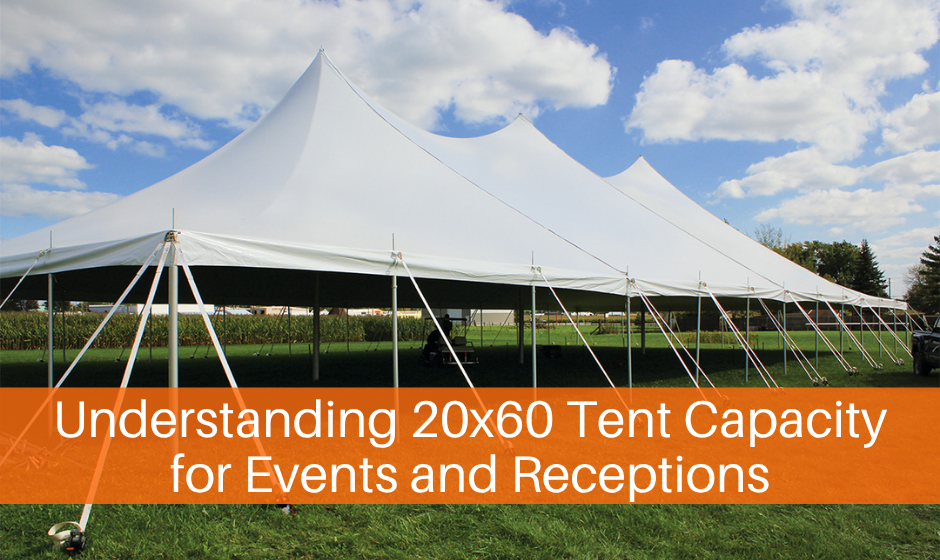
Pole tents typically include two center poles along the length in a 20x60 configuration. These poles do not drastically reduce capacity, but they require intentional table placement.
Many planners position tables around the poles rather than directly in front of them. With thoughtful arrangement, the impact is minimal.
Frame Tent Capacity
Frame tents eliminate interior poles entirely, providing an open floor plan. This slightly increases layout flexibility and makes it easier to maximize usable space.
If maximizing 20x60 tent capacity is a priority, a frame tent offers a small but noticeable advantage in design freedom.
Comfort Capacity vs Maximum Capacity
There is a difference between maximum occupancy and comfortable occupancy.
While it may be technically possible to seat 120 or more guests or host 180 standing, the overall event experience depends on aisle width, table spacing, and circulation flow.
For formal weddings and corporate functions, planners typically aim below maximum capacity to maintain elegance and ease. For casual celebrations, pushing toward the upper range may feel acceptable.
Guests rarely notice extra space, but they always notice crowding.
How 20x60 Compares to Other Tent Sizes
Understanding relative scale helps with planning.
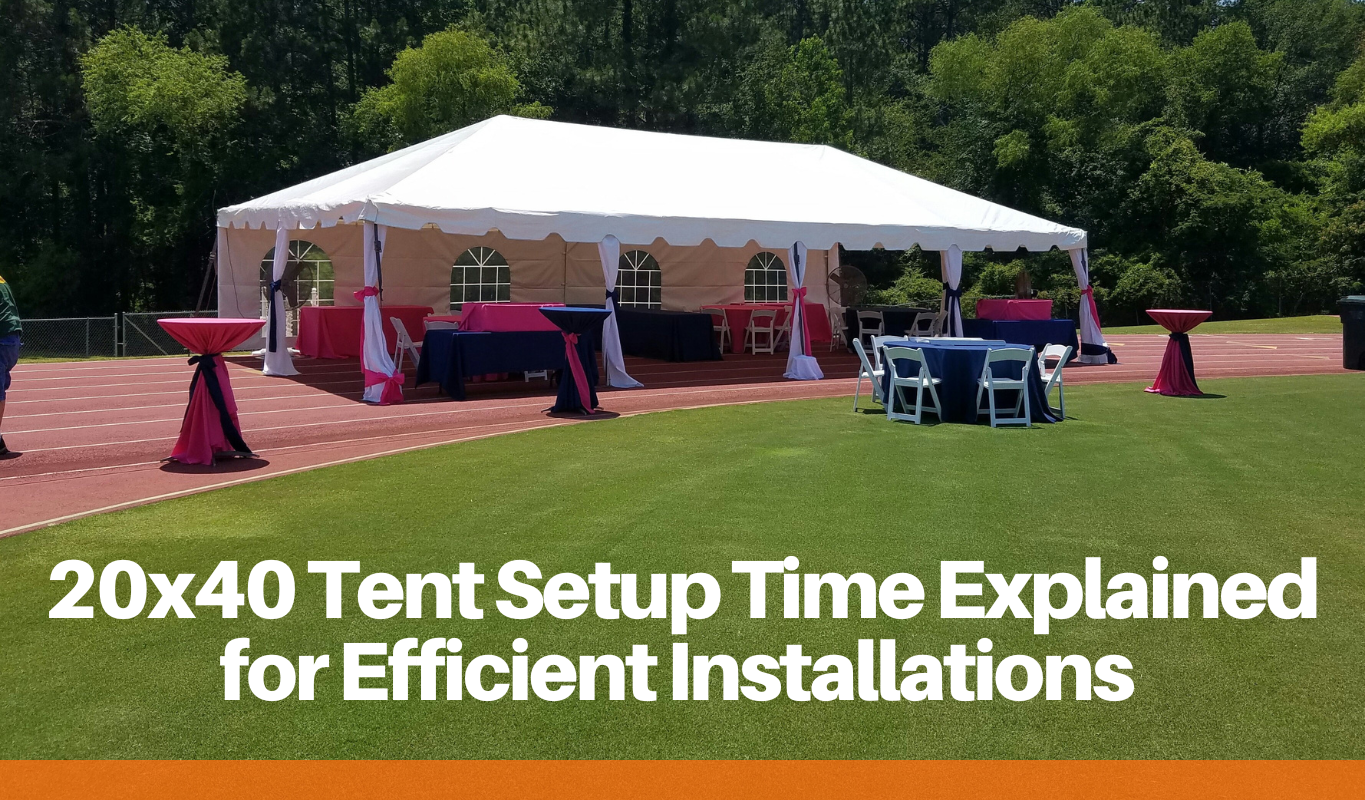
A 20x40 tent generally supports 80 to 100 seated guests. A 30x60 tent supports 150 to 180 seated guests. A 40x60 tent supports 180 to 220 seated guests.
The 20x60 tent sits comfortably in the mid-range. It is often selected when guest counts exceed 90 but available yard width does not allow for a 30-foot-wide structure.
Choosing the Right Capacity for Your Event
Start with your projected guest list. Then factor in dancing, catering, lounge seating, and décor installations.
Every additional element slightly reduces practical seating. Planning slightly under maximum capacity creates a smoother, more enjoyable experience.
The goal is not simply fitting guests inside the tent. The goal is creating space where guests can move comfortably and celebrate fully.
Final Thoughts
A 20x60 tent capacity typically supports 100 to 120 seated guests, 120 to 140 banquet-style guests, or 150 to 180 cocktail-style guests.
The exact number depends on layout design, service space, and whether a dance floor is included. At 1,200 square feet, this tent size provides flexibility without overwhelming a property.
When planned thoughtfully, it strikes the right balance between capacity and comfort.
Plan Your Guest Count with Confidence
Explore durable 20x60 tent options designed to maximize capacity, flexibility, and event comfort.
View 20x60 Tent OptionsFlexible Layouts | Professional Installation | Event-Ready Performance
FAQ
How many people fit in a 20x60 tent for a wedding?
A 20x60 tent typically accommodates 100 to 120 seated guests for a wedding, depending on table layout and dance floor size.
Can a 20x60 tent hold 150 guests?
Yes, usually in a cocktail-style or standing layout. For seated dinners, comfortable capacity is typically lower.
Does adding a dance floor reduce tent capacity?
Yes. A dance floor uses usable square footage and may reduce seated capacity by 10 to 20 guests depending on its size.
Is banquet seating more efficient than round tables?
Banquet seating often allows slightly higher guest counts because it uses space more efficiently, though it changes the event aesthetic.
Is a 20x60 tent large enough for a reception?
For guest counts around 100 to 110 with dining and dancing, a 20x60 tent is often an excellent fit.