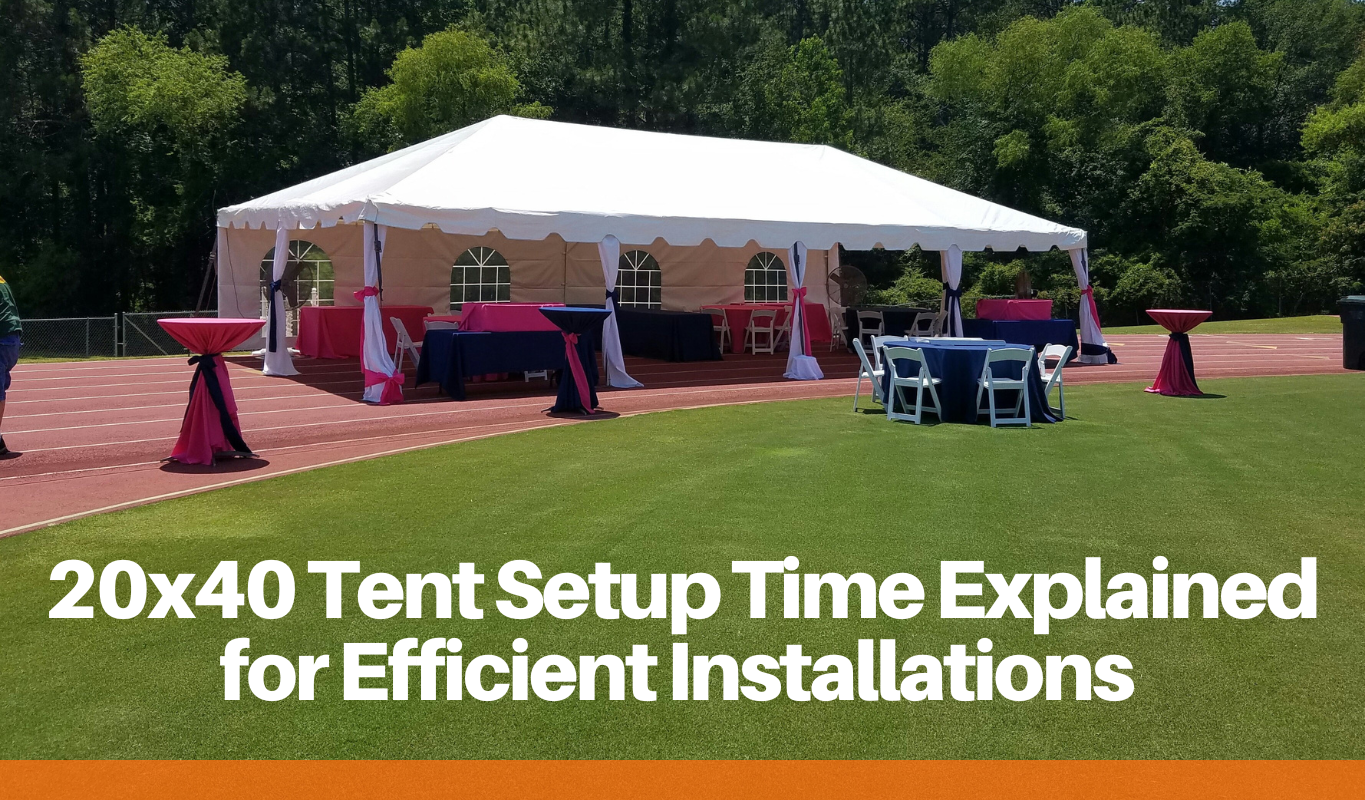





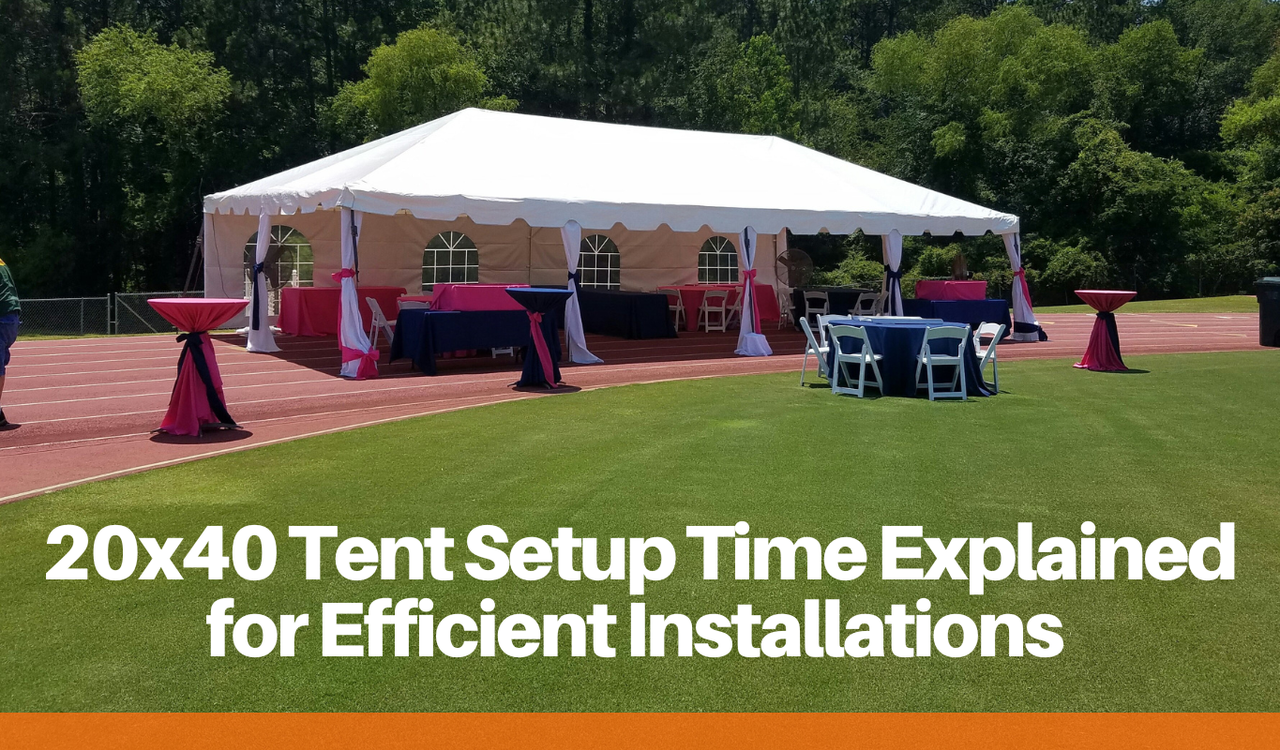
20x40 Tent Setup Time Explained for Efficient Installations
If you’re planning an outdoor event, one of the most practical questions you’ll ask is simple: how long will this actually take?
Understanding 20x40 tent setup time helps you plan vendor arrivals, décor installs, catering prep, and guest flow without feeling rushed. A 20x40 tent gives you 800 square feet of coverage — a comfortable size for weddings, graduation parties, corporate events, and mid-sized receptions. But setup time isn’t just about square footage. It depends on how the tent is built, where it’s going, and what’s going inside it.
The good news is that a 20x40 is large enough to feel substantial, but still manageable in terms of installation. With the right crew and preparation, it comes together efficiently.
What’s the Average 20x40 Tent Setup Time?
In normal conditions, a professional crew can install a 20x40 tent in about 1.5 to 3 hours.
That estimate covers the structure itself — raising the frame or poles, attaching the top, securing it properly, and anchoring it safely. When people see it happen, they’re often surprised at how quickly the framework takes shape.
Where timelines stretch is everything around the tent. Add flooring, lighting, sidewalls, or detailed décor, and you’re no longer just installing a structure — you’re building a fully functional event environment.
What Actually Affects Setup Time?
It’s rarely just the tent size that determines installation time. Conditions matter more than dimensions.
The Ground Makes a Big Difference
Grass or soil installations are usually the most straightforward. Stakes go into the ground, tension is set, and the structure stabilizes quickly.
Concrete or asphalt changes the process. Instead of staking, crews must position weighted ballast systems. That requires more equipment, more alignment, and more time.
If the surface is uneven, leveling comes first. It may not be the most visible part of the job, but it’s one of the most important. A stable footprint ensures everything above it performs the way it should.
Crew Size and Experience
A coordinated team of four experienced installers moves differently than two helpers figuring things out step by step.
You see the difference in alignment, lifting rhythm, and tension adjustments. A 20x40 isn’t overly complex, but efficiency comes from familiarity. Crews who have done this hundreds of times simply anticipate the next move.
Weather Always Plays a Role
Wind changes the pace immediately. Even light gusts require extra control when lifting vinyl overhead.
Rain makes surfaces slick and tent tops heavier. Extreme heat requires scheduled hydration breaks for safety.
Speed never overrides stability. A cautious pace in difficult weather is part of professional installation.
Pole Tent vs Frame Tent: Is One Faster?
Both styles are common for a 20x40, and each has a slightly different installation rhythm.
Pole Tent Installation
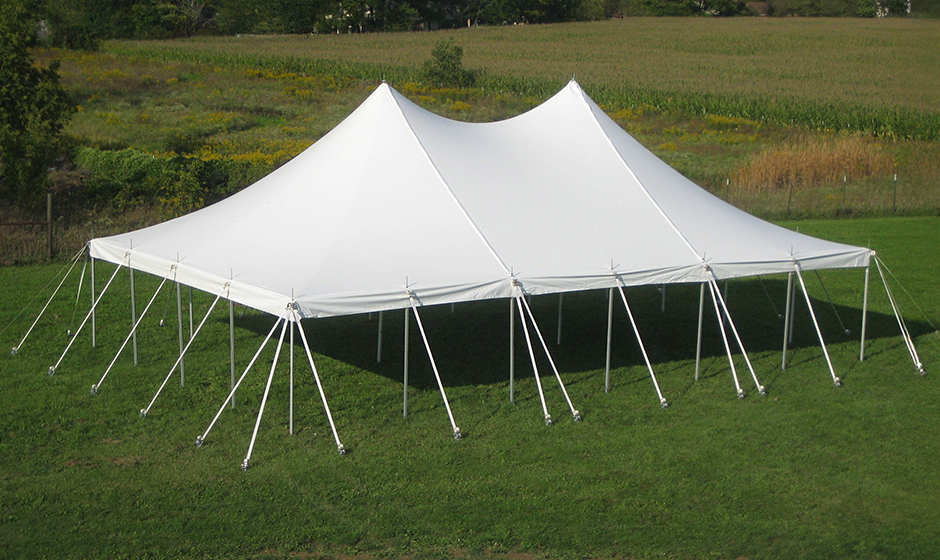
Pole tents rely on tension and center poles. The process typically begins with laying out the tent top, staking the perimeter, raising the center poles, and tightening everything into place.
When ground conditions cooperate, this setup can move quickly. Many pole-style 20x40 tents are fully installed in under two and a half hours by a professional crew.
The critical step is proper staking depth. That part should never be rushed.
Frame Tent Installation
Frame tents require assembling the metal framework before the vinyl top is secured.
Crossbars connect. Corners lock into place. Legs are positioned. The structure is then raised gradually in stages.
It’s slightly more technical, which usually places structural setup closer to two to three hours. The benefit is an open interior without center poles, giving planners more flexibility.
The Tool That Makes Frame Installations Smoother
If you’ve watched a frame tent go up, you may have seen a lifting stand positioned at one side of the structure. That’s a frame tent jack.
Why a Tent Jack Helps
Instead of lifting the entire frame evenly by hand, the jack allows installers to raise one section at a time in a controlled manner.
This improves alignment, reduces strain on the crew, and prevents small shifts that would otherwise need correction.
For a 20x40, it’s not always required — but when working with heavier commercial vinyl or uneven terrain, it noticeably improves efficiency.
Accessories Add Time — But They Add Experience Too
When discussing 20x40 tent setup time, many people imagine just the frame. In reality, most events include enhancements that extend the timeline.
Sidewalls
Sidewalls can add 30 to 60 minutes depending on the level of enclosure. Clear panels must align properly for visual consistency, and solid panels require even tension.
Flooring
Flooring changes everything. A simple dance floor installs quickly. A full subfloor system with leveling and panel locking can add several hours.
For formal weddings, flooring is often worth the added time because it improves both comfort and presentation.
Lighting and Décor
String lights may take under an hour. Chandeliers require more precision. Uplighting involves routing cables and coordinating power.
The tent might rise quickly, but creating atmosphere always takes intention.
Simple Ways to Keep Setup on Schedule
Preparation makes a significant difference.
Clear the area before the crew arrives. Confirm placement dimensions in advance. Ensure trucks have easy access to the site. Mark underground utilities ahead of time.
Small obstacles — patio furniture, overhanging branches, blocked driveways — can delay progress more than most people expect.
When the site is ready, installation feels smooth.
When Should Installation Happen?
For casual gatherings, same-day setup is often practical.
For weddings or more complex events, installing one day before provides breathing room for florists, rental companies, and catering teams.
If flooring is involved, consider installation two days prior. Buffer time is rarely regretted.
Tear-Down Is Faster — But Still Important
Most 20x40 tents dismantle in one to two hours.
If the top is wet, teardown requires additional care to prevent mildew during storage. Just like setup, it should be deliberate and safe.
So, What’s the Real Timeline?
For the structure alone, 20x40 tent setup time typically falls between 1.5 and 3 hours under normal conditions.
With flooring, lighting, sidewalls, and full décor, the total preparation window can extend to half a day or more.
The tent rises efficiently. Transforming it into your event venue is what takes time — and that transformation is what guests remember.
Final Thoughts
A 20x40 tent is large enough to host meaningful celebrations yet manageable in terms of installation.
Setup time depends less on the tent itself and more on surface conditions, weather, crew experience, and accessories included.
With proper planning and professional installation, the process feels organized rather than stressful. Understanding the timeline simply helps you schedule smarter.
Plan Your Setup with Confidence
Explore professional-grade 20x40 tent options designed for efficient installation and seamless event planning.
View 20x40 Tent OptionsReliable Engineering | Professional Installation | Event-Ready Performance
FAQ
How long does it take to set up a 20x40 tent?
Most professional crews can install the structure in 1.5 to 3 hours under normal conditions. Accessories such as flooring or lighting extend that timeline.
Is a pole tent faster to install than a frame tent?
Pole tents can install slightly faster when staking conditions are ideal. Frame tents take a bit longer due to structural assembly but offer open interiors.
Does flooring add significant setup time?
Yes. Even basic flooring systems add time, and full subfloor systems can extend installation by several hours.
What makes setup take longer than expected?
Weather, uneven ground, limited site access, and additional accessories are the most common factors that increase installation time.
Can a small crew install a 20x40 tent?
It is possible, but professional crews ensure proper alignment, anchoring, and safety — often making the process faster and more reliable.