



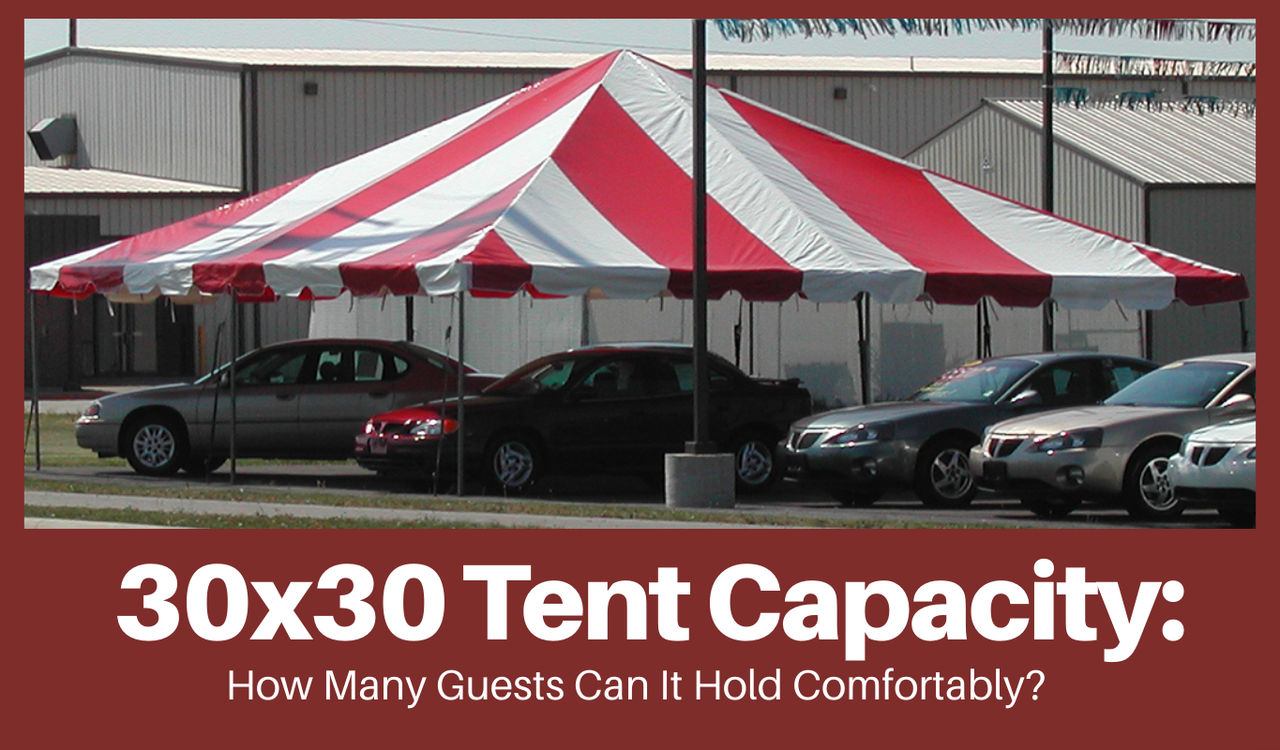
30x30 Tent Capacity: How Many Guests Can It Hold Comfortably?
When planning a large outdoor event, one of the most important questions is about 30x30 tent capacity. How many people can it realistically hold? Will guests feel cramped? Is there room for a dance floor and buffet?
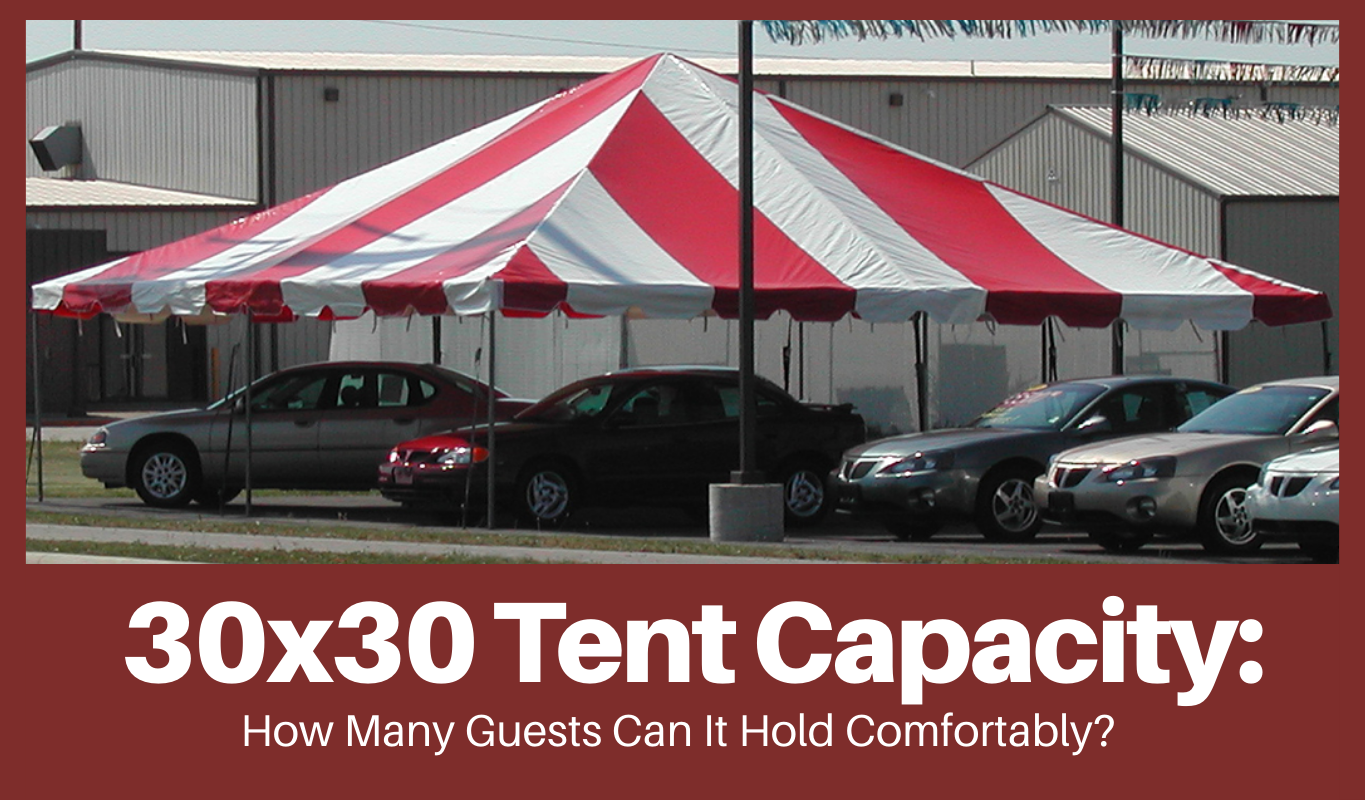
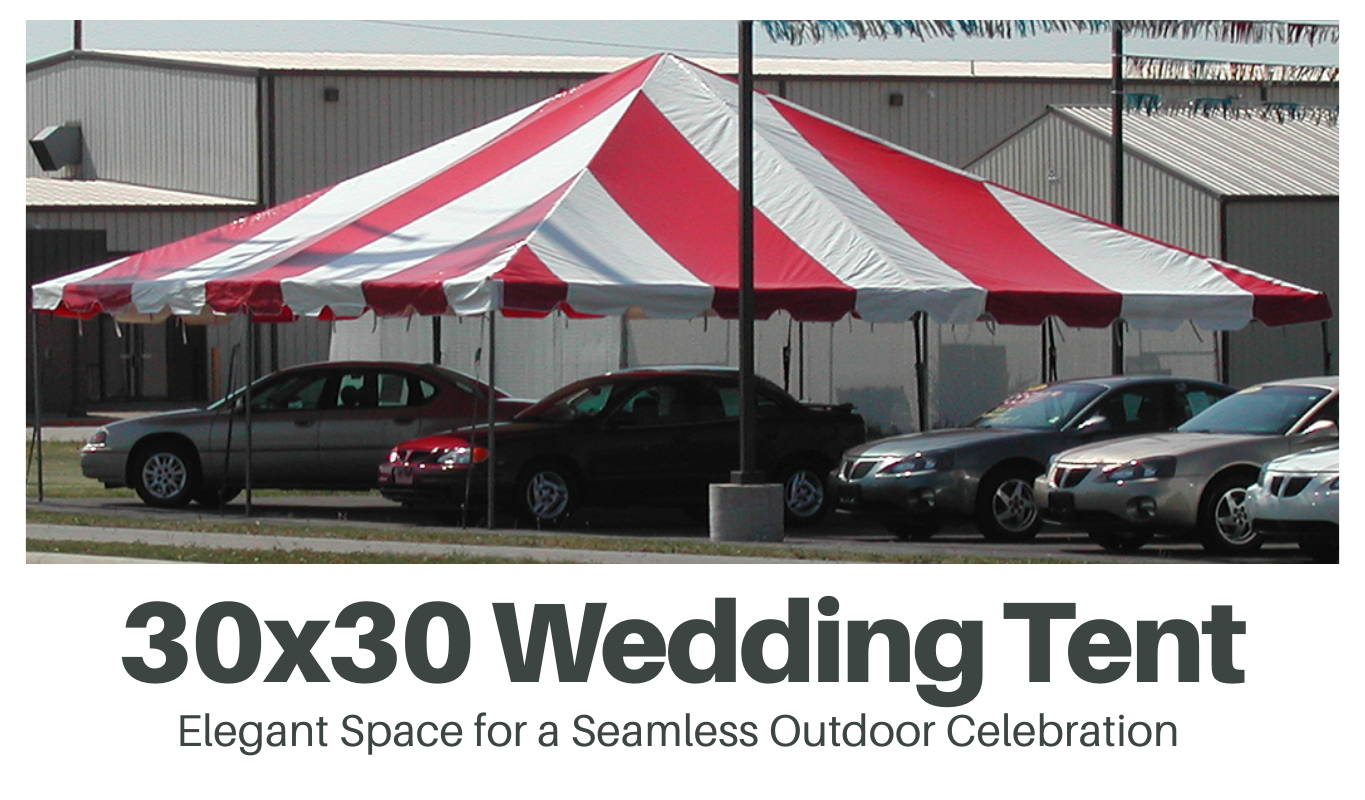
A 30x30 tent provides 900 square feet of covered space. That is a substantial footprint, but capacity depends entirely on layout decisions.
Maximum capacity and comfortable capacity are not the same thing.
Understanding the difference is what prevents tight walkways, blocked buffet lines, and an overcrowded dance floor.
Let’s break down what 900 square feet truly allows.
The Math Behind 900 Square Feet
A 30x30 tent equals 900 square feet of usable area.
Event planners typically calculate capacity by estimating square footage per guest based on event style:
Standing room only: 6–8 square feet per person
Seated at tables: 10–15 square feet per person
Seated with dance floor: 15–20+ square feet per person
Using those guidelines, a 30x30 tent can accommodate:
- 110–130 guests standing cocktail-style
- 80–100 guests seated at round tables
- 100–120 guests banquet-style
- 60–80 guests seated with a dance floor
But numbers alone do not guarantee comfort. Layout design matters just as much as square footage. Understanding the backbone of every beautiful event design layout and decor helps maximize usable space without overcrowding.
Round Table Seating Capacity
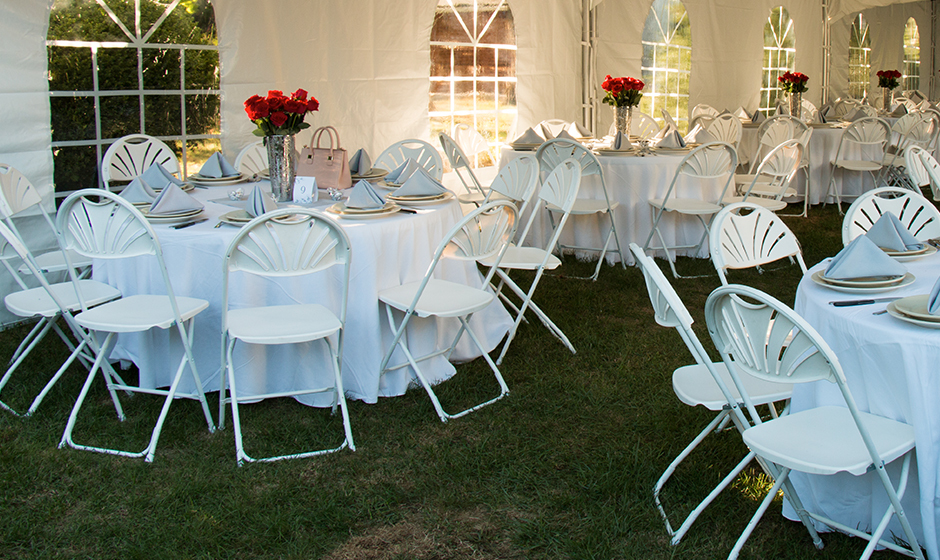
Round tables are popular for weddings and formal events because they encourage conversation and symmetry.
In a 30x30 tent, you can typically fit 9 to 11 round tables (60-inch) depending on spacing. At 8 guests per table, that equals 72 to 88 guests comfortably.
If spacing is tightened, you might reach 96 guests. However, walkways narrow and service access becomes limited.
For weddings or upscale receptions, 80 to 90 guests is often the sweet spot. Couples planning these layouts often compare options while reviewing wedding tents for sale to ensure the structure supports both seating and dance space.
Banquet-Style Seating Capacity
Banquet tables maximize seating efficiency.
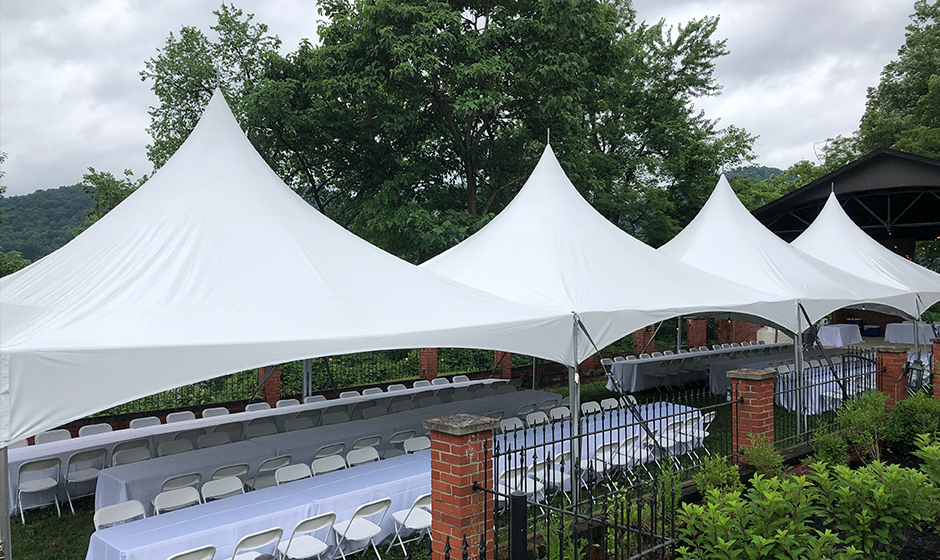
Long rectangular tables reduce wasted corner space and allow more guests per linear foot. In a 30x30 tent, banquet-style seating can accommodate 100 to 120 guests when arranged thoughtfully.
This layout works well for:
- Graduation parties
- Community dinners
- Corporate banquets
- Fundraisers
However, adding a dance floor or stage will reduce those numbers significantly.
Cocktail and Standing Events
For cocktail-style events with high-top tables and lounge seating, 30x30 tent capacity increases substantially.
Because guests are standing and circulating, you can comfortably host 110 to 130 guests. The square footprint supports circular traffic flow, which prevents bottlenecks.
This setup works especially well for:
- Networking mixers
- Engagement parties
- Product launches
- Birthday celebrations
Even in standing events, leaving open pathways improves guest comfort. Strategic tent lighting also enhances circulation by visually defining zones.
What Happens When You Add a Dance Floor
Dance floors consume more space than most hosts expect.
A 16x16 dance floor requires 256 square feet. That alone uses nearly one-third of the tent’s total area.
Once a dance floor is included, realistic seated capacity drops to:
- 60–75 guests at round tables
- 70–90 guests banquet-style
For events prioritizing dancing, guest comfort should take precedence over maximum seating.
Buffets, Bars, and Service Areas
Capacity calculations must account for catering space.
Two 8-foot buffet tables with clearance require roughly 120–150 square feet. Bar stations may require 60–100 square feet depending on setup.
If these areas are placed inside the 30x30 tent, guest capacity should be reduced accordingly.
Many event planners choose to place catering prep tents adjacent to the main tent to preserve seating space.
Planning these zones early prevents last-minute layout stress. Mastering tent anchoring and placement techniques also ensures secondary tents are positioned safely and efficiently.
Frame vs Pole and Usable Space
Structure type slightly affects usable interior space.
A 30x30 frame tent has no center poles, allowing full 900 square feet to remain flexible.
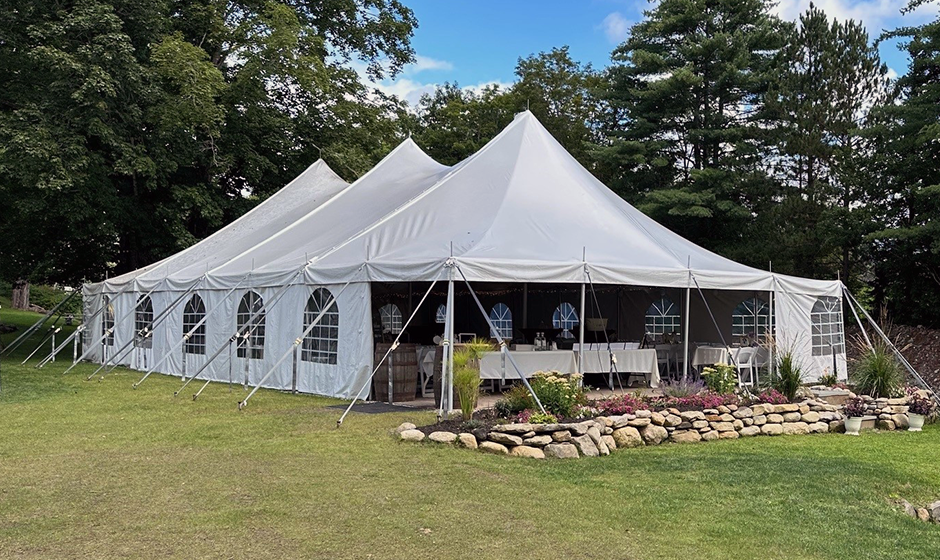
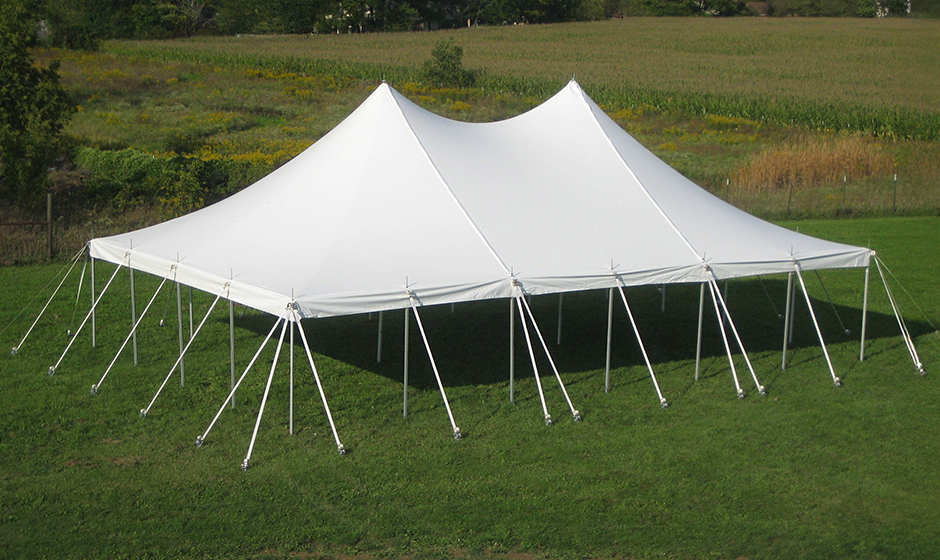
A 30x30 pole tent introduces one or more center poles depending on design. These poles reduce layout flexibility but add visual height and elegance.
If maximizing capacity is important, frame construction provides a small advantage. Comparing frame tents vs pole tents helps clarify how interior space changes between designs.
Real-World Event Scenarios
Let’s look at how this plays out practically.
A wedding reception with 85 guests, round tables, and a 14x14 dance floor fits comfortably inside a 30x30 tent.
A graduation party with 110 guests banquet-style and buffet service works well when tables are arranged along two sides with central clearance.
A corporate mixer with 125 guests cocktail-style feels energetic and spacious because movement replaces seated density.
Same tent. Completely different capacity outcomes.
Comfortable Capacity vs Maximum Capacity
Technically, a 30x30 tent could hold more people than recommended. But events are about experience, not compression.
When guests can move freely, access food easily, and dance without obstruction, the event feels organized and enjoyable.
For most seated events with light entertainment, 80–90 guests is ideal.
For standing receptions, 110–120 guests feels energetic without overcrowding.
Planning with comfort in mind leads to better results.
When You Should Size Up
If your guest list exceeds:
- 100 seated guests with dance floor
- 120 seated guests without dance floor
- 130+ guests cocktail-style
You may want to consider a larger footprint, such as those covered in large party tent planning guides.
While a 30x30 tent offers strong capacity, pushing beyond comfortable limits often reduces guest experience.
It is better to have slightly more space than slightly less.
Why 30x30 Remains a Popular Size
The square footprint provides balance. It supports symmetrical layouts and evenly distributed seating.
It is large enough to handle substantial guest lists while still fitting within many residential properties.
For weddings, corporate gatherings, and milestone celebrations, 30x30 tent capacity strikes an effective middle ground between scale and comfort.
It offers flexibility without overwhelming logistics.
Ready to Design a Comfortable 30x30 Event Layout?
Explore professional-grade tent solutions designed for flexible seating, reliable performance, and seamless installation — built to support both capacity and comfort.
Shop 30x30 TentsFlexible Layouts | Professional Grade Materials | Event-Ready Performance
FAQ
How many people can fit in a 30x30 tent?
A 30x30 tent can seat approximately 80 to 100 guests at round tables, up to 120 banquet-style, or 110 to 130 guests for cocktail-style events. Capacity depends on layout and whether space is reserved for dancing or service areas.
Is a 30x30 tent big enough for a wedding reception?
Yes, for mid-sized weddings. It comfortably supports 75 to 90 seated guests with room for a dance floor. Larger weddings may require a 30x40 tent.
How much space does a dance floor take inside a 30x30 tent?
A 16x16 dance floor requires 256 square feet. Including one significantly reduces seating capacity and should be factored into early layout planning.
Does a frame tent hold more people than a pole tent?
Frame tents provide unobstructed interior space, which can slightly improve layout flexibility. Pole tents may require adjusting seating around center poles.
What is the most comfortable capacity for this size tent?
For seated events with good circulation, 80 to 90 guests is ideal. For cocktail-style events, 110 to 120 guests feels energetic without overcrowding.