



Party Tents: Sizes, Types, Pricing, and Setup
Party tents are often thought of as simple shelters, but in reality, they are one of the most important planning tools behind successful outdoor events. They do far more than block sun or rain. A party tent defines the boundaries of an event, guides how people move through the space, protects equipment and guests, and quietly shapes the overall experience from the moment attendees arrive. This is why professional planners and venues rely on commercial party tent systems that are designed for real-world use.
At weddings, the tent becomes the venue itself, similar to how outdoor wedding tents replace traditional indoor venues entirely. At corporate events, a party tent establishes professionalism and order, especially when paired with intentional layouts informed by event layout planning best practices.
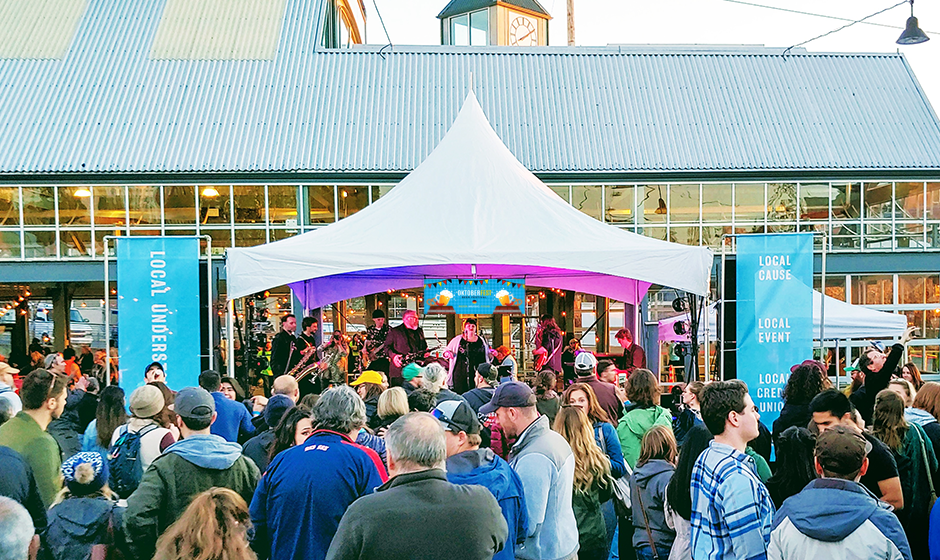
At festivals or community gatherings, party tents create structure and flow in what would otherwise be an open field, playing the same role as large-scale outdoor event tents designed to manage crowds. For rental companies, party tents are not just equipment, they are revenue drivers that must perform reliably across dozens or hundreds of installs, which is why many operators focus on smarter rental inventory planning.
Whether you’re planning a one-time celebration, managing a rental inventory, hosting recurring corporate events, or purchasing tents for long-term use, choosing the right party tent involves far more than picking a size and hoping for good weather. Layout considerations, structure type, anchoring requirements, accessories, site conditions, and labor all influence how well the tent performs and how smoothly the event runs. Many of these decisions overlap with the guidance found in choosing the right event tent for any occasion.
This guide breaks party tents down in a practical, real-world way. You’ll learn how different tent types actually function, how sizes translate to usable layouts, what truly drives pricing, how setup decisions affect safety and cost, and how to avoid common mistakes that end up costing far more in the long run — mistakes frequently seen in event rental operations.
Not Sure Which Tent Is Right for Your Event?
Our team has helped thousands of customers choose the right tent, layout, and accessories for events of every size. Whether you're planning a wedding, festival, corporate event, or building your rental inventory, we're here to help.
Friendly Advice • No Pressure • Commercial-Grade Event Experts
What Is a Party Tent and How It Differs From Other Event Tents
A party tent is a temporary fabric structure designed to create covered, functional event space outdoors. Unlike pop-up canopies or consumer-grade tents, party tents are built for scale, durability, and repeat use, similar to the commercial event tent systems used by professional rental companies and venues. They are designed to handle larger guest counts, heavier fabrics, integrated accessories, and longer installation periods common in professional event environments.
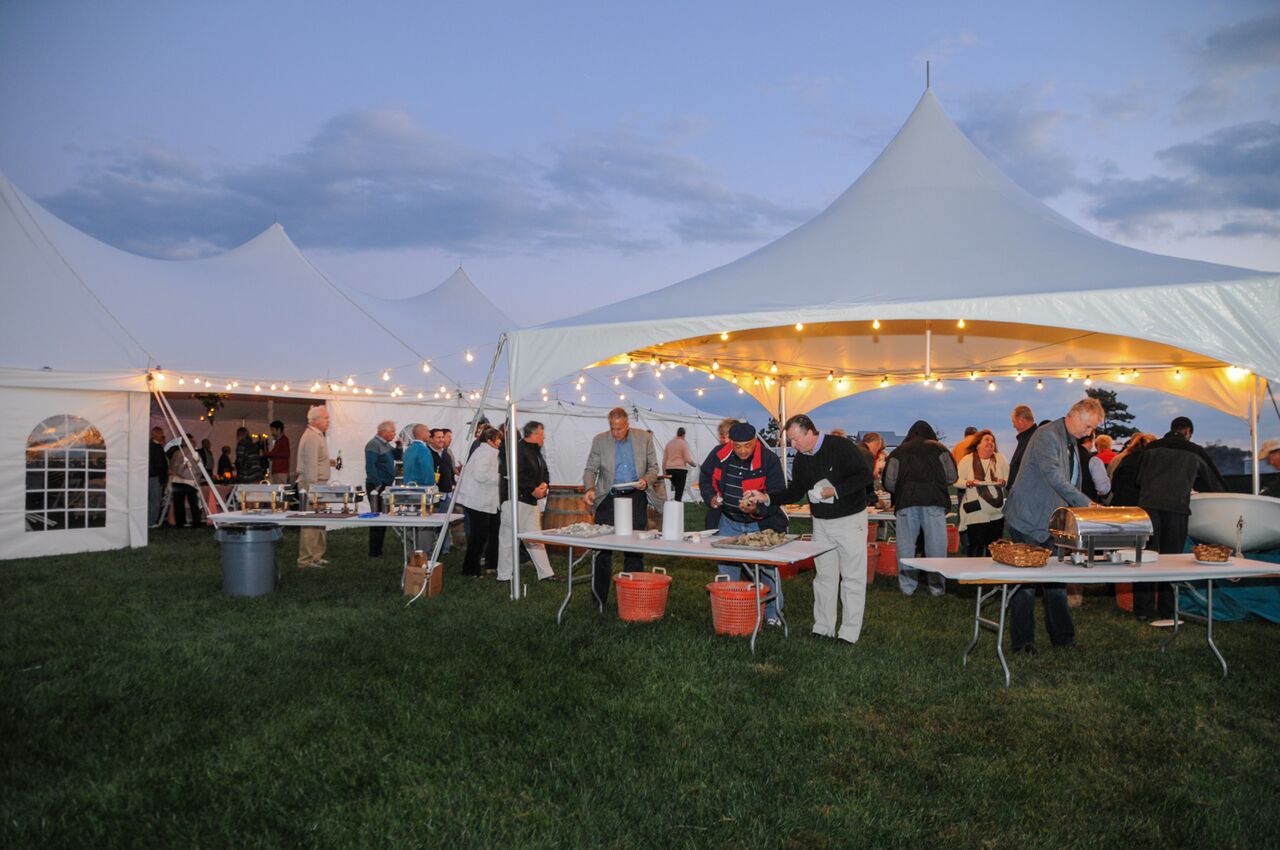
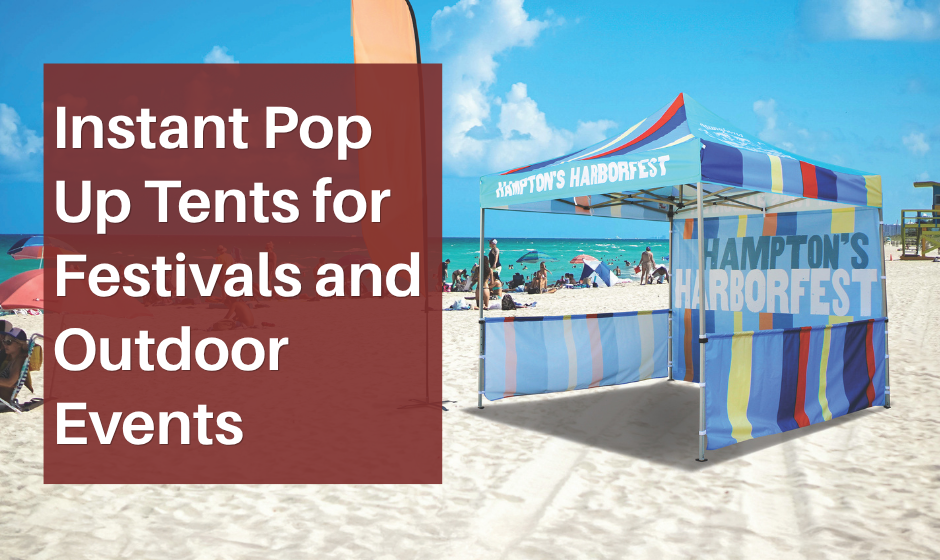
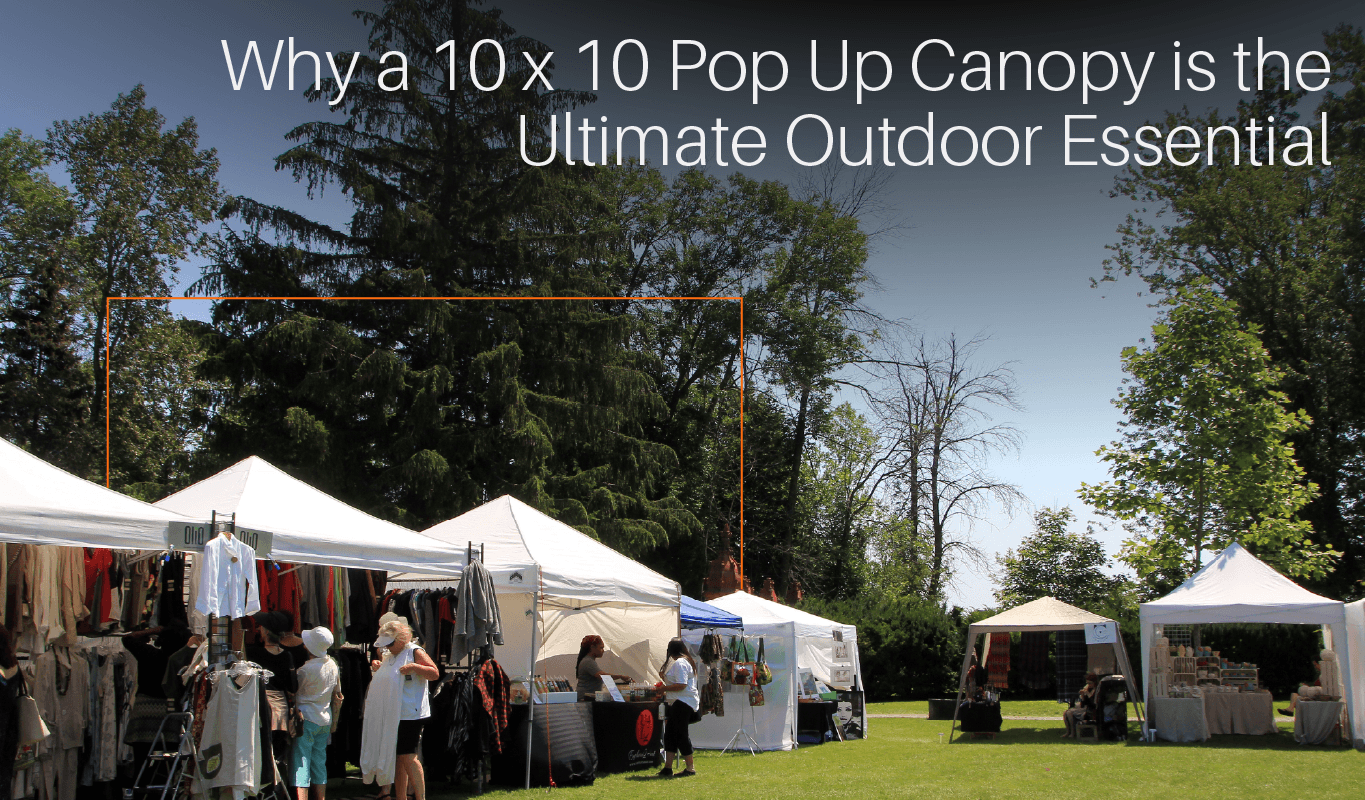
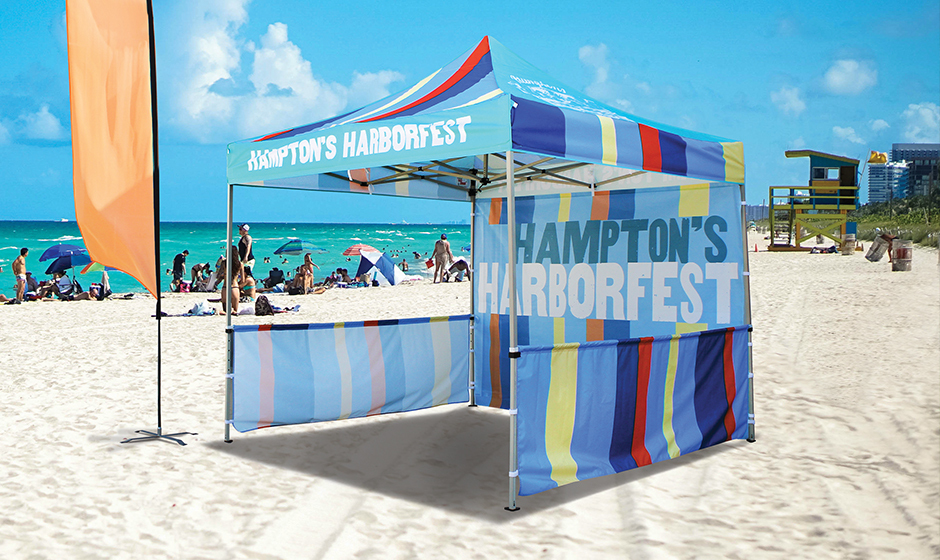
One of the biggest differences between party tents and simpler shelters is intent. A pop-up canopy is meant for short-term shade, often installed by one or two people in minutes, like those typically used for farmers markets and casual vendor setups. A party tent, by contrast, is intended to function as a venue. It must support lighting, sidewalls, décor, signage, climate control, and sustained foot traffic over hours or days, which is why it is treated as core infrastructure in event rental operations.
Party tents also differ from engineered structures or permanent buildings. They rely on fabric tension, frames, poles, and anchoring rather than rigid walls and foundations. This allows flexibility in size, layout, and location, much like the advantages outlined in temporary event-ready tent solutions, but it also means installation quality and site conditions matter greatly.
In practical use, party tents are commonly selected for:
- Weddings and receptions, where they function as the primary venue similar to wedding tents designed for outdoor ceremonies
- Graduation parties and family celebrations that require flexible layouts
- Corporate events and brand activations where clean presentation mirrors the use of trade show and branded event tents
- Festivals, fairs, and outdoor markets that depend on weather-ready large party tents
- Fundraisers and community gatherings that require scalable layouts
- Temporary expansions for venues or restaurants, similar to how venues extend capacity using tented spaces
- Rental company inventories built around repeatable, standardized tent systems
They are chosen when flexibility, appearance, and scalability matter more than permanence. A well-selected party tent adapts to different layouts, different guest counts, and different event styles without requiring permanent construction, which is why many businesses choose to invest in professional tent inventory.
Party Tent Types Explained
Not all party tents are built the same. The structure type you choose affects appearance, interior layout, surface compatibility, installation complexity, and cost. Understanding how each type works helps prevent mismatches between expectations and reality, especially when comparing options like those outlined in frame tents versus pole tents.
Pole Party Tents
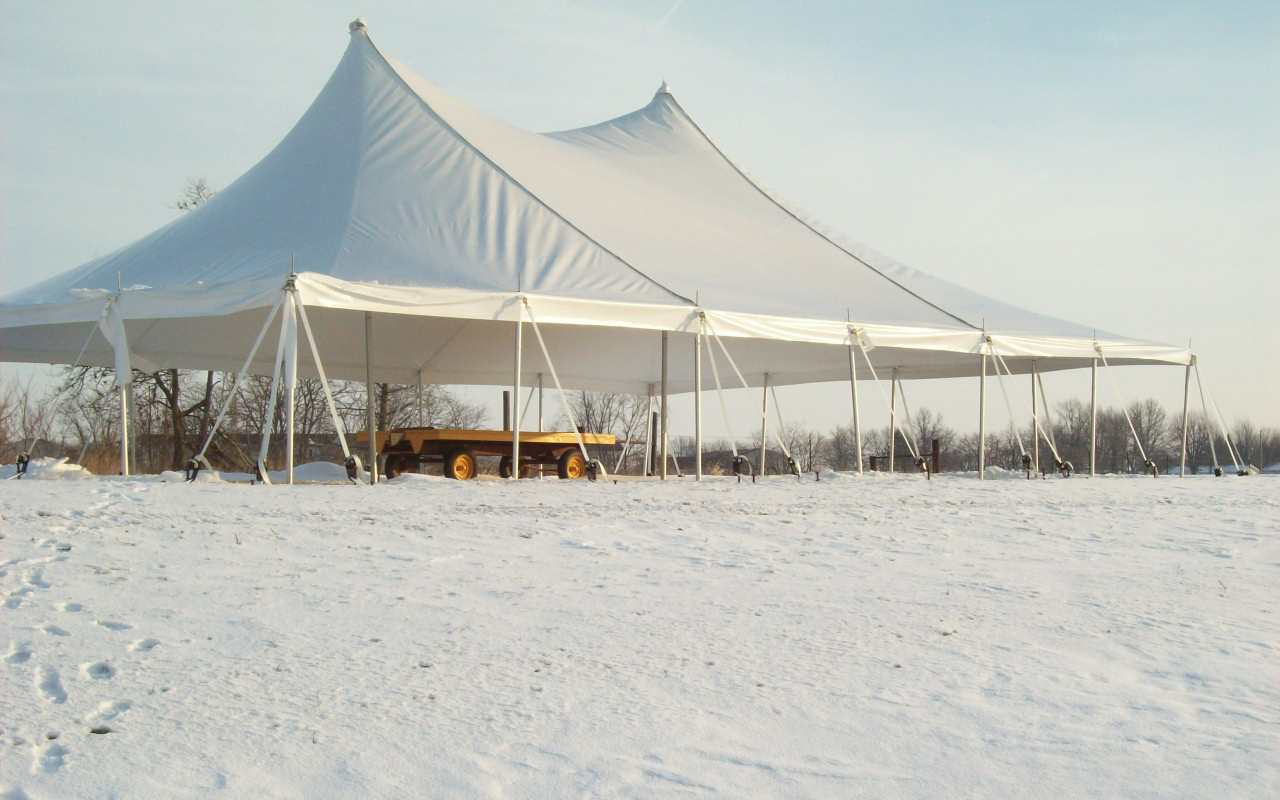
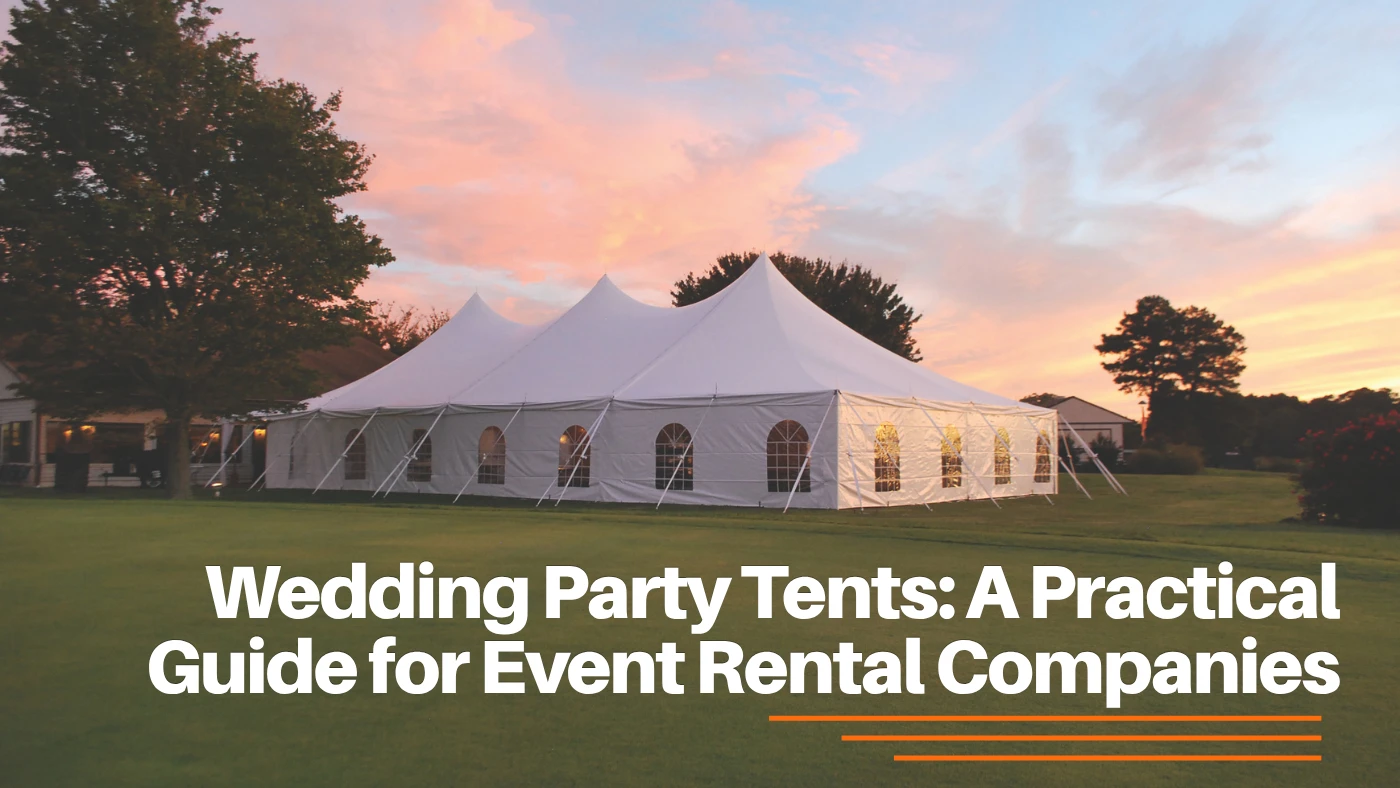
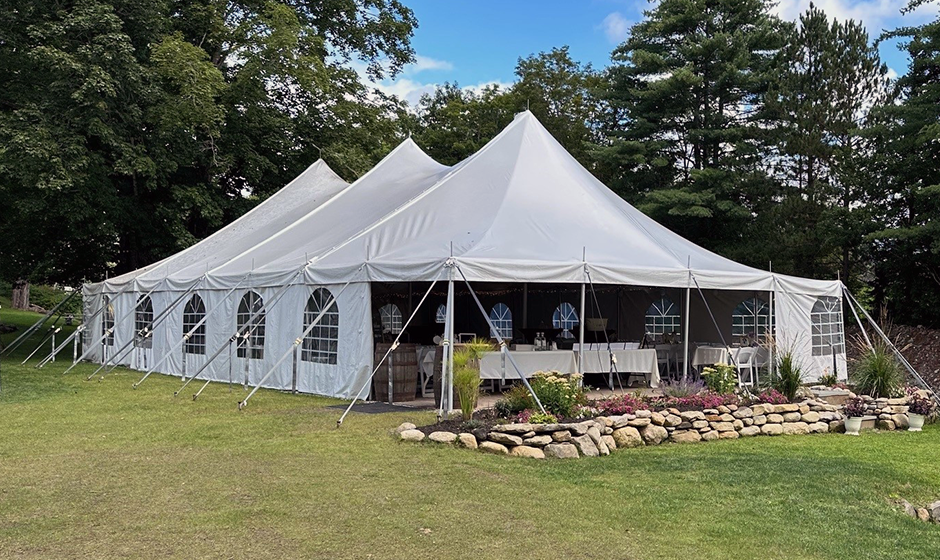
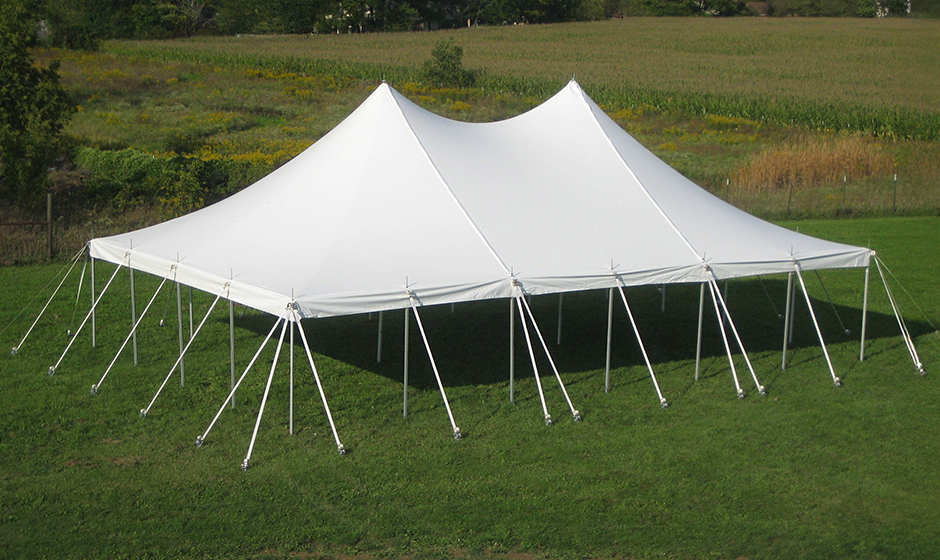
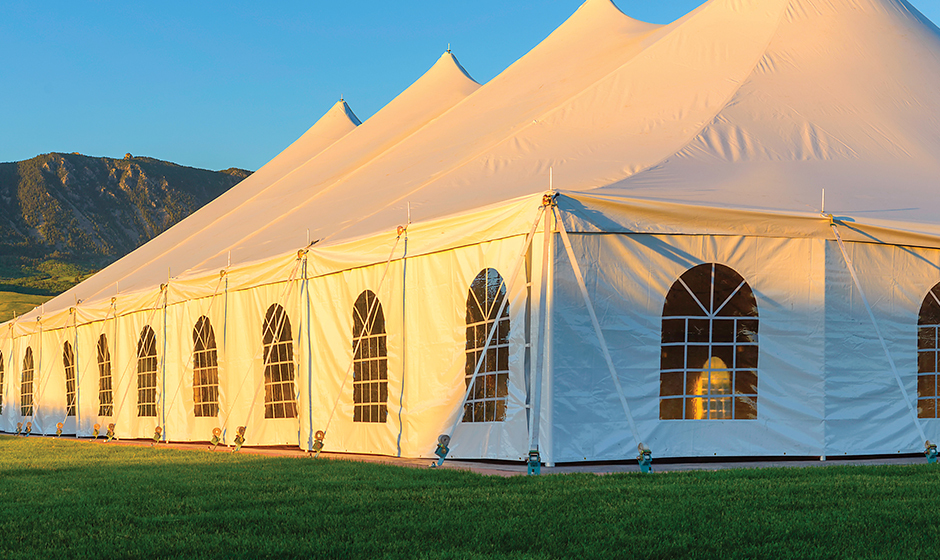
Pole tents are the classic image most people think of when they hear “party tent.” They use center poles and perimeter poles to support the canopy, with tension created by staking the tent into the ground. This design is common in traditional pole tent installations used for weddings and formal outdoor events.
This construction gives pole tents their distinctive high peaks and sweeping lines. The fabric stretches from the peaks down to the perimeter, creating a dramatic, elegant silhouette that photographs beautifully, similar to the aesthetic highlighted in white wedding tent designs.
The visual appeal of a pole tent is one of its greatest strengths. The peaks add height and character, making these tents especially popular for weddings, galas, and formal outdoor events where presentation matters.
When properly installed, a pole tent can feel airy, grand, and timeless, often serving as the centerpiece in large outdoor wedding receptions.
However, that beauty comes with trade-offs. Center poles are structural and cannot be removed, which means they must be planned around. They can interfere with table placement, dance floors, stages, or large installations if the layout isn’t carefully designed, an issue frequently discussed in event layout and décor planning.
Pole tents also rely heavily on staking. They work best on grass, soil, or other penetrable surfaces where stakes can be driven deep enough to maintain tension. Installing a pole tent on concrete or asphalt requires specialized ballast systems, which can increase cost and complexity, similar to the challenges outlined in tent anchoring safety considerations.
When to Use a Pole Tent
- Visual impact and classic styling are priorities, especially for elegant outdoor wedding tents
- The event is on grass or soil with good staking conditions
- Center poles can be incorporated into the layout without disruption
- The tent is meant to be a focal point of the event
They are less ideal for tight urban spaces, mixed surfaces, or layouts that require completely open interiors.
Frame Party Tents
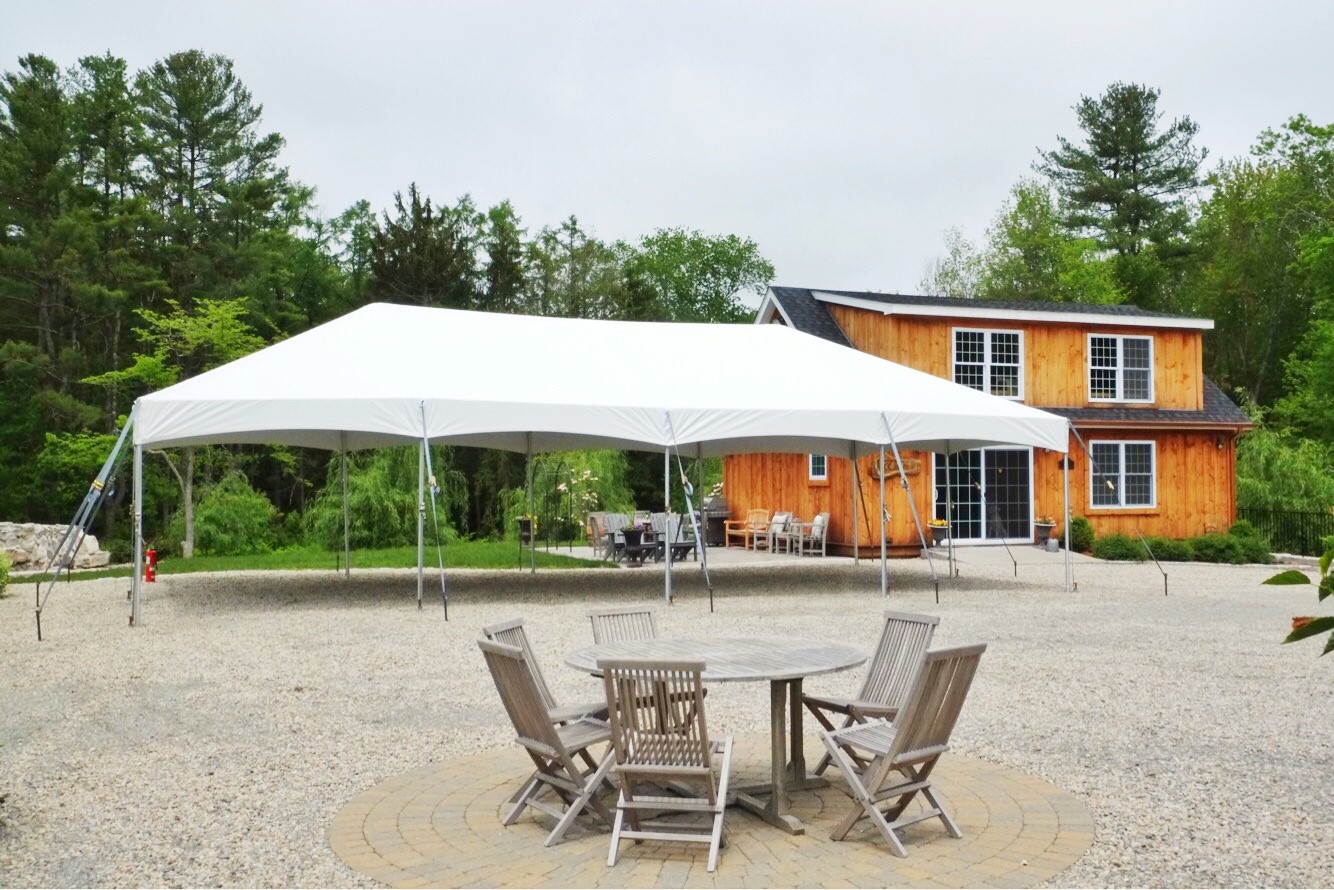
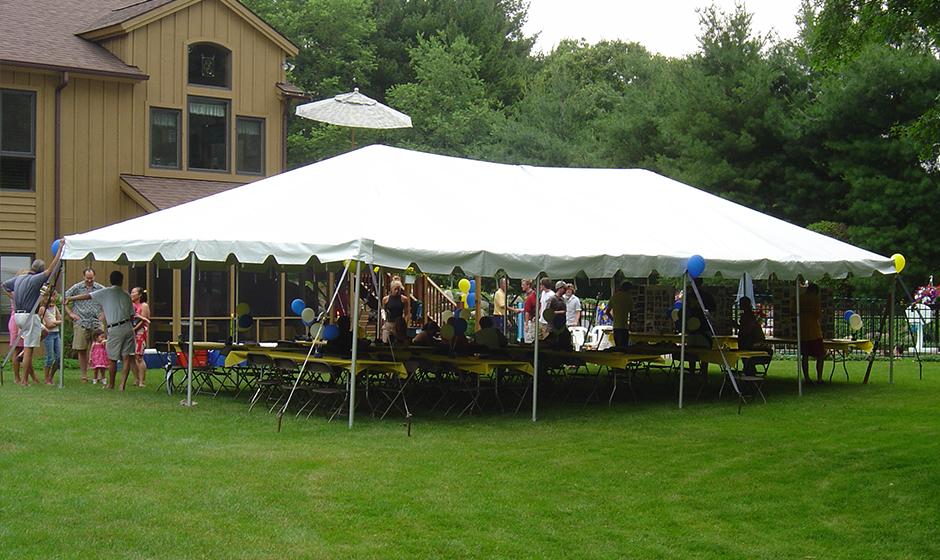
Frame tents use a rigid metal framework that supports the canopy from the perimeter rather than from center poles. The fabric is tensioned over the frame, creating a clean, functional structure with no interior obstructions, which is why many planners prefer frame tent systems for professional events.
The absence of center poles is the biggest advantage of frame tents. It allows complete freedom in interior layout, making it easier to place tables, stages, dance floors, bars, and equipment exactly where needed. This open layout is especially valuable for events that require precision, such as corporate event tents or trade show-style setups.
Frame tents are also far more versatile when it comes to surface compatibility. They can be installed on grass, concrete, asphalt, pavers, decks, or mixed surfaces using the appropriate anchoring method.
This makes them extremely popular for rental companies, venues, and events in urban or commercial settings, where staking may not be possible and ballast anchoring systems are required.
From a logistical standpoint, frame tents are predictable. They have standardized components, consistent footprints, and repeatable setup processes. This reliability reduces labor surprises and makes them easier to scale across multiple events, a key reason they are favored in professional rental inventories.
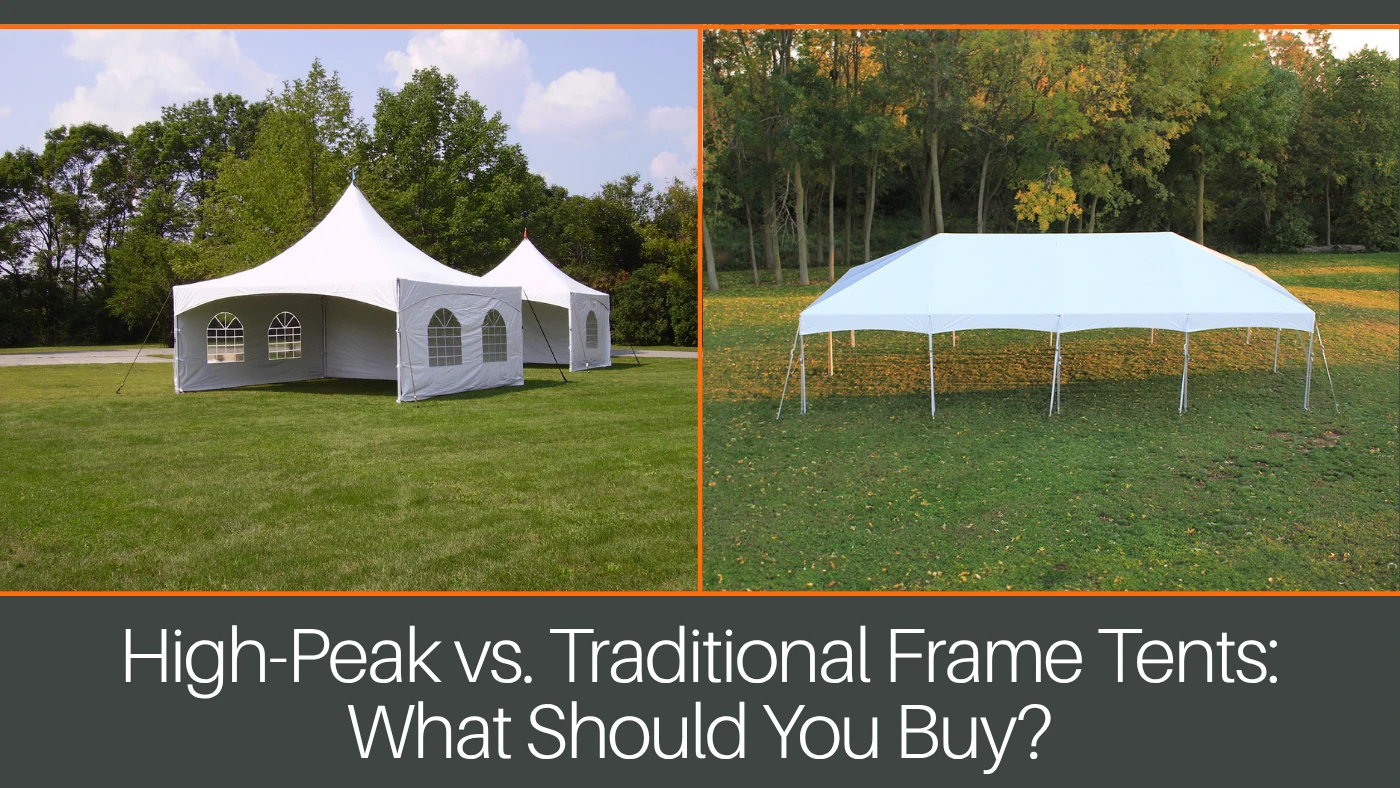
The trade-off is appearance. While modern frame tents can look clean and professional, they lack the dramatic peaks of pole tents unless modified with high-peak designs or liners, which is why some planners compare them closely with high peak frame tents.
When to Use a Frame Tent
- Open interior layouts are required for seating, staging, or equipment
- Surface conditions are unpredictable or hard, such as concrete or asphalt
- Installations must be repeatable and efficient across many events
- Layout precision matters more than dramatic peaks
They are especially common for corporate events, city venues, festivals, and rental inventories built around commercial-grade event equipment.
High Peak Party Tents
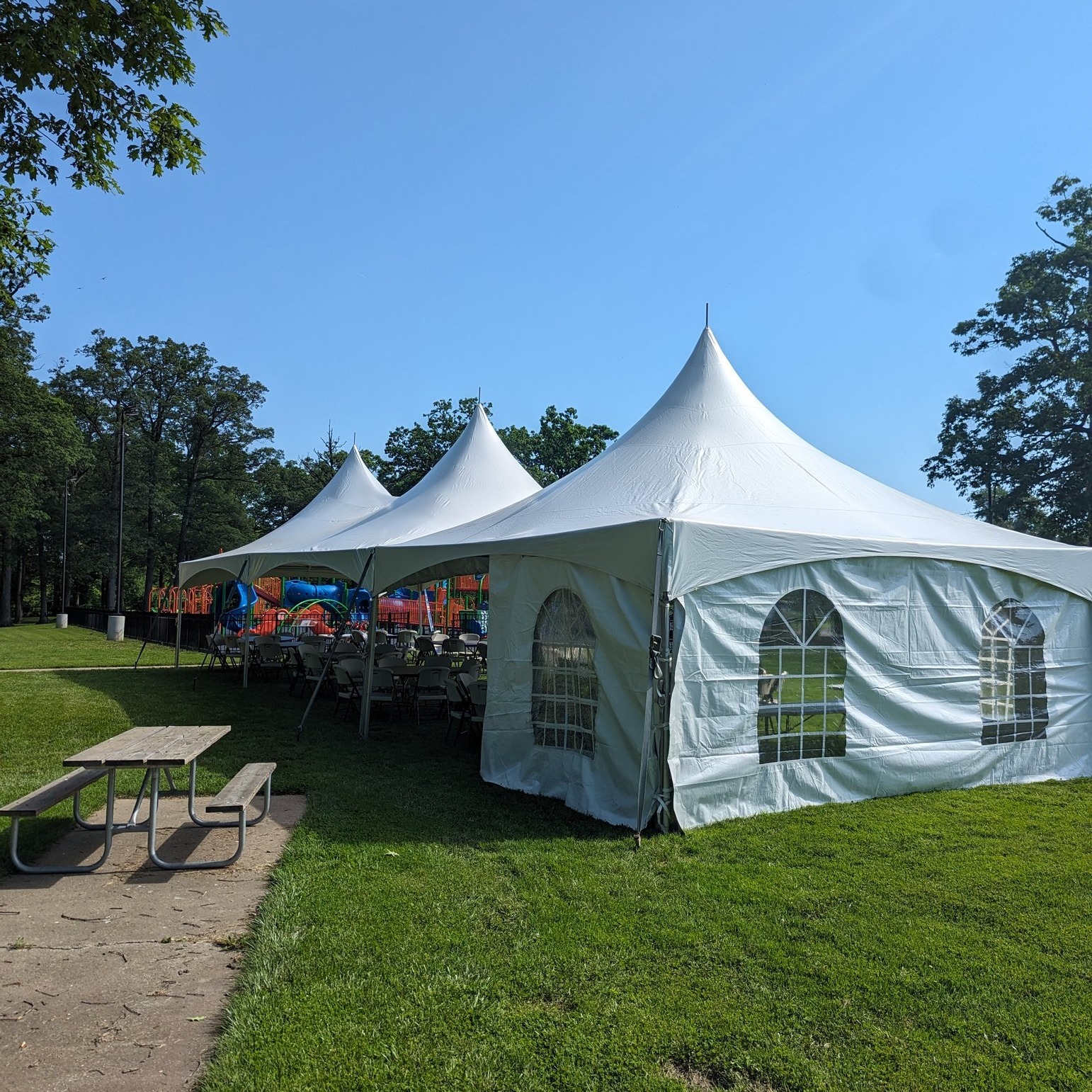
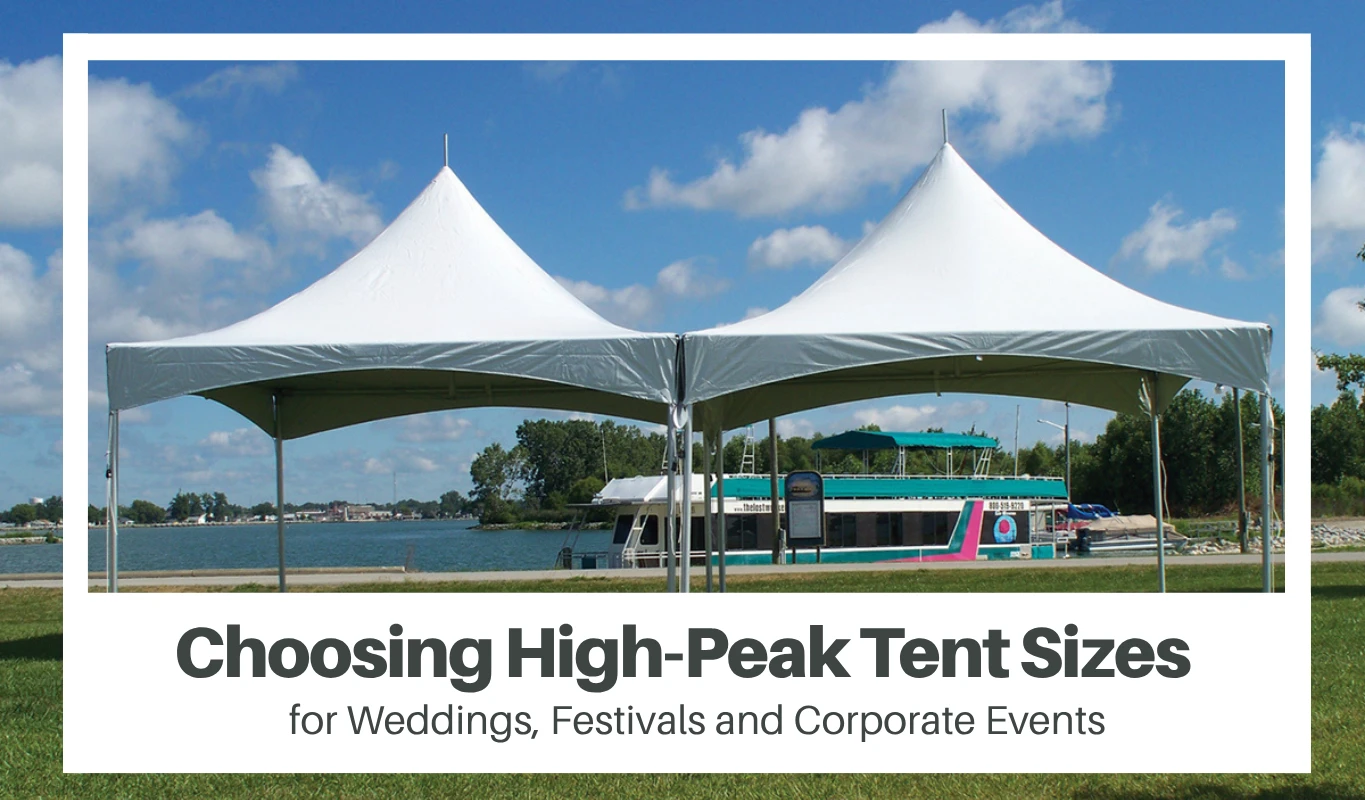
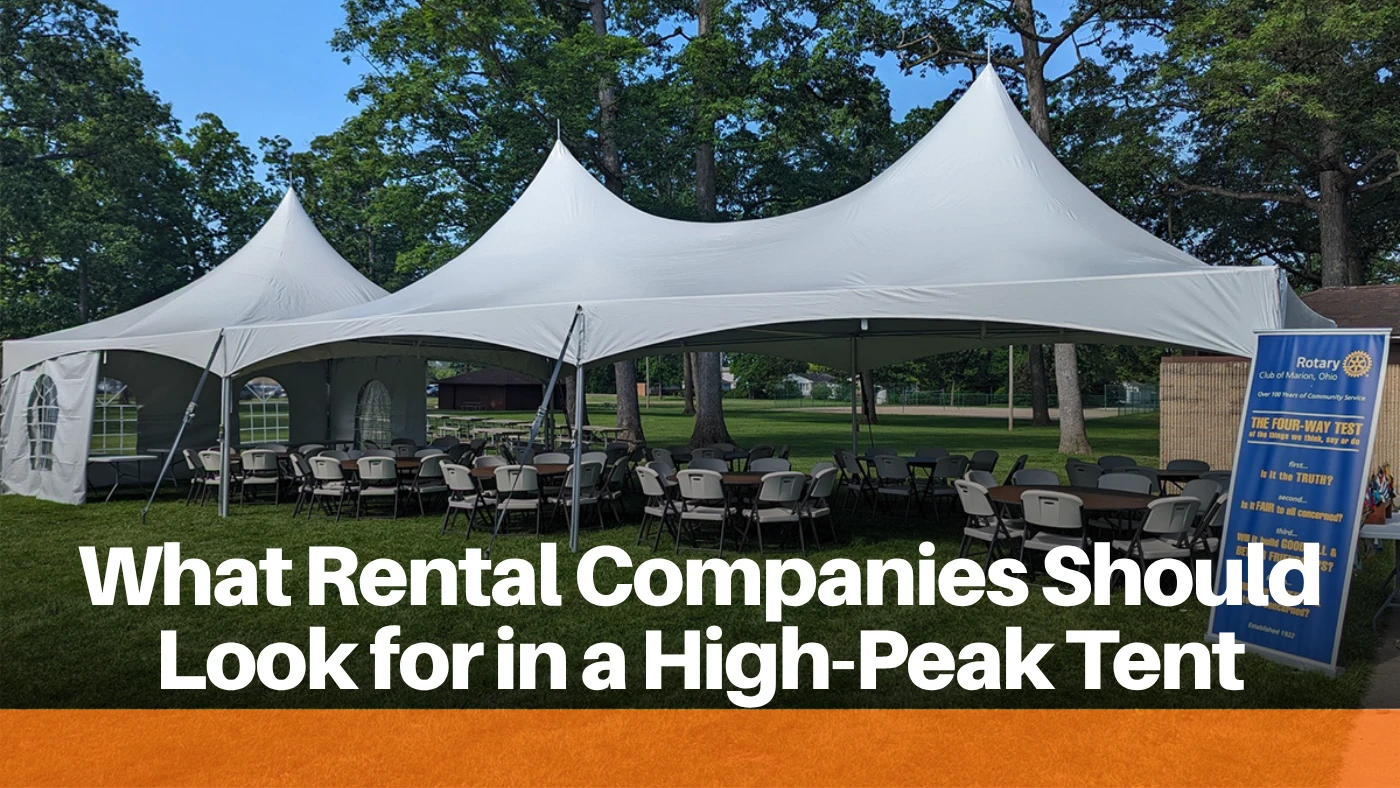
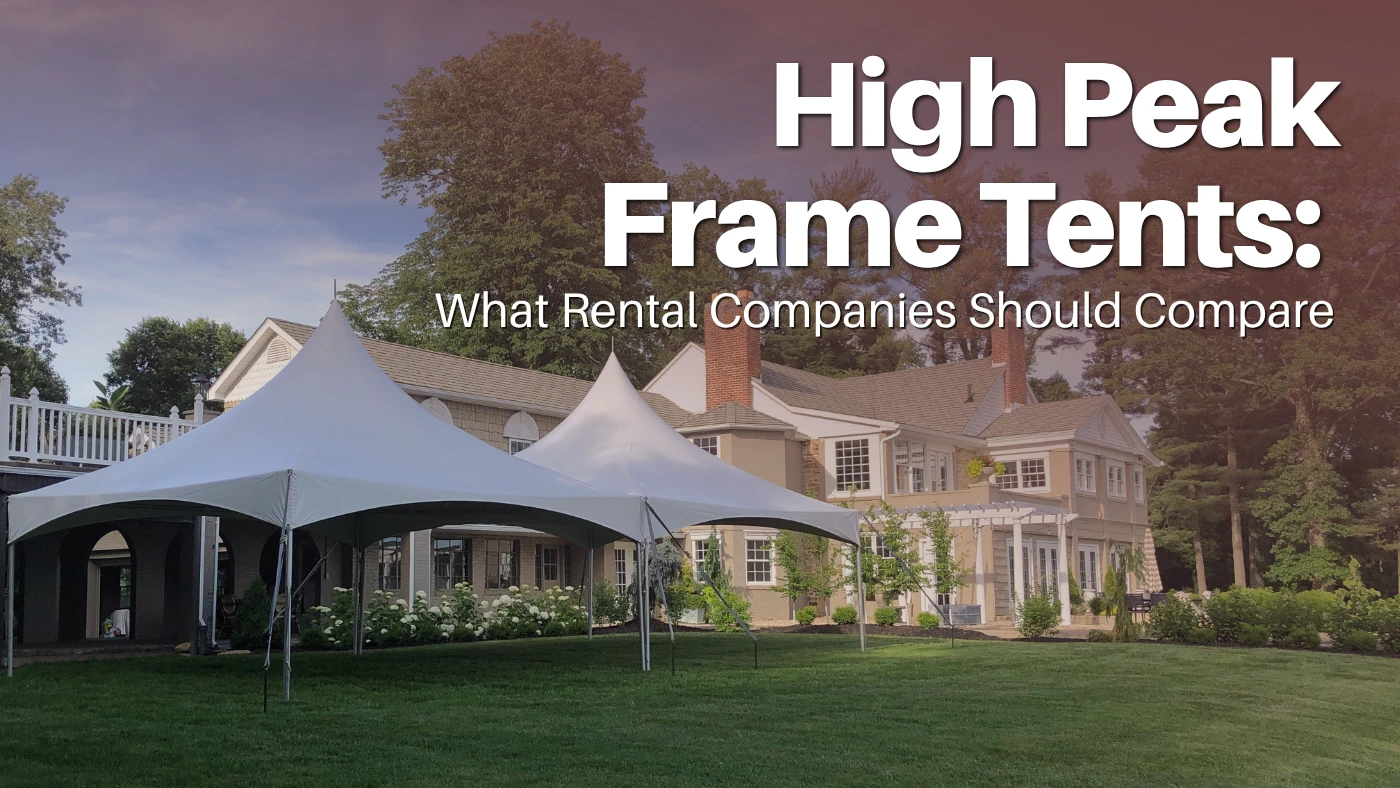
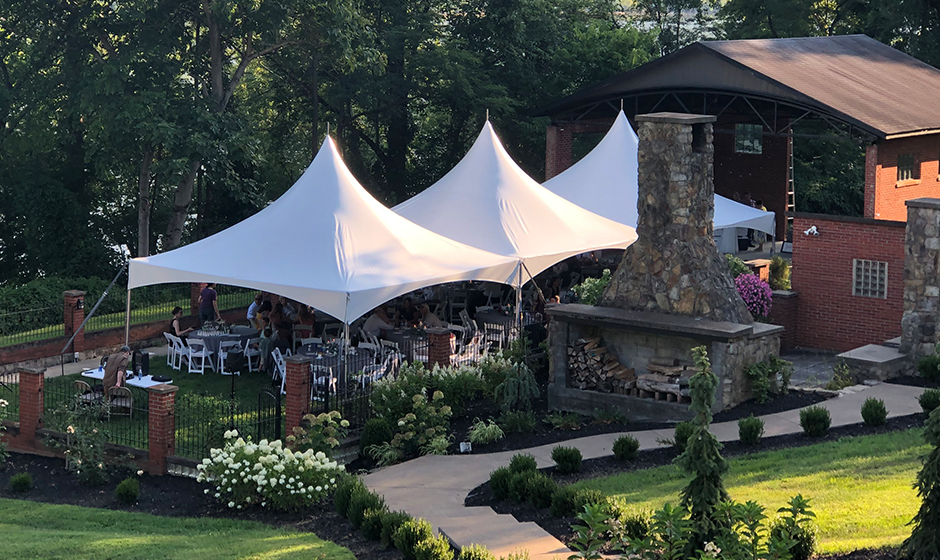
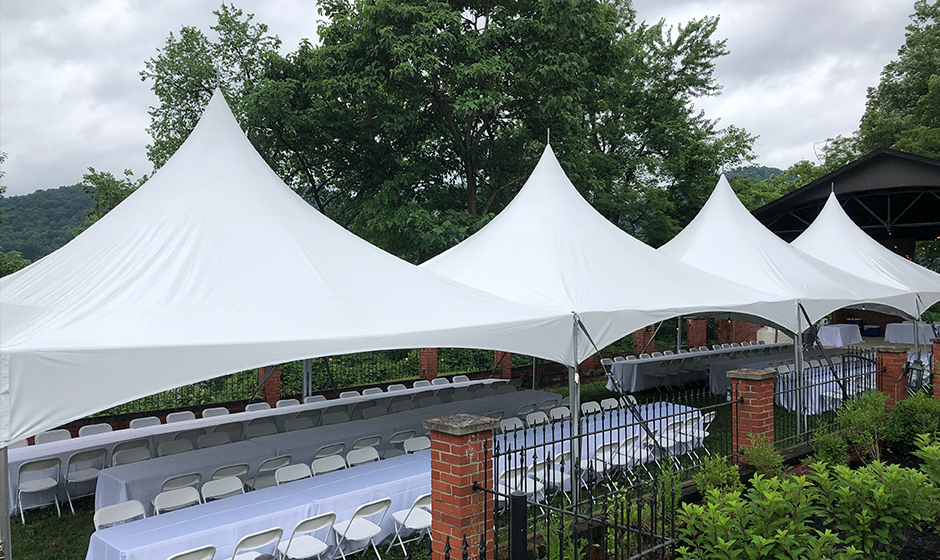
High peak tents combine the structural advantages of frame tents with the elevated peaks traditionally associated with pole tents. They use a frame-based system to create dramatic peaks without relying on center poles, blending the benefits of both designs.
The result is a tent that delivers both form and function. High peak tents stand out visually, making them popular for upscale events, entrances, cocktail areas, and focal spaces. At the same time, they maintain open interiors and surface flexibility similar to standard frame tents used for events.
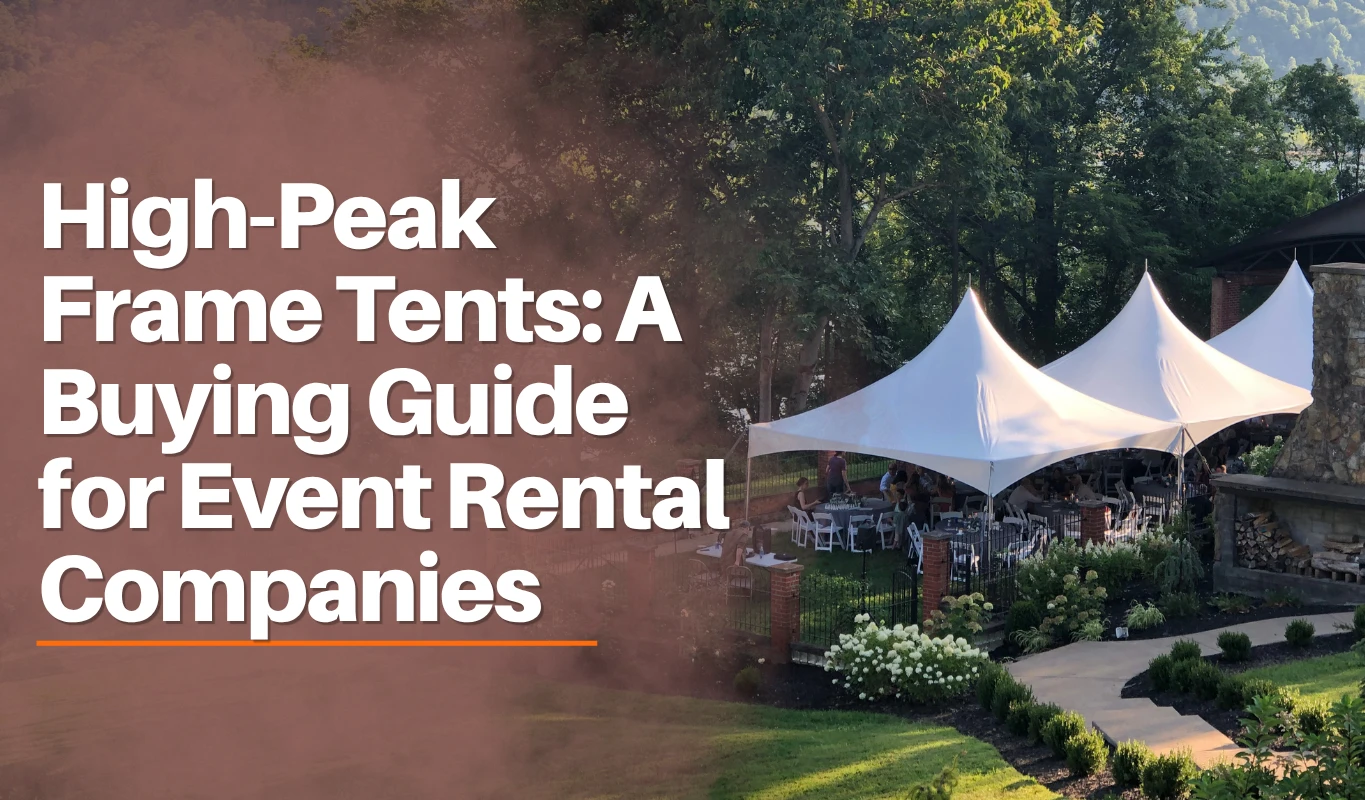
These tents are often used as statement pieces. A high peak tent at the entrance of an event immediately signals intention and quality. They are also commonly paired together in modular layouts to create larger, visually dynamic spaces.
Because of their specialized design, high peak tents are often priced higher than standard frame tents, but they offer strong value when presentation matters and when clients want a premium look without sacrificing layout flexibility.
When to Use a High Peak Tent
- Visual presentation is critical for the event
- The tent needs to stand out or anchor a space
- Center poles are undesirable for layout reasons
- A premium look is required without sacrificing surface flexibility
They are frequently used for upscale weddings, brand activations, and featured areas within larger multi-tent event layouts.
Party Tent Sizes and Capacity Planning
Choosing the right party tent size is one of the most common challenges in event planning. Many people rely on basic capacity charts, but those charts only tell part of the story. Real-world layouts involve furniture, décor, service areas, and guest movement, all of which require space, as outlined in event capacity planning best practices.
Popular Party Tent Sizes
Smaller tents, such as 10x10 or 20x20, are often used as support structures rather than primary venues. They work well for bars, DJ booths, vendor stations, catering prep, or small gatherings, similar to support tents used in event layouts. When planning overall capacity, reviewing standard spacing recommendations for round banquet seating layouts can help determine how support tents complement the main event structure.
Mid-size tents like 20x30 and 30x30 frequently serve as the main space for medium-sized events. They can accommodate seated dinners, dance floors, or mixed-use layouts depending on configuration, which is why sizes like the 20x30 frame tent and 30x30 frame tent are popular rental staples.
Larger tents such as 20x40, 30x60, and 40x60 are designed for high guest counts and complex layouts. These sizes support full wedding receptions, corporate banquets, festivals, and multi-zone events similar to those covered in large event tent planning.
Shape matters just as much as square footage. Rectangular tents lend themselves to linear layouts, such as banquet seating or presentation rows. Square tents feel more centralized and balanced, which works well for dance floors or social gatherings, a distinction often explored when comparing tent footprints and layouts.
Common Party Tent Sizes and Typical Uses
| Size | Approximate Area | Common Uses |
|---|---|---|
| 20x20 | 400 sq ft | Small receptions, cocktail areas |
| 20x30 | 600 sq ft | Dining areas, support tents |
| 30x30 | 900 sq ft | Main event space, weddings |
| 20x40 | 800 sq ft | Banquets, presentations |
| 40x60 | 2400 sq ft | Large receptions, festivals |
How Many People Fit Under a Party Tent
Capacity depends heavily on how the space is used. Standing cocktail events allow for the highest density, while seated dinners require significantly more room per guest, which is why planners often reference tent capacity planning guidelines instead of relying on rough estimates.
A standing event may allow 6–8 square feet per person, while a seated banquet with round tables often requires 12–15 square feet per person or more, especially when accounting for layouts similar to those used in formal wedding tent receptions. Once you add buffet lines, bars, stages, or dance floors, capacity drops further, as explained in real-world event layout planning.
This is where many planners make mistakes. A tent that technically fits 100 people may feel crowded once catering equipment, décor, and service staff are included. Crowding affects comfort, flow, and safety, particularly in events that rely on professional catering tent layouts.
Planning with realistic layouts rather than maximum headcounts leads to better outcomes and fewer last-minute adjustments.
Choosing the Right Party Tent Size for Your Event
Choosing the right party tent size is one of the most important decisions in event planning, and it is also the area where mistakes happen most often. Many event issues that show up on installation day can be traced back to sizing decisions made weeks earlier, a problem frequently discussed in event rental preparation guides. A tent that is too small creates crowding, limits layout options, complicates catering, and makes last-minute adjustments stressful or impossible. A tent that is appropriately sized, or slightly oversized, gives flexibility and prevents small problems from turning into major disruptions.
The challenge is that tent size is rarely just about guest count. Square footage needs change based on how the space will be used, what furniture is required, how guests will move, and what additional elements must fit inside the tent. Capacity charts can be helpful, but they should be treated as a starting point, not a final answer, especially when planning layouts similar to those outlined in event tent sizing best practices.
The most reliable way to choose the right tent size is to think in terms of zones and functions, not just people, a principle used by experienced planners designing multi-zone tented events.
Party Tent Accessories That Change Everything
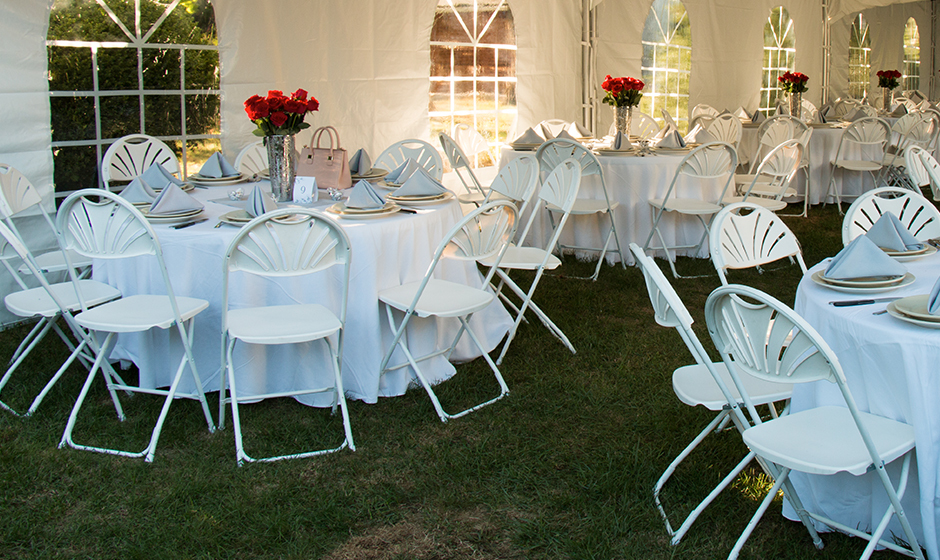
A party tent on its own is simply a covered space. Accessories are what turn that space into a functional, comfortable, and intentional event environment, similar to how event tent accessories transform basic structures into full venues. They determine how guests experience the tent, how staff operate within it, and how adaptable the setup is to weather, season, and event type.
Accessories are often treated as optional add-ons, but in practice, they are what allow a tent to perform its job. The right accessories improve comfort, protect equipment, extend seasonal use, and elevate appearance, which is why many rental companies treat accessories as part of the core event tent system.
For rental companies and venues, accessories are also value multipliers. They increase average order size, expand use cases, and allow the same tent inventory to serve very different events, a strategy commonly used in growing event rental businesses.
Sidewalls
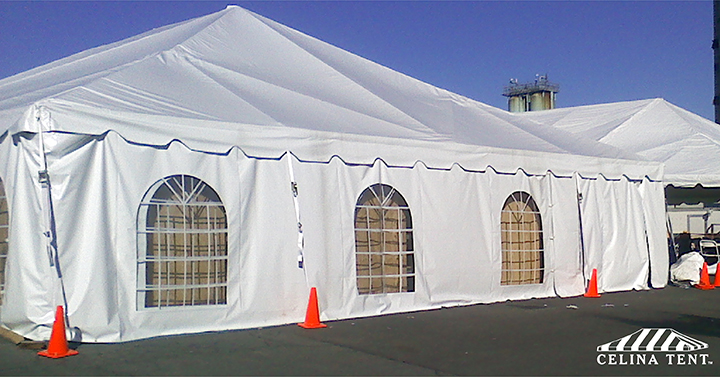
Sidewalls are one of the most impactful party tent accessories. They control exposure to wind, rain, temperature, and noise while also shaping how enclosed or open the space feels, which is why planners carefully select tent sidewall options.
Sidewalls are not one-size-fits-all. Different wall types serve different purposes, and selecting the right combination is often more effective than fully enclosing a tent, particularly in events using frame tent enclosures.
Common sidewall types include solid vinyl walls for wind and rain protection, windowed walls that allow light while blocking wind, clear vinyl walls for maximum visibility and enclosure, and cathedral-style window panels used in formal wedding tent setups.
Sidewalls can be installed fully, partially, or selectively based on weather forecasts and site conditions. For example, windward sides may require solid walls, while leeward sides remain open for airflow, a technique often used in professional outdoor event planning.
Beyond weather control, sidewalls influence temperature retention, sound containment, privacy from nearby areas, and visual boundaries for event flow. Poorly planned sidewall use can create condensation, overheating, or restricted airflow. Proper planning balances protection with comfort.
Flooring Systems
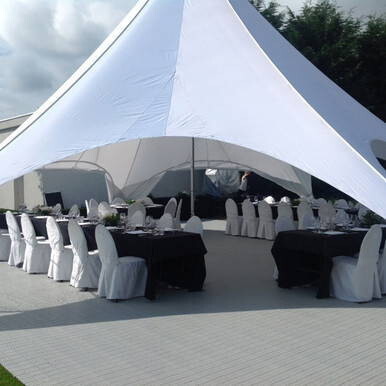
Flooring dramatically changes how a tent functions. Without flooring, guests are exposed to uneven ground, mud, dust, and moisture. With flooring, the tent becomes a stable, predictable surface suitable for formal wear, equipment, and accessibility needs, similar to setups used in professional event flooring systems.
Flooring is especially important for weddings and formal events, corporate functions, food service and catering areas, ADA accessibility compliance, and long-duration events, all of which benefit from tent flooring solutions.
Common flooring options include interlocking plastic or composite panels, plywood-based systems with finished surfaces, and subfloor systems topped with carpet or vinyl.
Flooring also affects layout planning. Once installed, it defines walkways, dance floors, and seating zones clearly. It reduces trip hazards and protects décor, tables, and equipment from ground moisture. While flooring adds cost and labor, it often prevents much larger problems caused by weather or site conditions.
Lighting
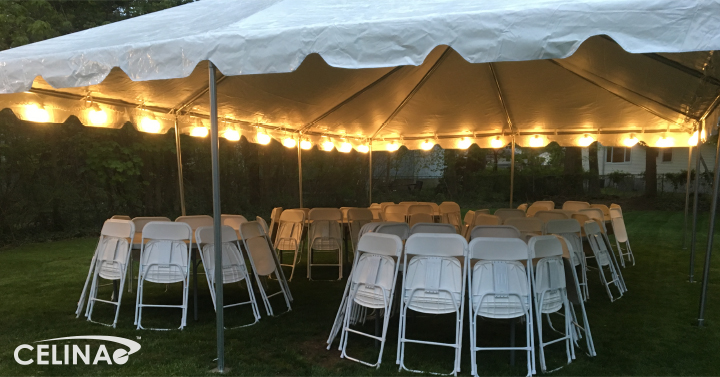
Lighting is both a functional necessity and a design tool. At minimum, it ensures safety and visibility. When planned intentionally, it shapes mood, highlights features, and defines zones within the tent, which is why lighting is treated as a core element in professional event tent setups.
Basic lighting provides general illumination for seating and walkways. Decorative lighting adds warmth and atmosphere. Task lighting supports catering, bars, and technical areas, similar to how lighting is layered in corporate and formal event tents.
Common lighting types include string or café lights for ambient glow, LED uplighting for walls and poles, chandeliers for formal events, spot lighting for stages or displays, and emergency and egress lighting for safety compliance, which aligns with guidance from organizations like the National Fire Protection Association on temporary event structures.
Lighting placement matters as much as fixture choice. Poorly placed lights can create glare, shadows, or dark zones. Well-planned lighting improves navigation and encourages guests to move comfortably through the space. Lighting systems should always be compatible with tent structure and power requirements, and electrical loads should be planned carefully to avoid hazards outlined by OSHA’s electrical safety guidance.
Climate Control: Heating, Cooling, and Ventilation
Climate control accessories extend the usable season of party tents and improve guest comfort dramatically. Without them, tents can become uncomfortably hot or cold depending on conditions.
Heating is commonly used for spring, fall, and winter events. Cooling and ventilation are critical for summer events, especially when sidewalls are installed, similar to best practices used in large enclosed party tents.
Climate control options include forced-air heaters with ducting, portable air conditioning units, fans for air circulation, and ventilation panels or roof vents. Planning should account for tent size, sidewall configuration, outside temperature and humidity, power or fuel availability, and safety clearances, which aligns with heat and airflow guidance from the Centers for Disease Control and Prevention for managing heat stress in enclosed spaces.
Climate equipment should never be added as an afterthought. Incorrect sizing or placement reduces effectiveness and can create safety concerns, especially in fully enclosed tents.
Liners and Interior Enhancements
Liners transform the interior of a tent by covering framework and softening the overall appearance. They are particularly popular for weddings and formal events where aesthetics matter as much as function, especially in upscale wedding tent designs.
Liners hide structural elements, improve acoustics, reflect lighting more evenly, and create a finished, cohesive look that elevates guest perception. Common liner styles include pole tent liners that follow peak lines, frame tent liners that create smooth ceilings, and draped fabric accents for focal areas, all frequently used in luxury outdoor event tents.
While liners are not required for every event, they significantly elevate perception. For rental companies, they allow the same tent inventory to serve both casual and upscale markets without changing the underlying structure.
Anchoring and Ballast Accessories
Anchoring is sometimes overlooked as an “accessory,” but it is one of the most critical components of any tent installation. Anchoring systems vary depending on surface conditions and local regulations, which is why professional installers follow strict tent anchoring best practices.
Common anchoring solutions include stakes for grass or soil, concrete or steel ballast weights for hard surfaces, water ballast systems where permitted, and engineered anchoring plans for high-wind areas. Proper anchoring protects guests, staff, and equipment and ensures the tent tensions correctly, which directly affects appearance and longevity.
Improper anchoring is a major safety risk and has been cited in multiple incident investigations referenced by OSHA’s guidance on temporary structures. Anchoring should never be improvised or downsized to save time or cost.
Functional Add-Ons and Support Accessories
Beyond the major categories, several smaller accessories improve efficiency and usability, especially in complex layouts similar to those used in multi-tent event configurations.
Rain gutters help connect multiple tents and manage runoff. Entrance canopies or vestibules improve guest flow. Power distribution systems support lighting and catering. Signage and wayfinding mounts help guide guests. Crowd control barriers integrated into layouts improve safety and movement.
These accessories are often invisible to guests but make a significant difference in operations and setup efficiency.
Choosing Accessories Based on Event Type
Not every event needs every accessory. The most effective setups match accessories to event goals, a principle followed in professional event design planning.
Weddings prioritize flooring, liners, lighting, and climate control. Corporate events prioritize lighting, power, and clean layouts. Festivals prioritize flooring, sidewalls, and weather protection. Rental inventories prioritize versatility and compatibility across many event types.
Selecting accessories intentionally prevents overcomplication and unnecessary cost.
Why Accessories Should Be Planned Early
Accessories affect layout, labor, power requirements, and timeline. Adding them late creates conflicts and compromises, which is why experienced planners include accessories during the initial event tent sizing and layout phase.
Early planning ensures proper tent sizing, efficient setup sequencing, correct power distribution, and safer installations. Accessories should be considered part of the tent system, not optional extras added at the end.
Accessories as Long-Term Value Drivers
For owners and rental companies, accessories extend the usefulness of tent inventory. They increase booking flexibility, improve margins, and allow tents to serve multiple markets, which is a key strategy in growing event rental businesses.
A tent without accessories has limited applications. A tent with the right accessories becomes a versatile event solution.
Maintenance: Protecting Your Investment
For anyone who owns party tents — whether a rental company, venue, municipality, or organization that hosts recurring events — maintenance is not optional. A strict, consistent maintenance routine is the difference between equipment that looks professional year after year and equipment that quickly develops a worn appearance, a reality discussed in commercial tent maintenance practices.
Unlike single-use décor, party tents are long-term assets exposed repeatedly to sun, wind, moisture, dirt, food spills, and mechanical stress. Without proper care, even high-quality tents degrade early. With proper maintenance, the same tent can remain functional and presentable for many seasons.
Maintenance affects safety, setup efficiency, customer perception, and replacement costs. A clean, well-maintained tent installs faster, tensions correctly, and presents fewer surprises on event day.
Cleaning and Drying
Cleaning and drying are the most critical steps in party tent maintenance. Most long-term damage does not come from a single storm or event, but from repeated storage of tents that were not fully cleaned or dried. Many rental operations reduce this risk by treating post-event care as part of their standard turnover process, especially when reviewing equipment readiness before peak booking periods and seasonal transitions like those covered in this approach to pre-season rental preparation.
Never Store a Tent Wet
Storing a tent while damp is one of the fastest ways to ruin vinyl fabric. Moisture trapped in folded tent tops creates the perfect environment for mildew growth. Once mildew sets in, it leaves behind permanent staining often referred to as “scrim” stains—cloudy, shadow-like discolorations that cannot be fully removed. These issues are most common when vinyl is folded and stored without proper airflow, making correct handling and storage practices essential for long-term vinyl fabric longevity.
Even if mildew is treated later, the visual damage remains. Over time, mildew also weakens fabric fibers and compromises the protective coatings designed to extend the life of the tent. This is why tent tops frequently end up being replaced ahead of schedule, especially during busy seasons when moisture-related damage compounds across multiple events, contributing to patterns seen in high-turnover rental inventory.
As a rule:
- If a tent is even slightly damp, it should not be folded for storage.
- If weather conditions prevent drying on site, drying must happen immediately upon return to the warehouse, with airflow and space already planned into normal breakdown operations.
Mildew Prevention After Rain Events
Rain events require a specific post-event process. Tents that are struck wet should be tagged, prioritized, and handled differently from dry equipment. Without a clear system in place, wet fabric is often rushed back into circulation during high-volume weeks, increasing the likelihood of long-term damage later in the season.
Best practices include:
- Hanging tent tops fully unfolded in a warehouse or drying area
- Using airflow rather than heat to speed drying
- Allowing sufficient time for seams, pockets, and reinforced areas to dry completely
Air-based drying methods are widely favored because they minimize stress on coatings and seam construction, a principle that aligns with broader long-term fabric care practices used across professional shelter environments.
Rushing this step to improve short-term turnaround often leads to early fabric failure that costs significantly more than the labor required to dry tents properly, particularly when replacement becomes unavoidable due to moisture damage and staining issues tied to premature tent top wear.
Chemical Care and Proper Cleaning Products
Vinyl tent fabric relies on protective surface coatings to maintain UV resistance, flexibility, and water repellency. Using the wrong cleaning products gradually strips these coatings away, leaving fabric more vulnerable to cracking, fading, and moisture intrusion.
Only non-abrasive, pH-neutral cleaners should be used. Harsh chemicals, bleach, or aggressive detergents may remove surface stains initially, but they accelerate material breakdown over time. Abrasive brushes and pressure washers can cause similar damage, especially around seams and reinforced areas. Fabric care standards from the Industrial Fabrics Association International reinforce this by emphasizing gentle methods for cleaning coated materials.
Recommended cleaning practices include:
- Rinsing loose dirt before applying cleaner
- Spot cleaning instead of aggressive full scrubbing
- Using soft brushes or cloths
- Rinsing thoroughly to remove residue
Cleaning should be done when conditions call for it, not automatically after every event. Excessive cleaning can be just as damaging as neglect, particularly for rental fleets trying to preserve appearance while keeping equipment moving efficiently through the season, which is central to smarter inventory turnover planning.
Inspection During Cleaning
Cleaning time is also inspection time. Handling the tent fabric provides an opportunity to identify small issues before they become major problems, especially when crews are already working through standard care routines supported by ongoing product support resources.
During cleaning and drying, crews should look for:
- Small tears or punctures
- Fraying seams or stitching
- Worn reinforcement patches
- Discoloration indicating UV fatigue
- Stress marks near grommets or webbing
Catching these issues early allows for inexpensive repairs and prevents failures during future installs. A small tear left untreated often grows under tension, leading to emergency fixes or tent retirement, particularly when damaged fabric is repeatedly reinstalled without access to proper replacement parts and repair components.
Storage Solutions
How a tent is stored is just as important as how it is cleaned. Improper storage causes gradual damage that may not be noticeable until the tent is already compromised, often surfacing during setup when replacement options are limited.
Proper Folding Techniques
Tents should be folded using consistent, approved techniques designed to minimize friction and stress. Random or rushed folding creates uneven pressure points that lead to pinholing—tiny holes caused by fabric rubbing against itself during transport and storage.
Pinholing is particularly common along fold lines that are repeated over time. Rotating fold patterns and using proper folding methods helps distribute stress and extend fabric life, especially for frequently deployed inventory such as frame and pole tent systems.
Training crews on correct folding is one of the simplest and most cost-effective ways to reduce long-term damage across a fleet.
Storage Bags and Protection
Tent tops should always be stored in heavy-duty bags that protect them from abrasion, dust, and moisture. Thin or damaged bags allow friction during transport and expose fabric to contaminants that accelerate wear.
Best practices include:
- Using bags sized appropriately for the tent
- Avoiding overstuffing, which creates creases and stress
- Keeping bags clean and dry
- Labeling bags clearly to reduce unnecessary handling
Poles, frames, and hardware should be stored separately in organized racks or containers to prevent sharp edges from contacting fabric, a key consideration when managing large volumes of tent poles, frames, and structural components.
Temperature and Environment Control
Vinyl tent fabric is sensitive to temperature extremes. In cold environments, vinyl becomes stiff and brittle, increasing the risk of cracking during folding. In excessive heat, vinyl can become overly tacky, causing layers to stick together and tear when separated.
A temperature-controlled storage environment helps maintain fabric flexibility and reduces stress during handling. While climate control requires investment, it significantly extends tent lifespan and reduces replacement frequency, especially for companies managing high-value inventory across multiple tent structures and shelter types.
At a minimum:
- Avoid storing tents in uninsulated outdoor containers
- Keep tents away from direct sunlight during storage
- Maintain consistent conditions whenever possible
Long-Term Maintenance Planning
Maintenance should not be reactive. Establishing a regular maintenance schedule ensures consistency across inventory and crews, regardless of who handled the last event or install.
A basic maintenance plan includes:
- Post-event drying protocols
- Scheduled deep cleaning
- Routine inspections
- Repair tracking
- Retirement criteria for aging tents
Documenting maintenance history helps identify wear patterns, budget for replacements, and maintain consistent quality standards, particularly for companies scaling operations or managing mixed inventory through wholesale and commercial purchasing programs.
The Business Impact of Proper Maintenance
Well-maintained tents install faster, look better, and last longer. They reduce labor time, prevent last-minute issues, and support premium pricing for rental companies offering dependable, professional-grade equipment.
From a customer perspective, clean, bright tents signal professionalism and reliability. From an operational perspective, maintenance protects inventory value, minimizes downtime, and reduces emergency spending tied to rushed repairs or replacements ordered through shipping and fulfillment services.
Over time, maintenance discipline becomes a competitive advantage—not just an operational task, but a core part of delivering consistent event quality.
Common Mistakes When Buying Party Tents
Buying a party tent is often seen as a straightforward purchase, but many buyers discover too late that small decisions made upfront can lead to long-term frustration, added costs, and operational problems. These mistakes are rarely obvious at the point of purchase. They show up later during installation, storage, bad weather, or when trying to scale use across different event types and locations.
Understanding these common mistakes helps buyers make smarter decisions, whether they are purchasing their first tent or expanding an existing inventory for more frequent use across party and event tent applications.
Buying Based on Price Alone
One of the most common mistakes is choosing a tent primarily because it is cheaper than comparable options. Lower upfront cost can be appealing, especially for first-time buyers, but price alone rarely reflects true value.
Cheaper tents often use lighter fabric, thinner frames, lower-quality coatings, or incomplete hardware kits. These shortcuts may not be obvious at first glance, but they reveal themselves over time through faster wear, difficulty tensioning the tent, or limited compatibility with add-ons like sidewalls and liners commonly used with commercial-grade tent systems.
In many cases, buyers end up spending more replacing or upgrading a low-cost tent than they would have spent purchasing a more durable system from the start, particularly once replacement tops, poles, or hardware become necessary.
Not Accounting for Anchoring Requirements
Anchoring is frequently overlooked during the buying process. Some buyers assume stakes or ballast are included, only to realize later that anchoring systems are sold separately or require additional planning.
Failing to plan for anchoring leads to last-minute scrambling, unsafe installations, or events that cannot proceed as planned. Anchoring requirements vary based on tent size, structure type, surface conditions, and local regulations, which is why understanding how anchoring affects tent safety and performance is essential before purchasing.
A tent purchase should always account for how the tent will be secured in real-world conditions, not just ideal ones.
Choosing the Wrong Tent Type for the Surface
Another common mistake is purchasing a tent type that does not match the surfaces where it will most often be used. Pole tents rely on staking and are best suited for grass or soil, while frame tents offer greater flexibility on hard or mixed surfaces.
Buyers who frequently work on concrete, asphalt, or indoor venues often regret purchasing pole tents without a clear plan for ballast or weighted anchoring solutions. Evaluating surface compatibility alongside options like frame tent configurations helps prevent limitations that surface only after the tent arrives.
Surface conditions should be a primary consideration, not an afterthought.
Underestimating Storage and Transport Needs
Party tents take up more space than many buyers expect. Fabric, poles, frames, ballast, and accessories all require organized storage systems and proper handling.
Buyers who do not plan for storage often end up folding tents improperly, stacking components unsafely, or exposing fabric to damaging conditions. Over time, these issues shorten tent lifespan and increase maintenance costs, especially when replacement components like tent tops and structural parts are needed sooner than expected.
Transport is another key factor. Larger tents require appropriate vehicles, loading equipment, and trained crews. Buying a tent that cannot be transported or handled efficiently creates operational bottlenecks that affect scheduling and labor costs.
Ignoring Accessory Compatibility
Some tents are purchased without considering accessories such as sidewalls, liners, lighting, or climate control. Buyers may later discover that compatible accessories are limited, expensive, or unavailable for their tent model.
This limits how the tent can be used and reduces its overall value. A tent that cannot easily accept sidewalls and enclosure options may only be usable in ideal weather, significantly shrinking its practical application across seasons.
Buying the Wrong Size to “Save Money”
Undersizing a tent to reduce cost is a mistake that almost always backfires. A tent that barely fits the expected layout leaves no room for changes, weather adjustments, or guest movement.
Buyers often end up needing additional tents, last-minute upgrades, or layout compromises that cost more than selecting the right size initially. Reviewing realistic capacity needs and layout flexibility using available tent size options helps avoid these issues.
A slightly larger tent almost always delivers better long-term value.
Failing to Consider Maintenance and Lifespan
Some buyers focus heavily on initial purchase details and ignore long-term maintenance requirements. Fabric quality, seam construction, and coating durability all affect how much effort and cost maintenance will require over time.
A tent that is difficult to clean, repair, or store properly will consume more labor and deteriorate faster. Maintenance considerations should be part of the buying decision, especially when evaluating access to ongoing product support and care guidance.
Mixing Incompatible Components
Buying tents, poles, frames, or accessories from multiple sources without ensuring compatibility often leads to problems. Small differences in sizing, fittings, or tension systems can prevent components from working together correctly.
This results in unsafe installations, longer setup times, and increased wear. Purchasing complete systems or clearly compatible components—such as coordinated tent parts and accessories—reduces these risks significantly.
Should You Buy or Rent a Party Tent
Deciding whether to buy or rent a party tent depends on how often the tent will be used, how much control is required, and how much responsibility the buyer is willing to take on. Both options make sense depending on usage patterns, staffing, and storage capacity.
Buyers planning recurring events or long-term use often lean toward ownership for greater flexibility, while one-time or infrequent events are typically better served through rental providers offering event-ready tent solutions.
| Criteria | Buying a Party Tent | Renting a Party Tent |
|---|---|---|
| Frequency of use | Best for frequent or recurring events | Best for one-time or infrequent events |
| Upfront cost | Higher initial investment | Lower upfront cost per event |
| Long-term cost | Lower cost over time with repeated use | Higher cost over time if used often |
| Storage requirements | Requires dedicated storage space | No storage needed |
| Maintenance responsibility | Owner is responsible for cleaning, repairs, and upkeep | Rental company handles maintenance |
| Setup and teardown | Requires trained crew or internal labor | Often included with the rental |
| Customization | Full control over accessories, layout, and configuration | Limited to available rental inventory |
| Availability | Always available when needed | Dependent on rental availability and booking windows |
| Operational control | High level of control over scheduling and setup | Limited control beyond rental terms |
Making the Right Party Tent Decision
Choosing the right party tent is about more than square footage or appearance. It requires understanding how structure, layout, accessories, surface conditions, and long-term use all work together.
Whether you are buying your first tent, expanding an existing inventory, or deciding whether ownership makes sense at all, evaluating real-world needs upfront helps prevent costly mistakes later. Access to the right mix of tent options, accessories, and support—along with clear planning—creates confidence on event day.
A well-chosen party tent installs smoothly, adapts to changing conditions, supports the layout you need, and delivers a better experience for guests and staff alike. When approached thoughtfully, a party tent becomes more than equipment—it becomes a reliable foundation for successful events, season after season.
Ready to Choose the Right Party Tent?
Explore commercial-grade party tents built for durability, flexibility, and real-world event performance. Find the right size, structure, and accessories for your next event or rental investment.
Shop Party TentsEngineered for Performance | Modular Systems | Fast Nationwide Shipping
Frequently Asked Questions
What size party tent do I need for my event?
The right tent size depends on more than guest count. You must account for seating style, dance floors, buffet lines, bars, staging, and walkways. Standing events require less space per guest than seated dinners. Planning by layout zones instead of maximum capacity ensures better flow, comfort, and safety.
What is the difference between a pole tent and a frame tent?
Pole tents use center poles and require staking into the ground, creating dramatic peaks but limiting interior flexibility. Frame tents use a perimeter-supported structure with no center poles, allowing completely open layouts. Frame tents are also better suited for concrete, asphalt, and mixed surfaces.
Can party tents be installed on concrete or asphalt?
Yes, but the tent type matters. Frame tents are ideal for hard surfaces because they can use ballast anchoring systems. Pole tents typically require staking and may need engineered ballast solutions on concrete. Proper anchoring is critical for safety and performance in all conditions.
How much does a commercial party tent cost?
Pricing depends on size, structure type, fabric quality, frame materials, and included components. Larger tents and high-peak designs typically cost more. Accessories such as sidewalls, flooring, and climate control also impact total investment. Long-term value should be considered alongside upfront price.
Is it better to buy or rent a party tent?
Buying is often better for recurring events or rental operations that need full control and long-term cost efficiency. Renting works well for one-time or occasional events. The decision depends on frequency of use, storage availability, staffing, and willingness to manage maintenance and setup.