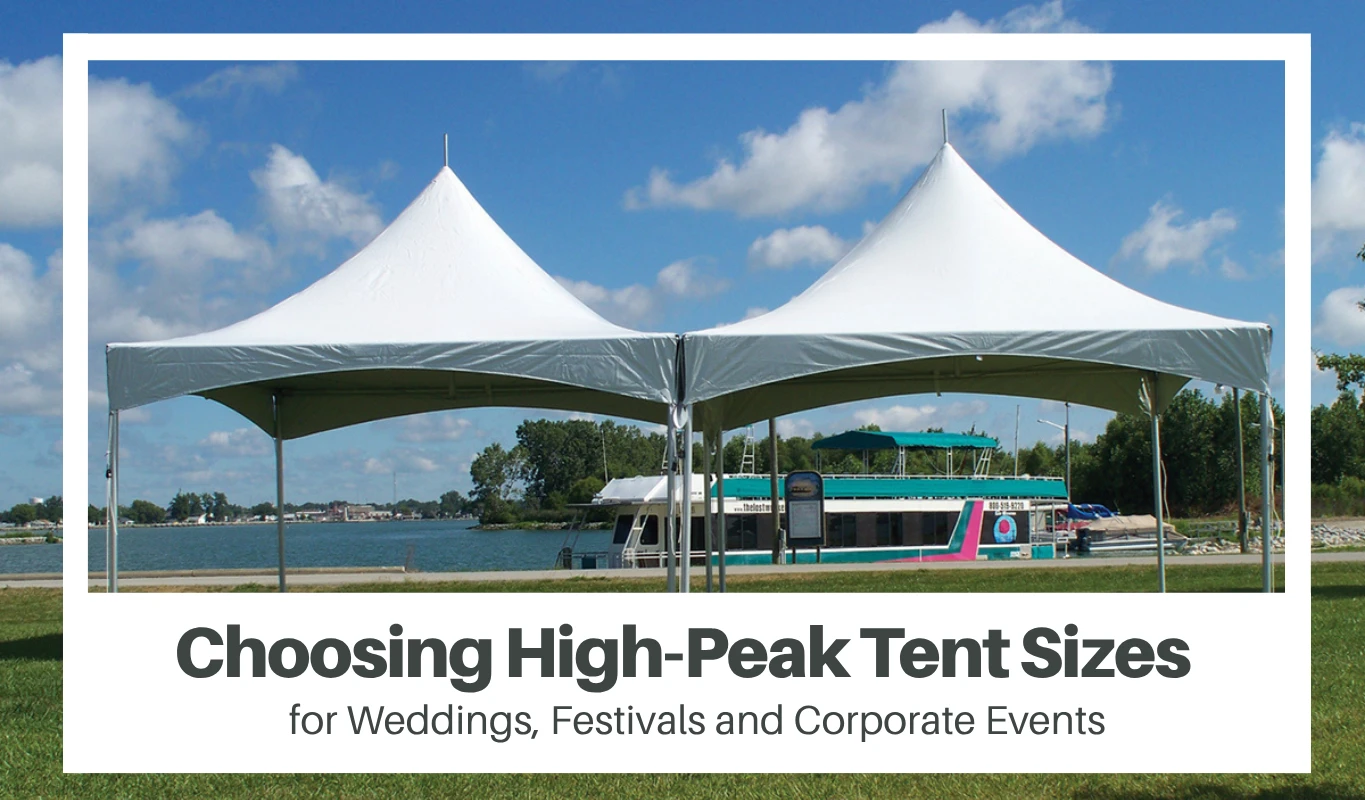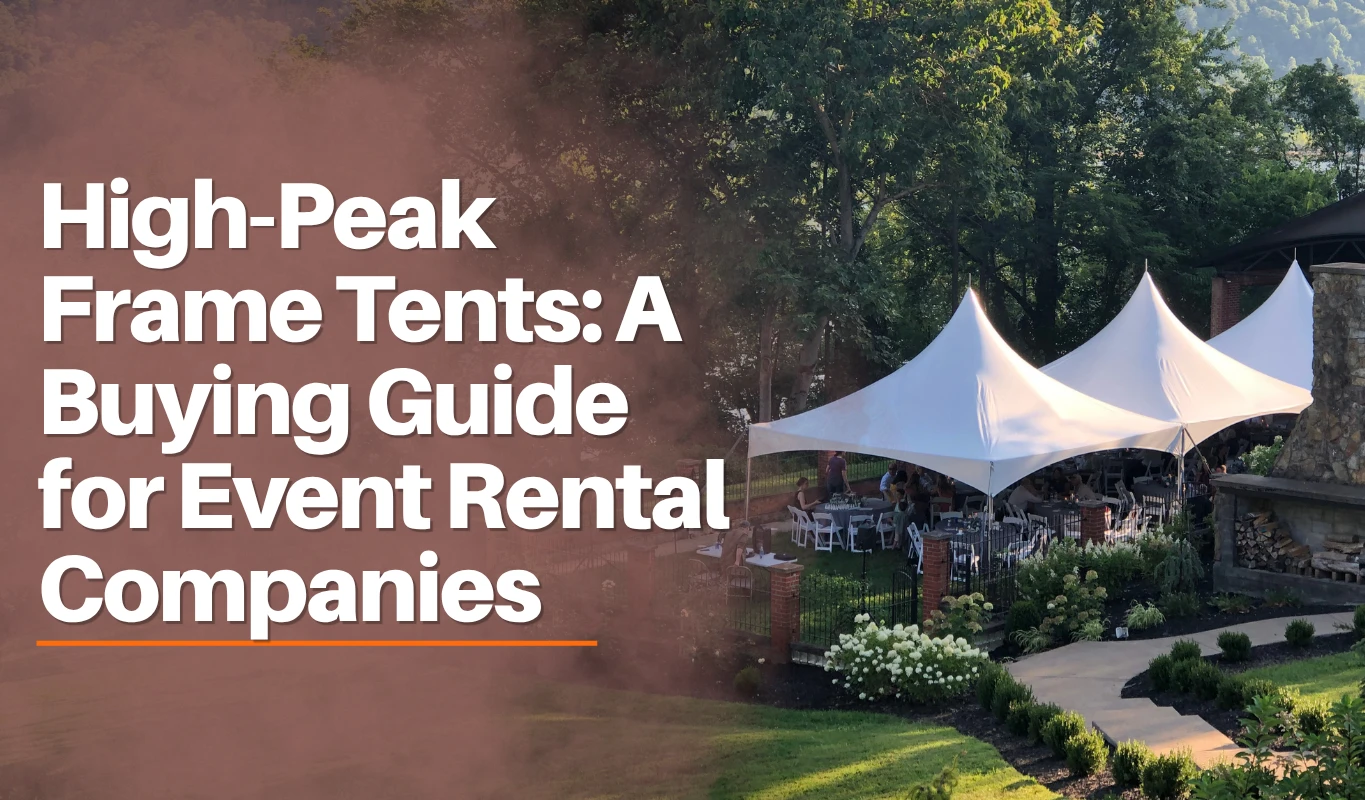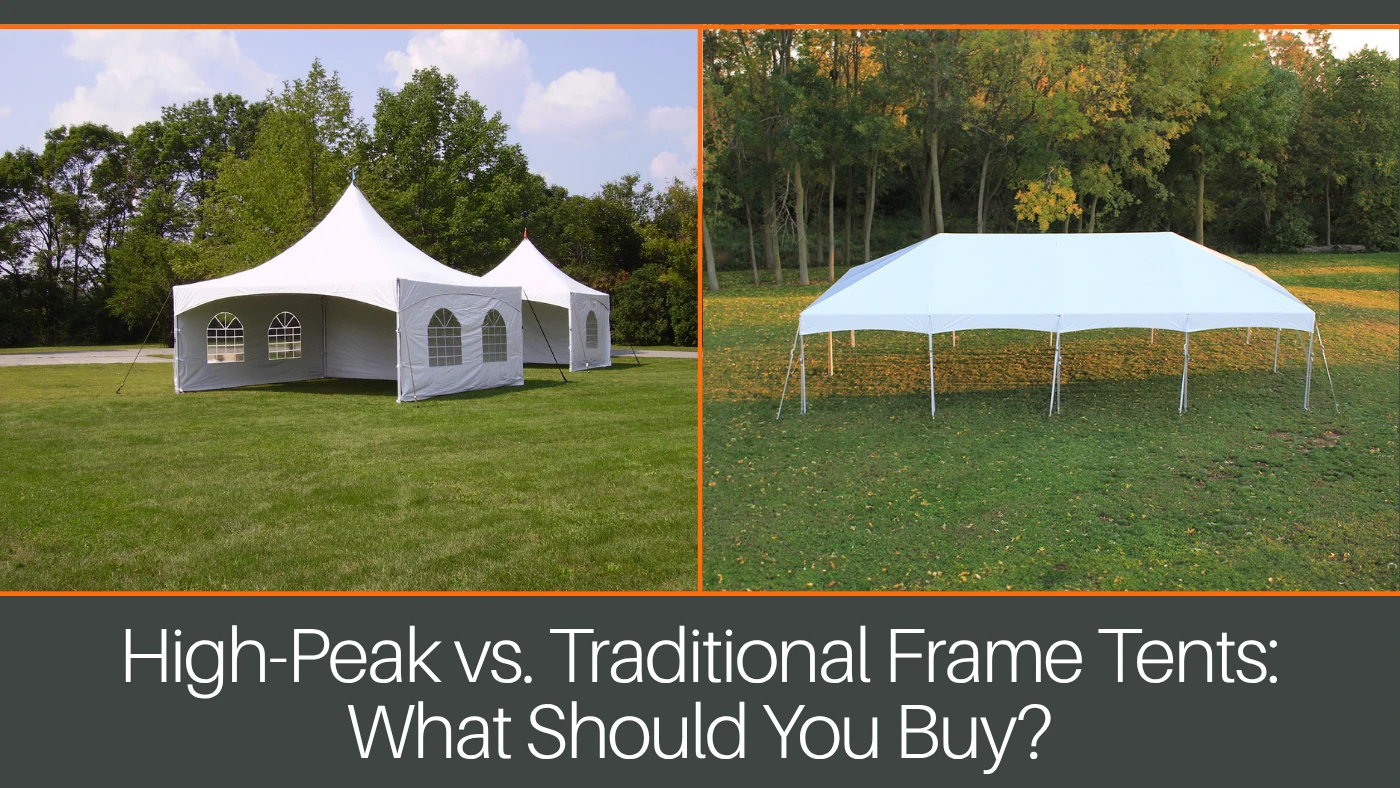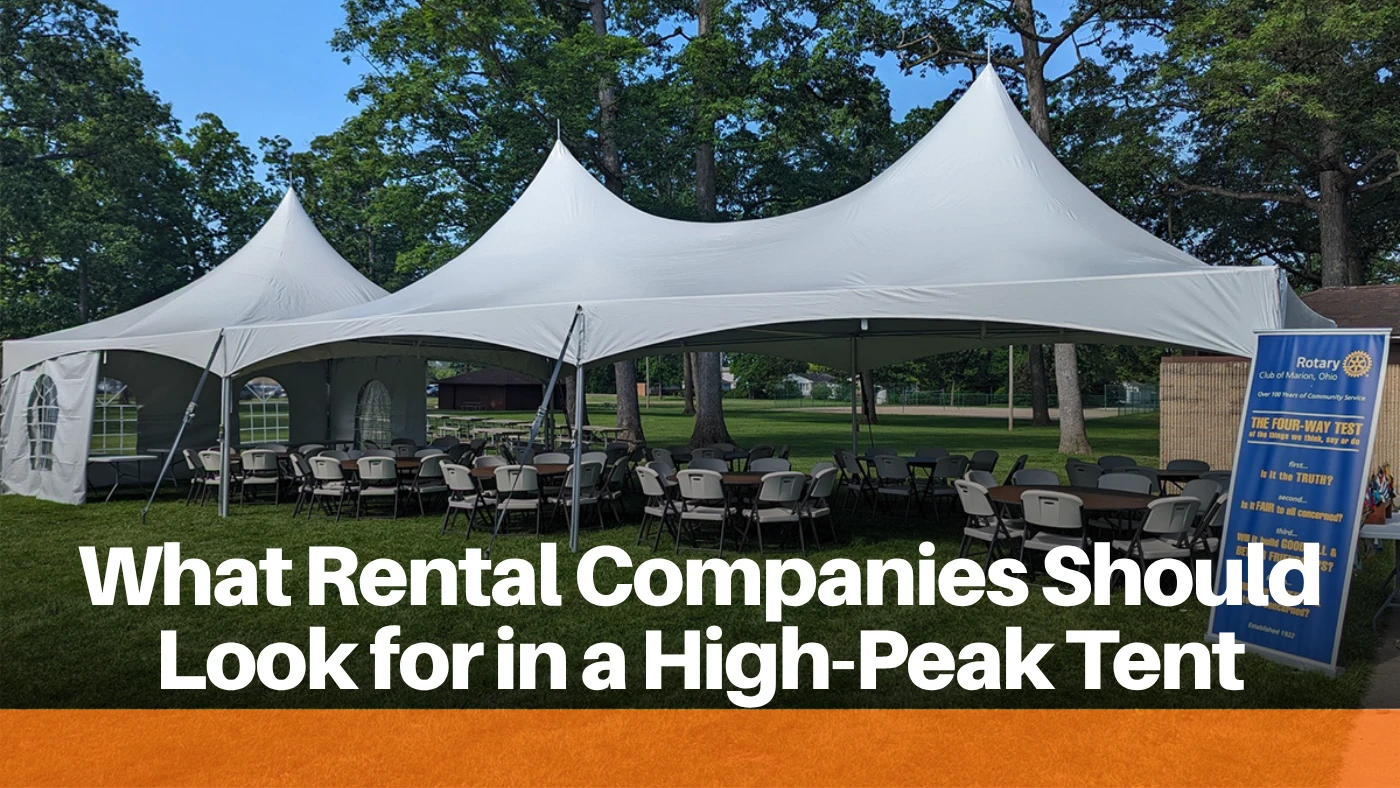








High Peak Frame Tents: What Rental Companies Should Compare
You have customers asking for high peak tents. Your current inventory is booking consistently, and you are thinking about adding more. So you start comparing options. At first glance, many high peak frame tents look similar. White top. Aluminum frame. High center peak. Open interior.
For a rental company, that is only the beginning of the comparison.
The differences start to matter once the tent enters your rental rotation. It gets loaded onto the truck, installed, torn down, cleaned, stored, and sent back out for the next job.
What aluminum is used in the frame? How thick is the tubing? How does the tent maintain tension? What anchoring equipment comes standard? How are the corners secured? How is the edge of the top reinforced?
These are the details your customers may never ask about, but your crew will deal with every week. Before you compare high peak tents on price alone, take a closer look at what you are actually buying.
Pinnacle Series High Peak Frame Tent Comparison
See how the CELINA Pinnacle Series Cross Cable High Peak Frame Tent compares with another high peak frame tent design across the features that matter most to rental companies.
View Comparison Infographic (PDF)The comparison covers the tent top, tubing, fittings, anchoring, vertical tension, wind kit, corner connections, and tent-top edge construction.
Start With the Tent Top
The top is going to see a lot during its time in rental inventory.
Sun. Rain. Dirt. Folding. Unfolding. Transportation. Setup. Tear down.
Then it goes back into storage until the next job.
The CELINA Pinnacle Series uses 16 oz., 580 gsm blackout PVC fabric. The material is waterproof and flame retardant to NFPA 701 and CAN/ULC-S109. It also has anti-UV, anti-cold-crack, anti-wicking, and anti-mildew properties. CELINA conducts a full PVC test every year.
By comparison, some competitor high peak tents use 16 oz., 560 gsm blackout PVC without the same listed mold and mildew protection or ongoing testing. Those differences may not be obvious when the tent is new.
Rental companies need to think beyond the first setup.
Look Beyond Fabric Weight
Seeing "16 oz. PVC" on two product pages does not necessarily mean you are looking at the same material specifications.
Dig a little deeper.
Ask:
- Is the material tested for flame resistance?
- What standards does it meet?
- Does it have UV protection?
- How does it perform in cold temperatures?
- Does it have anti-wicking protection?
- Does it have mildew protection?
- Does the manufacturer continue testing the material?
The tent top has to go through more than one event. Look at the specifications with repeated rental use in mind.
Check What Is Actually Inside the Frame
Next, look at the tubing.
This is easy to overlook when two completed tents have roughly the same shape.
The CELINA Pinnacle Series uses 6061-T6 aluminum tubing with a 0.128-inch (3.25 mm) wall thickness and a hardness rating of 16HW. Competitor high peak tents may use lighter 6005-T5 aluminum. In the system evaluated by CELINA, that tubing has a 0.123-inch (3.13 mm) wall thickness and a hardness rating of 13HW. Those numbers tell you more about what is underneath the tent top.
For a rental operator, that matters.
Your frame is going to be handled by the crew, loaded into trucks, unloaded at jobs, assembled, taken apart, and stored repeatedly. The frame deserves the same attention you give the top.
Don't Skip the Fittings
One fitting does not look like a big deal when you are shopping for a complete tent.
On a Friday afternoon before a booked weekend, it can suddenly become a very big deal. Your truck needs to leave. The tent is on the schedule. Now your guys are trying to find the part they need to finish loading.
Know what fittings your system uses before it enters your inventory.
Look at the Corner Fittings
Pinnacle corner fittings have a 0.26-inch (6.65 mm) wall thickness and include a reinforced hook.
The competitor corner fitting evaluated by CELINA has a 0.18-inch (4.46 mm) wall thickness.It is not a detail your customer will see on the quote.
It is still worth knowing what your crew will be working with.
Check the Spreader Inserts
Material choice matters here too.
The Pinnacle uses heavy-duty aluminum spreader inserts. Some competitor systems combine aluminum and steel in the spreader insert. Introducing steel also introduces another material your operation needs to account for when equipment is repeatedly exposed to outdoor conditions.
For a rental company, knowing what the fittings are made from also helps when it comes time to inspect inventory or order replacement parts.
Look at the Anchoring System
Anchoring is not an accessory you figure out after the tent arrives.
Before buying any high peak frame tent, know what the manufacturer requires and what comes with the system.
The Pinnacle uses a 24-inch anchor with a hook at the base plate. Some competitor systems use a shorter 20-inch straight anchor. There is also a difference in how vertical tension is handled.
Ratchet Straps vs. Rope Tension
The Pinnacle uses a 1-inch ratchet strap assembly for vertical tension.
Some competitor high peak systems rely on rope. Rope can weather over time and lose tension. A ratchet strap gives the crew a different way to apply and maintain tension.
For a rental company, think about this from the crew's side.
These are the guys who will install the tent repeatedly during busy season. The tensioning system becomes part of their setup process every time that tent leaves the warehouse.
Find Out What Comes With the Wind Kit
This is where comparing purchase prices can get misleading.
One high peak tent may have a lower starting price. Then you realize some of the equipment you need is optional. The CELINA Pinnacle wind kit comes included with the tent. It uses 2-inch ratchet strap assemblies and 36-inch stakes. Some competitor systems treat the wind kit as an optional accessory and use 1.5-inch rope tension with 24-inch stakes.
Before comparing the final cost, find out exactly what you are getting.
Is the Wind Kit Included?
Do not assume it is part of the package because you saw it in a product photo or setup video.
Check the actual package contents.
What Stakes Come With the Tent?
Look at the type and length of the included stakes and confirm the manufacturer's installation requirements.
Are the Tensioning Components Included?
Find out whether the required ropes, straps, or other tensioning components come standard or need to be purchased separately.
What Will You Need to Add Before the First Job?
Price the tent as your crew will actually use it.
If required components are sold separately, include them when comparing the real purchase cost.
Pay Attention to the Corners
Corners are easy to ignore until something slips or does not stay where your crew expects it to.
The Pinnacle uses galvanized steel closed carabiners at the corners. Some competitor high peak tents use an open S-shaped steel hook instead The Pinnacle also includes corner flaps that secure each corner. Those flaps are not present on every competing design.
These are small components in the overall tent system.
But rental equipment is full of small components that suddenly matter when crews start putting that equipment to work.
Check the Tent Top Edge
Take a look at how the edge of the top is finished too.
Some high peak tent tops use a rope edge. The Pinnacle uses a 1-inch webbing-reinforced overlapped edge. That distinction matters because the edge repeatedly deals with tension during setup and use.
Rope can weather and lose tension over time. The reinforced webbing and overlapped construction give the Pinnacle additional reinforcement around the tent-top edge.
Your event customer probably will not ask how the edge of the top is constructed.
Your crew may be much more interested after dozens of setups and tear downs.
Compare the Whole Tent, Not One Number
It is easy to get stuck comparing a single specification.
Fabric weight.
Tube thickness.
Stake length.
Price.
None tells you everything by itself.
Instead, look at how the complete system will work inside your rental operation.
Before buying a high peak frame tent, compare:
- Tent-top material
- Fabric testing
- Aluminum type
- Tubing wall thickness
- Corner fittings
- Spreader inserts
- Base plate anchors
- Vertical tension
- Wind kit
- Corner connections
- Tent-top edge
- Included equipment
- Replacement parts
Then bring those specifications back to your own operation.
How often will the tent go out?
What does your crew already know how to install?
What parts will you need to keep on hand?
What comes standard with the tent?
What will you need to purchase separately?
And if something gets damaged in the middle of busy season, can you replace the individual part?
That is a more useful comparison than deciding based on the first number on the quote.
Think About What Happens After the First Rental
The first setup is not the hard part.
The tent is new. All the pieces are there. Everything just came out of the packaging. Think about six months later. It is Monday morning after a busy weekend. Tops are coming back to the warehouse. One needs cleaning. Another needs to be inspected. A fitting is missing from one setup, and that tent is booked again Friday.
That is the normal cycle of rental inventory.
Replacement parts and compatible accessories matter because eventually something will need attention. Before committing to a tent system, find out what individual components you can order.
Can you replace a fitting?
Can you order another top?
Can you get the correct stakes, straps, sidewalls, or frame components?
A serviceable part should not automatically turn into a complete tent replacement.
Where the Pinnacle Fits in Rental Inventory
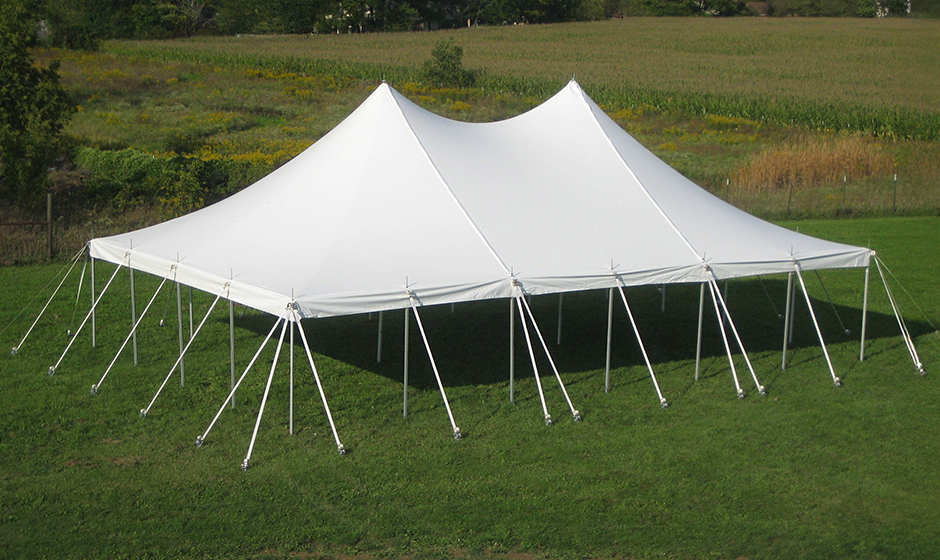
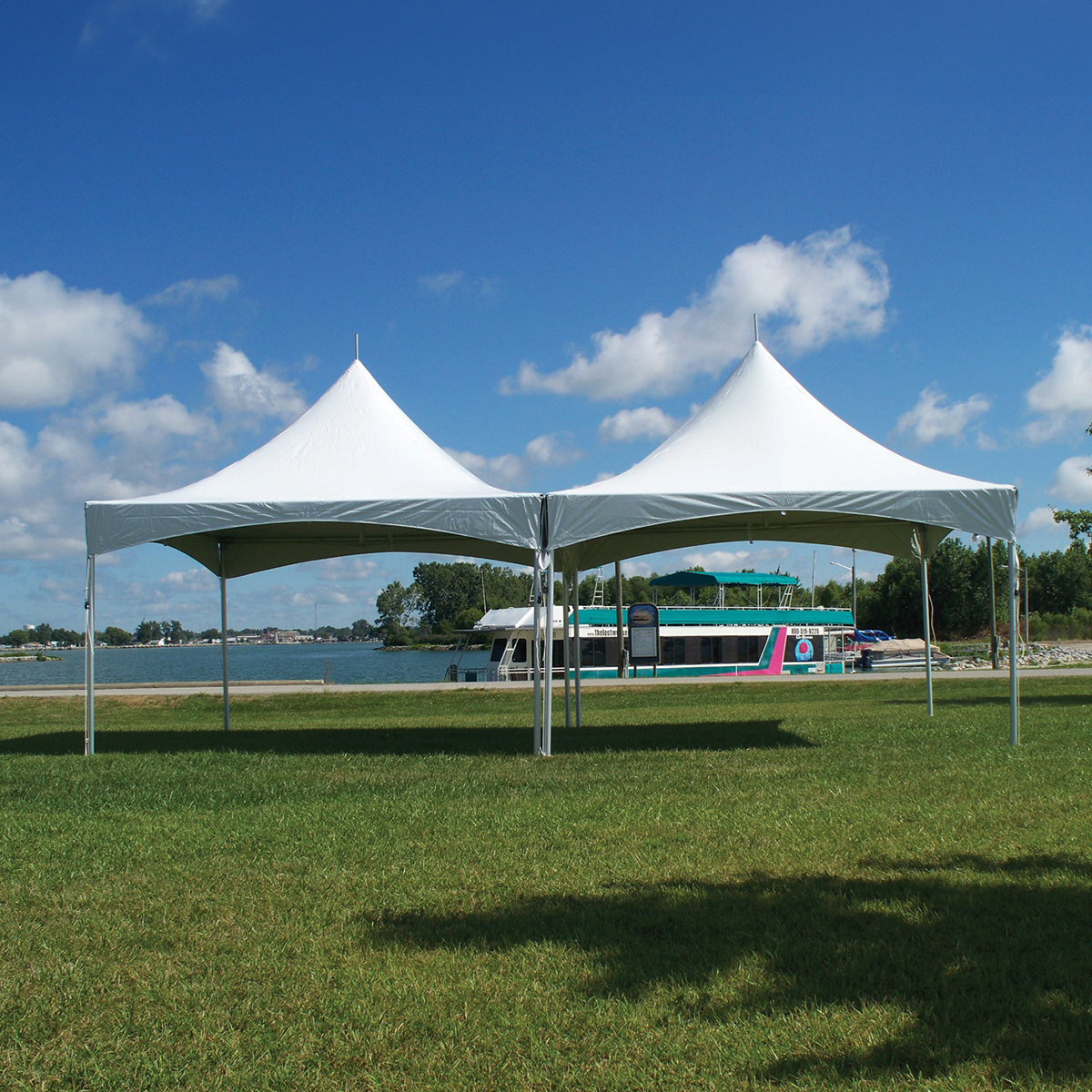
The CELINA Pinnacle Series is a cross cable high peak frame tent.
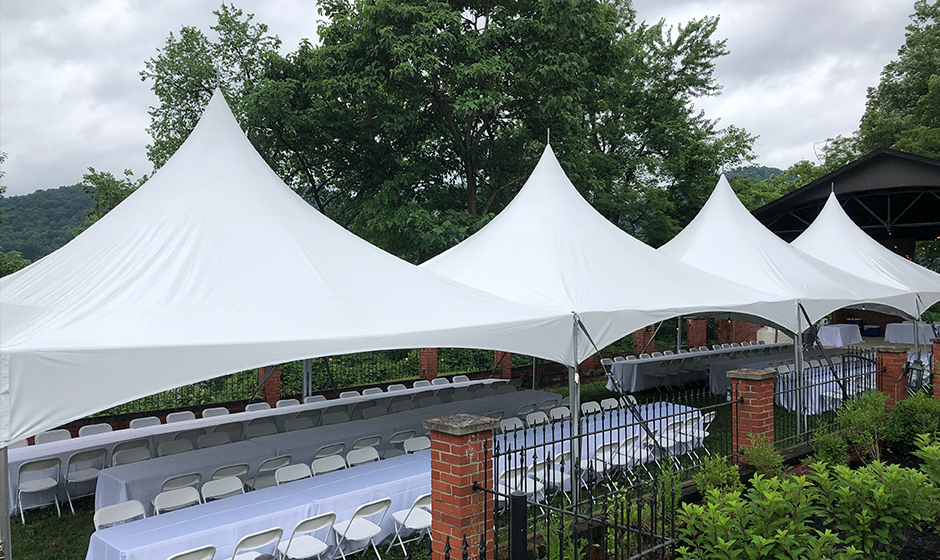
Its cable-supported peak gives customers the high-peak appearance they are asking for while keeping the space underneath free from a center pole. That open interior gives rental companies room to use the tent in different ways. It might cover dining tables at a wedding one weekend.
The next weekend, it could go out as a bar tent, registration area, vendor space, catering tent, or part of a larger event layout. But versatility alone is not a reason to buy more inventory.
Look at your bookings.
If your high peak inventory keeps going out, you are regularly subrenting this style, or you are turning away jobs because you do not have enough available, adding Pinnacle inventory may make sense. If the demand is not there yet, keep your money out of the warehouse until the bookings support the purchase.
What Matters Before You Buy?
A high peak frame tent needs to do more than look good when it is first installed.
For rental companies, the real test starts once the tent enters regular rotation.
Look at the top. Check the tubing and fittings. Understand the anchoring and tensioning system. Find out what comes with the tent. Know what replacement components you can get later.
Then ask the question that matters most:
Does this tent make sense for the jobs you're actually booking?
If high peak tents are already earning their place in your inventory, the CELINA Pinnacle Series gives you a cross cable frame system designed with details that matter beyond the first setup.
CELINA supplies Pinnacle Series tents, compatible components, replacement parts, sidewalls, anchoring equipment, and other event rental inventory through GetTent.com.
CELINA Pinnacle Series vs. Comparable High Peak Frame Tent
| Feature | CELINA Pinnacle Series | Comparable High Peak Frame Tent |
|---|---|---|
| Tent Top Fabric | 16 oz. (580 gsm) Blackout PVC | 16 oz. (560 gsm) Blackout PVC |
| Material Testing | Annual PVC testing, NFPA 701 & CAN/ULC-S109, anti-UV, anti-cold-crack, anti-wicking, anti-mildew | NFPA 701 listed; fewer published material protections |
| Frame Tubing | 6061-T6 Aluminum 0.128 in (3.25 mm) 16HW |
6005-T5 Aluminum 0.123 in (3.13 mm) 13HW |
| Corner Fittings | 0.26 in (6.65 mm) reinforced | 0.18 in (4.46 mm) |
| Spreader Inserts | Heavy-duty aluminum | Aluminum & steel combination |
| Anchoring | 24-inch hooked anchor | 20-inch straight anchor |
| Vertical Tension | 1-inch ratchet strap assembly | Rope tension |
| Wind Kit | Included 2-inch ratchet straps 36-inch stakes |
Optional 1.5-inch rope 24-inch stakes |
| Corner Connection | Closed galvanized carabiner with corner flap | Open S-hook, no corner flap |
| Tent Top Edge | 1-inch reinforced webbing overlap | Rope edge |
This summary highlights the key differences discussed throughout this guide. Always review complete specifications and included equipment before purchasing commercial rental inventory.
Ready to Expand Your High Peak Tent Inventory?
Compare commercial-grade Pinnacle Series high peak frame tents, replacement parts, anchoring systems, sidewalls, and accessories designed for demanding rental operations.
Commercial Grade | Replacement Parts Available | Fast Shipping
Frequently Asked Questions
What Is a Cross Cable High Peak Frame Tent?
A cross cable high peak frame tent uses a frame and cable system to create the raised center peak. It does not require a center pole underneath the peak, leaving the interior open for tables, chairs, bars, displays, and other event layouts.
What Should Rental Companies Compare When Buying a High Peak Tent?
Compare more than size and price. Look at the tent-top material, frame tubing, fittings, anchoring, tensioning system, wind kit, corner connections, included equipment, and replacement-part availability.
Does the CELINA Pinnacle Include a Wind Kit?
Yes. The CELINA Pinnacle wind kit is included with the tent. It uses 2-inch ratchet strap assemblies and 36-inch stakes.
What Material Is the CELINA Pinnacle Tent Top?
The Pinnacle uses 16 oz., 580 gsm blackout PVC fabric. It is waterproof and flame retardant to NFPA 701 and CAN/ULC-S109. The material also has anti-UV, anti-cold-crack, anti-wicking, and anti-mildew properties.
What Aluminum Does the Pinnacle Frame Use?
The Pinnacle uses 6061-T6 aluminum tubing with a 0.128-inch (3.25 mm) wall thickness and a hardness rating of 16HW.
Should You Add a High Peak Tent to Your Rental Inventory?
Start with your bookings. If your existing high peak tents are regularly booked, you are subrenting equipment, or you are turning away suitable jobs, more inventory may make sense. If demand is still occasional, you may be better off waiting until the bookings justify the purchase.