




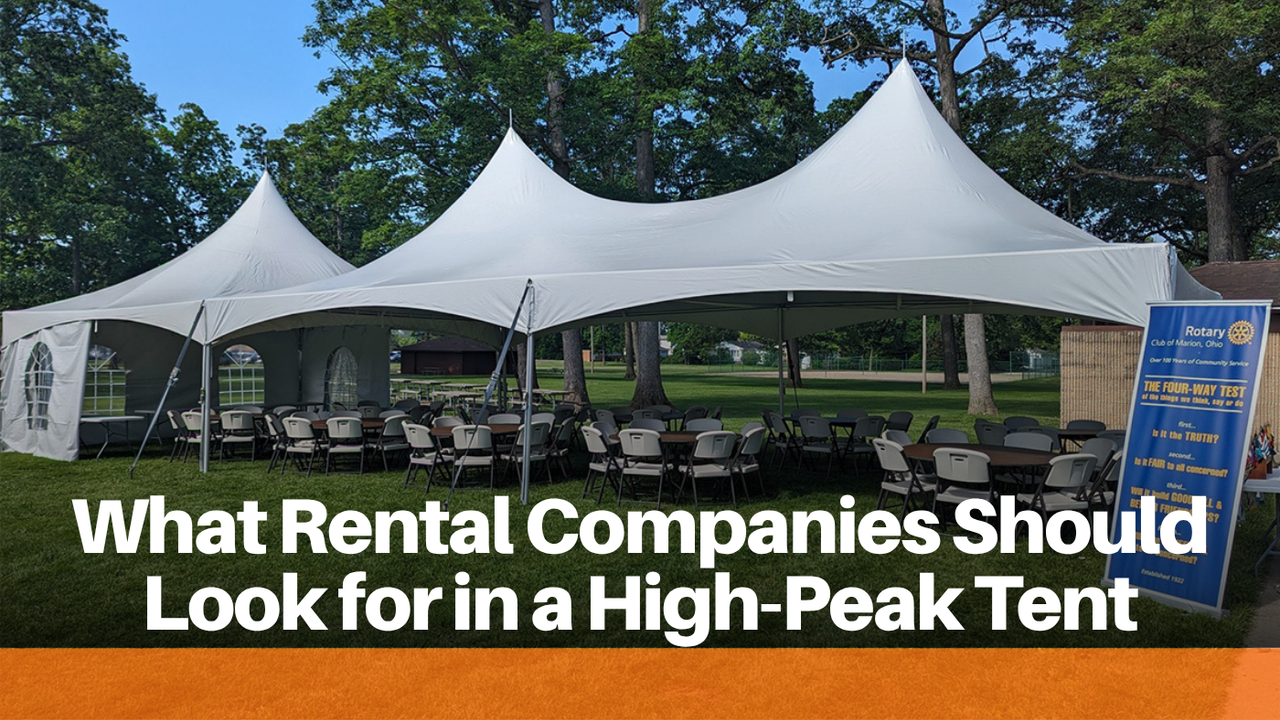
What Should Rental Companies Look for in a High-Peak Tent?
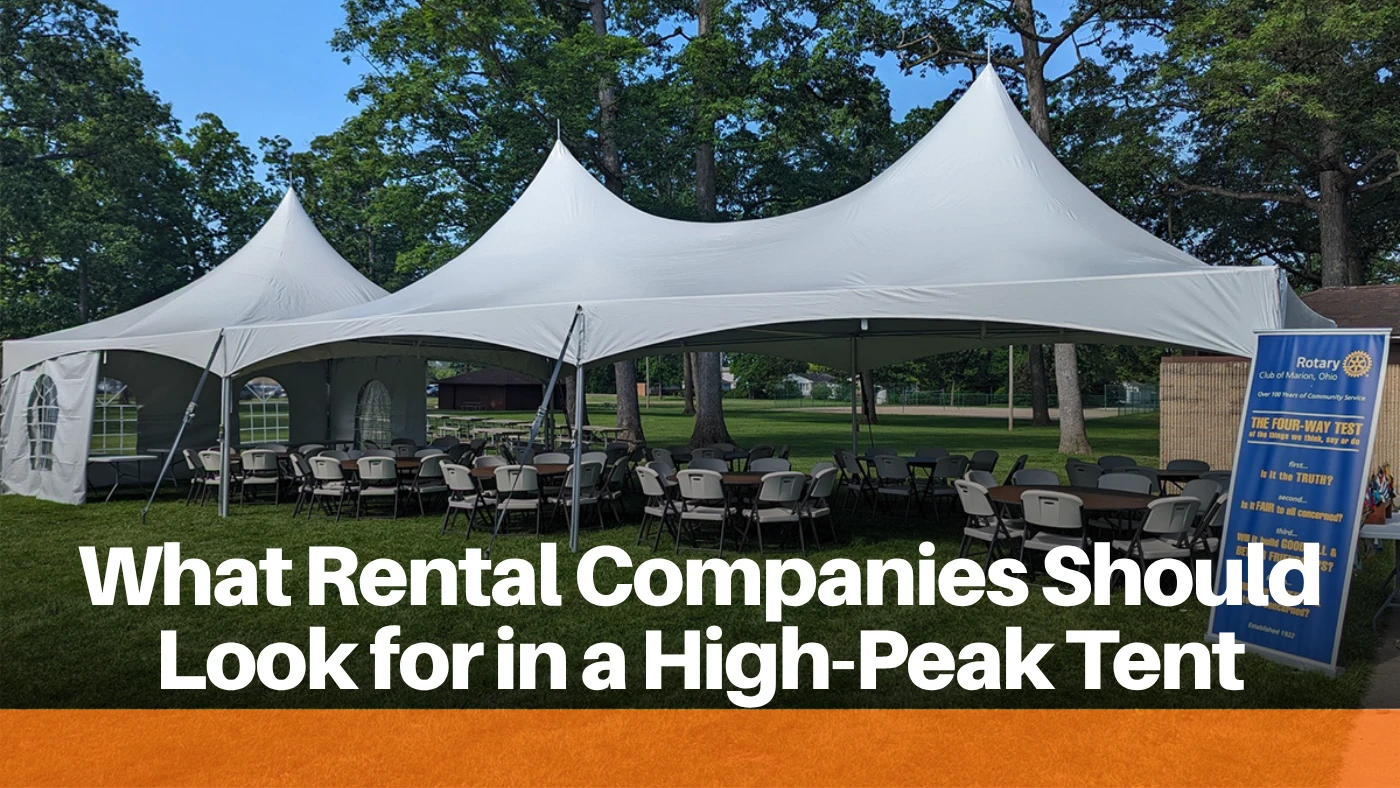
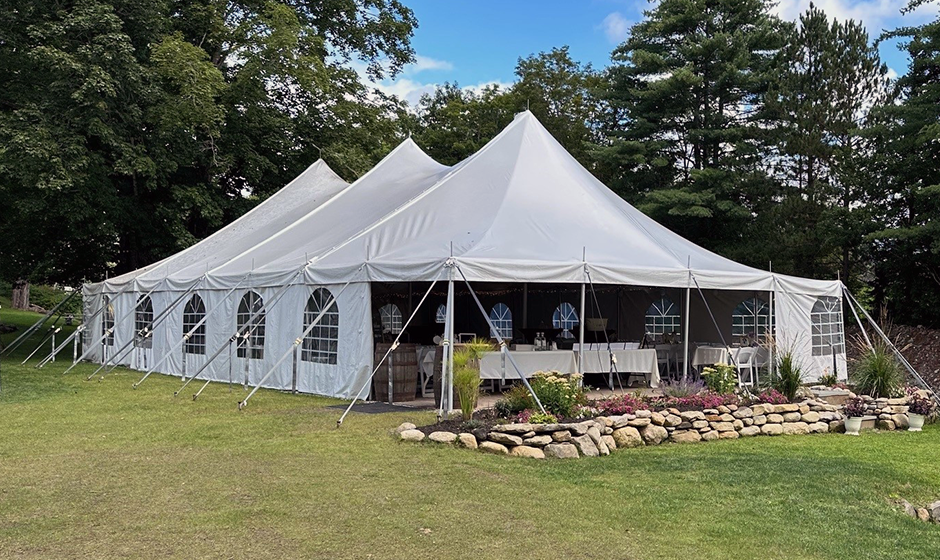
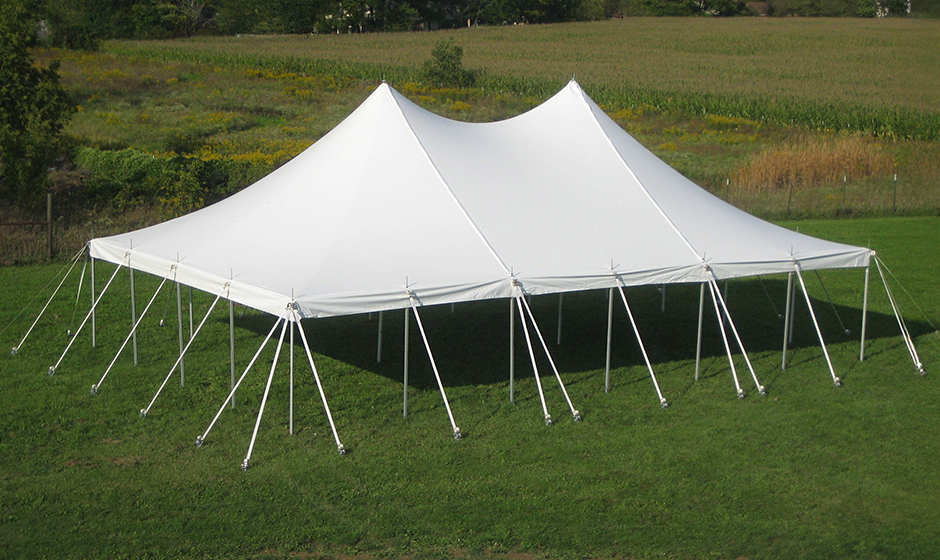
It's the off-season, and you're looking at high-peak tents for next year's inventory. You've found a few options that seem to fit your budget, and from the product photos, they look almost identical. The same white top. The same raised peak. Roughly the same dimensions.
So what actually makes one worth buying over another?
For rental companies, the answer goes far beyond appearance or purchase price. A high-peak tent has to survive repeated setups, tear downs, transportation, cleaning, and storage throughout the season. Your crew handles the frame every weekend, while the tent top is exposed to weather, dirt, moisture, and constant use.
That's why construction details matter. Fabric specifications, frame materials, fittings, anchoring systems, and replacement-part availability all play a role in how well a tent fits into your rental operation.
Before adding another high-peak tent to your fleet, here are the features worth examining.
Start With the Tent Top Material
The tent top is the first thing customers notice, but appearance alone tells you very little about its construction. Two high-peak tents may look nearly identical while using completely different materials, protective coatings, and manufacturing standards.
For rental operators, those differences become noticeable after dozens of rentals. Tent tops spend their lives outdoors, then return to the warehouse to be folded, transported, cleaned, and stored before heading back out again. Choosing a material designed for commercial use can make long-term maintenance easier.
CELINA's Pinnacle Series High Peak Frame Tents use 16 oz. (580 gsm) blackout PVC fabric. Published specifications include waterproof construction, anti-UV protection, anti-wicking treatment, anti-mildew properties, cold-crack resistance to -22°F (-30°C), NFPA 701 and CAN/ULC-S109 flame-retardant compliance, and annual PVC material testing.
Buying Tip: Don't compare tents by fabric weight alone. Compare the complete material specification, testing documentation, protective treatments, and maintenance requirements.
Don't Compare Fabric Weight Alone
Fabric weight is only one specification. A 16 oz. tent top from one manufacturer may have very different protective treatments or testing documentation than another product with the same listed weight.
When comparing tent materials, ask about:
- Flame-retardancy certifications
- UV protection
- Waterproof construction
- Cold-weather performance
- Mildew resistance
- Available testing documentation
This is particularly important for commercial rental companies, where venue requirements and local regulations may determine which equipment can be installed.
The goal isn't simply to buy a heavier tent top—it's to understand what the material is designed to withstand and how you'll maintain it throughout its service life.
Look Closely at the Frame Construction
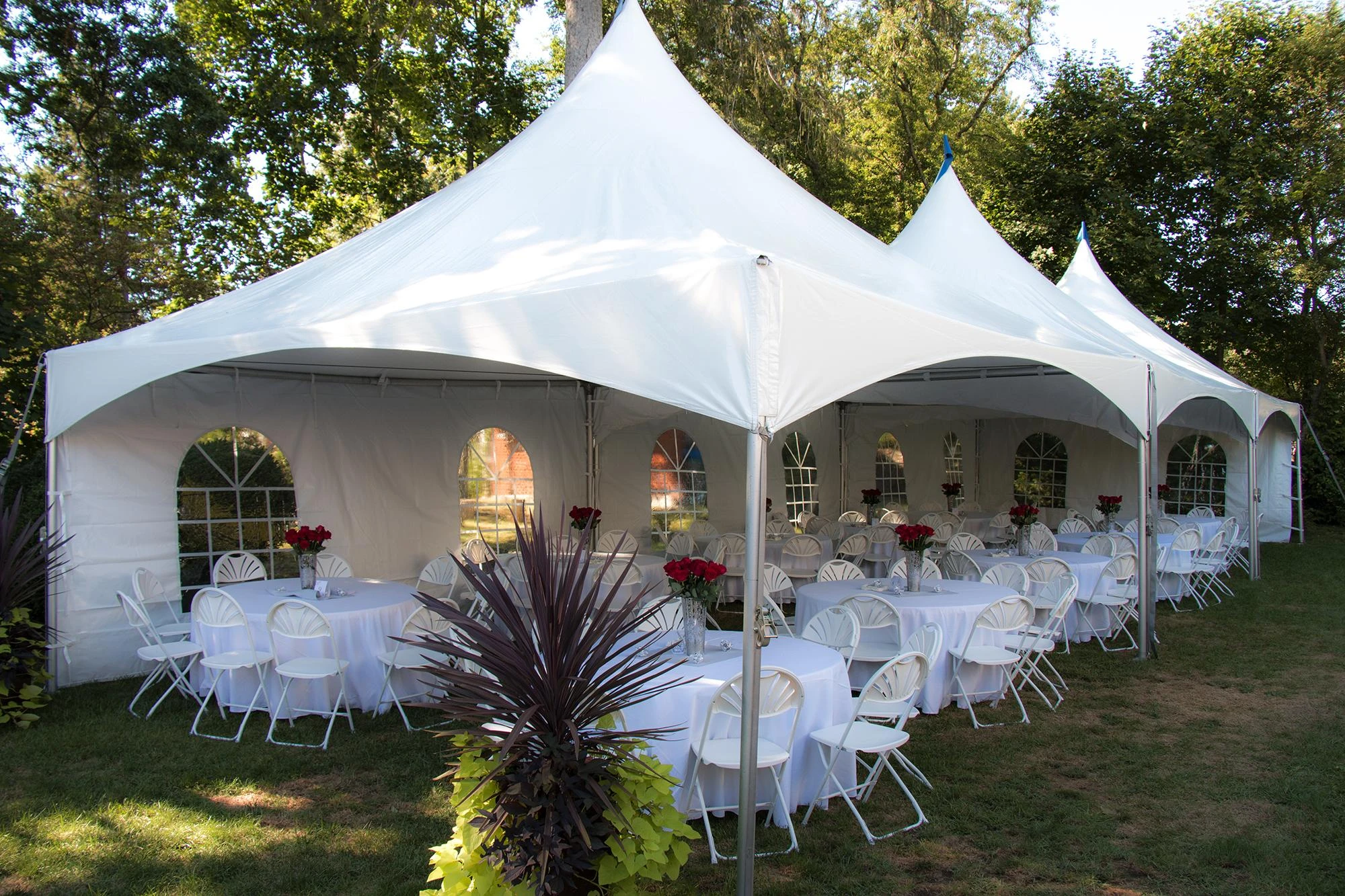
The frame deserves just as much attention as the fabric. Every rental involves loading it onto the truck, assembling it on-site, dismantling it afterward, and returning it to storage. Over hundreds of rentals, those repeated handling cycles become part of the equipment's real-world performance.
Different manufacturers may use different aluminum alloys, tubing dimensions, wall thicknesses, and fitting designs. Those differences aren't always obvious in product photos, making published specifications especially important when comparing systems.
For example, CELINA's Pinnacle Series uses 6061-T6 aluminum tubing with a 0.128-inch (3.25 mm) wall thickness and a published hardness rating of 16HW.
A competing high-peak system evaluated by CELINA uses 6005-T5 aluminum tubing with a 0.123-inch (3.13 mm) wall thickness and a listed hardness rating of 13HW.
These published specifications help identify measurable differences between products. However, tubing thickness or alloy alone should never be treated as proof of overall structural strength or wind performance. Engineering, frame design, approved installation methods, and proper anchoring all contribute to the performance of a complete tent system.
| What to Compare | Why It Matters |
|---|---|
| Aluminum alloy | Different alloys have different mechanical properties and intended applications. |
| Tubing wall thickness | Part of the overall frame specification, but not the only indicator of performance. |
| Published engineering information | Helps verify how the complete tent system is designed and supported. |
| Installation documentation | Shows what is required for proper assembly and anchoring. |
Consider What Your Crew Will Handle
Before choosing a frame system, think about how it moves through your operation. Your crew has to load the components, transport them to the venue, assemble the structure, dismantle it after the event, and organize everything back in the warehouse.
Longer or heavier frame components may affect truck loading, storage layouts, installation time, and the number of crew members required. A system that works well for one rental company may not be the best fit for another with different equipment or staffing.
Request the complete component list, individual weights, and installation instructions before making a purchase. Those documents often reveal practical considerations that aren't obvious in a product brochure.
Pay Attention to Fittings and Connection Points
Fittings rarely appear in marketing photos, but they're essential to the complete frame system. Corner fittings, spreader inserts, hooks, and connection hardware transfer forces throughout the structure and are handled every time the tent is assembled.
The Pinnacle Series uses corner fittings with a 0.26-inch (6.65 mm) wall thickness, reinforced hooks, and aluminum spreader inserts. By comparison, the competing system referenced in CELINA's published specifications uses 0.18-inch (4.46 mm) corner fittings and spreader inserts that combine aluminum and steel.
These measurable construction differences are worth reviewing whenever you're comparing commercial tent systems. Just as importantly, your crew should inspect fittings before every installation and keep replacement components organized between rentals.
Remember: The missing part that delays a Friday installation usually isn't the tent top—it's often a small fitting that wasn't inspected or replaced after the previous rental.
Small Parts Can Create Big Scheduling Problems
Imagine preparing for a Friday installation only to discover that one required fitting is missing. The truck is ready, the customer is expecting delivery, and your crew is scheduled to leave in an hour.
At that point, the purchase price of the tent no longer matters. What matters is whether you can source the correct replacement component quickly enough to keep the job on schedule.
Before buying any high-peak tent system, confirm that individual fittings are available, understand whether they're size-specific, and consider keeping approved replacement components in stock before peak season begins.
Check the Anchoring and Tensioning System
Anchoring is one of the most important aspects of any tent installation. No matter how well a tent is engineered, it must be installed and secured according to the manufacturer's requirements while accounting for the site, ground conditions, and expected weather.
High-peak tent systems may use different stakes, base plate designs, ratchet straps, ropes, or tensioning methods. These components aren't simply accessories—they're part of the engineered system that helps the tent perform as intended.
CELINA's Pinnacle Series uses a 24-inch anchor with a hook at the base plate and a 1-inch ratchet strap assembly for vertical tension. Its listed wind kit includes 2-inch ratchet strap assemblies and 36-inch stakes.
Some competing systems instead use shorter straight anchors and rope-based tensioning methods.
Compare the Complete Anchoring Package
When comparing purchase prices, make sure you're comparing complete systems rather than individual tent tops and frames. One manufacturer may include anchoring equipment that another sells separately, significantly changing the total investment.
Before placing an order, ask the manufacturer:
- What anchoring equipment is included?
- Does the system use ropes, ratchet straps, or another tensioning method?
- What installation procedures are specified for different ground conditions?
- Are additional anchoring accessories sold separately?
A longer stake or a larger ratchet strap doesn't automatically make a tent suitable for every installation. The entire anchoring system should always be used according to the manufacturer's engineering documentation and installation instructions.
Understanding those requirements before your first rental can help prevent delays and unexpected equipment purchases later.
Examine How the Tent Top Connects to the Frame
Another detail worth evaluating is how the tent top attaches to the frame, particularly around the corners and perimeter. These areas remain under constant tension during installation and while the tent is in service.
Different manufacturers may use open hooks, closed connectors, rope edges, or reinforced webbing to secure the fabric.
CELINA's Pinnacle Series uses galvanized steel closed carabiners at the corners together with protective corner flaps. The tent top also features a 1-inch webbing-reinforced overlapped edge rather than a traditional rope edge.
While attachment methods differ between manufacturers, the important consideration for rental companies is how those components perform through repeated installations and inspections.
Rental Insight: The tent top is one of the most frequently handled parts of the entire system. Well-designed attachment points can make inspections and routine maintenance much easier throughout the rental season.
Don't Overlook the Edge of the Top
The perimeter of the tent may seem like a small detail compared to the frame or center peak, but it's one of the areas your crew handles during every setup and teardown.
Check whether the manufacturer uses rope edges, reinforced webbing, or another edge construction. Ask how attachment points should be inspected for wear and what repair methods are approved if damage occurs.
Identifying small issues during routine inspections is far easier than discovering damage on the morning of a scheduled installation.
Consider Setup Time and Crew Requirements
A tent can have excellent specifications on paper but still be a poor investment if the installation process doesn't fit your crew or scheduling requirements.
High-peak frame tents use different structural designs. Some rely on cross cables supporting the center mast, while others use more conventional frame arrangements. Depending on the system, the number of frame components and the installation sequence may vary.
CELINA's Pinnacle Series uses a cross-cable design that supports the raised center peak without placing a center pole on the ground. This creates an open interior and may reduce the number of frame components compared with some conventional frame systems.
However, fewer parts don't automatically guarantee faster installations.
A 10x10 tent presents a very different installation than a 20x40 tent. Site access, crew experience, anchoring requirements, weather, and transportation logistics all influence the total setup time.
Think About the Entire Setup Day
Imagine your company has three separate installations scheduled for the same Saturday. Every job requires loading trucks, driving to the venue, unloading equipment, assembling the tent, completing inspections, and returning later for teardown.
If one tent system consistently requires additional handling or a larger crew, it may reduce the total number of installations your team can comfortably complete during a busy weekend.
Before purchasing new inventory, review the installation procedures and compare them against your existing workflow. Whenever possible, perform a practice installation during the off-season so your crew can become familiar with the system before it goes out on a customer rental.
That preparation often provides more long-term value than simply choosing the lowest purchase price.
Find Out What Replacement Parts Are Available
Even well-maintained rental equipment eventually needs replacement parts. Tent tops can be damaged, fittings wear over time, and small hardware sometimes goes missing during transportation or teardown.
That's why parts availability should be part of your purchasing decision from day one—not something you investigate after equipment has already been booked.
CELINA supplies tent parts and accessories for supported systems, making it possible to replace serviceable components without replacing an entire tent.
Ask About Parts Before You Need Them
Before committing to any high-peak tent system, ask whether you can purchase replacement tent tops, fittings, cables, stakes, ratchet straps, frame tubing, and other individual components.
You should also confirm whether replacement parts are interchangeable across different tent sizes within the same product series.
Don't assume that two high-peak tents with similar dimensions use compatible hardware. Even small differences between manufacturers may prevent components from being safely interchanged.
Keeping equipment organized by tent series and size makes replacement-part management much easier when inventory returns from multiple jobs each weekend.
Think About Maintenance Before the First Rental

The slower winter months are the ideal time to establish maintenance procedures for any new equipment you're planning to add to your fleet.
Before the tent ever goes out on its first rental, your crew should understand how to inspect the fabric, identify worn components, clean the material properly, and store everything according to the manufacturer's recommendations.
These routines matter because tents rarely return from an event in perfect condition. Fabric may come back damp or dirty, fittings may need inspection, and components can easily become mixed together during a busy teardown.
Developing a consistent maintenance process helps protect your investment while making it easier to identify issues before the next customer arrives.
Best Practice: A tent that's inspected after every rental is far less likely to surprise your crew on the morning of the next installation.
Build Maintenance Into Your Rental Process
Create a simple inspection checklist that your crew follows every time equipment returns to the warehouse.
For example, after each rental they can:
- Inspect the tent top for tears, stains, or damaged attachment points.
- Check frame tubing, fittings, and hardware for wear or damage.
- Account for every component before returning equipment to storage.
- Clean and completely dry the tent before long-term storage.
- Record repairs or replacement parts needed before the next booking.
Keeping maintenance records makes it easier to track recurring issues and schedule repairs before your busiest months begin.
For additional maintenance recommendations, read CELINA's Winter Tent Maintenance Guide.
Compare the Tent Against Your Existing Rental Inventory
Before purchasing another high-peak tent, take a step back and evaluate the equipment you already own.
If your rental company already operates one high-peak tent system, expanding with compatible sizes may simplify parts management, crew training, and warehouse organization. Your installers are already familiar with the setup process, and you may already stock approved replacement components.
On the other hand, changing to an entirely different tent system may make sense if it better aligns with the types of events you're booking or addresses limitations you've experienced with your current inventory.
The important thing is understanding how a new system affects your overall operation—not just the purchase price.
Look Beyond the Purchase Price
A new tent often requires more than simply buying the frame and top. Additional anchoring equipment, replacement parts, storage space, freight, accessories, and crew training all contribute to the total investment.
Instead of comparing price tags alone, compare the complete cost of putting the tent into rental service.
Then compare that investment against your expected bookings.
If customers consistently request that style and size, expanding your inventory may be a worthwhile investment. If demand is limited, your budget may be better spent maintaining existing equipment or purchasing a size that supports more frequent rentals.
For more guidance on evaluating commercial tent purchases, read CELINA's Commercial Event Tent Buying Guide.
Use the Off-Season to Make a Better Buying Decision
Winter gives rental companies something that's often in short supply during peak season—time.
Use the slower months to compare specifications, request engineering information, review installation manuals, calculate ownership costs, and verify replacement-part availability before making a purchasing decision.
It's also an opportunity to look back at last season's rentals. Which tent sizes booked most often? Which equipment required the most maintenance? Which jobs required equipment you didn't own?
If you're considering introducing a new high-peak system, involve the people who work with the equipment every weekend. Your installation crew may identify practical considerations that aren't obvious from a product catalog, such as loading efficiency, storage requirements, or differences in the setup process.
The best purchasing decisions combine customer demand with operational practicality.
Choose a High-Peak Tent That Makes Sense for Your Rental Operation
The right high-peak tent isn't determined by a single specification.
Fabric construction, frame materials, fittings, anchoring systems, maintenance requirements, replacement-part availability, and crew familiarity all contribute to how well a tent performs over years of commercial rentals.
Before placing an order, make sure you understand exactly what's included, how the system is installed, and what it will take to keep it operating season after season.
CELINA offers Pinnacle Series High Peak Frame Tents, compatible replacement components, and commercial event equipment designed for professional rental companies.
Whether you're expanding your fleet or replacing aging inventory, choosing equipment that matches your operation can help improve efficiency long after the purchase is complete.
Ready to Upgrade Your High-Peak Tent Inventory?
Browse CELINA's Pinnacle Series high-peak frame tents, replacement components, and commercial event equipment built for demanding rental operations.
Frequently Asked Questions
Which High Peak Frame Tent Is Most Durable for Frequent Rentals?
There isn't a single tent that can be identified as the most durable without comparable testing and long-term performance data. Rental companies should compare fabric specifications, frame construction, fittings, anchoring systems, and replacement-part availability. CELINA's Pinnacle Series includes reinforced tent-top edges, aluminum frame components, and commercial-grade anchoring equipment, making it one option worth evaluating.
What Should Rental Companies Check Before Buying a High-Peak Frame Tent?
Start by reviewing the tent-top material, frame specifications, fittings, anchoring system, included equipment, installation instructions, crew requirements, replacement-part availability, and maintenance procedures. The tent should fit both your expected bookings and your existing operation.
How Can Rental Companies Tell Whether a High-Peak Tent Is Commercial Grade?
Look for documented material specifications, applicable flame-retardancy certifications, engineering information, installation manuals, and replacement-part support. Avoid relying solely on marketing terms such as "commercial grade" or "heavy-duty."
Are High-Peak Frame Tent Parts Interchangeable Between Manufacturers?
Not necessarily. Even tents with similar dimensions may use different tubing, fittings, cables, and attachment systems. Always use manufacturer-approved components and confirm compatibility before ordering replacement parts.
How Often Should Rental Companies Inspect High-Peak Tents?
Tents should be inspected before and after every rental, with additional inspections following severe weather, accidental damage, or installation issues. Follow the manufacturer's maintenance recommendations and replace damaged or missing components before the next event.