



A wedding party tent can be one of the more demanding pieces of equipment in a rental company's inventory. The couple may have a particular look in mind, the venue may have limited installation space, and the final guest count can change the layout considerably. Add tables, chairs, a dance floor, catering stations, and decorations, and what appears to be a straightforward tent rental quickly becomes a much larger planning job.
For rental operators, wedding bookings are an opportunity to provide more than covered space. They often involve multiple pieces of equipment, staged installations, and coordination with venues, wedding planners, florists, caterers, DJs, and other vendors. The challenge is making sure the tent you recommend supports the event while remaining practical for your crew to transport, install, maintain, and store.
Whether you're reviewing your current wedding inventory or planning purchases before next season, understanding the differences between tent styles, sizes, and configurations can help you make better long-term investment decisions.
Planning Tip: The most profitable wedding tent isn't always the largest one—it's the one that fits the venue, supports the customer's layout, and keeps your installation crew operating efficiently.
What Makes a Good Wedding Party Tent?
Wedding customers usually focus on appearance first. They want a tent that complements the venue, photographs well, and provides an elegant backdrop for one of the most important days of their lives.
Rental companies have to think much further ahead.
A good wedding party tent should provide the required covered space, support the planned layout, and suit the installation site. It should also fit the rental company's day-to-day operations, including transportation, setup time, maintenance, storage, and long-term durability. A tent that looks beautiful in photos but creates unnecessary installation challenges may not be the best choice for every wedding.
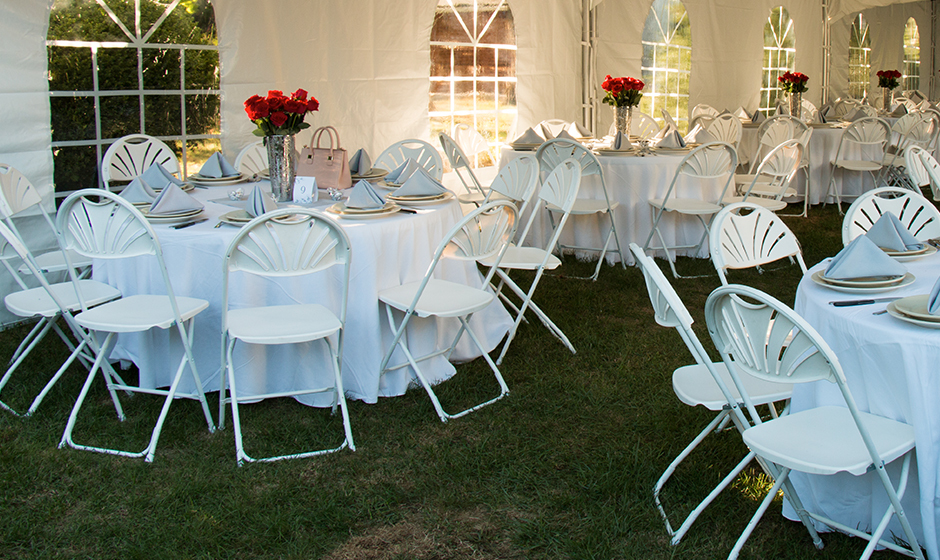
The most versatile wedding inventory balances visual appeal with operational practicality. White tent tops remain one of the most popular choices because they complement almost every wedding theme, while different frame and pole systems provide unique rooflines and interior layouts. Accessories such as sidewalls, lighting, ceiling liners, and draping allow the same tent to serve a variety of wedding styles throughout the season.
That flexibility becomes increasingly valuable when the same equipment is booked weekend after weekend.
Choosing the Right Wedding Party Tent Style
Not every outdoor wedding requires the same type of tent. A small garden ceremony, a formal reception, and a large estate celebration all present different layout requirements, guest expectations, and installation challenges.
Understanding where each tent style performs best helps rental companies recommend equipment that truly fits the event instead of trying to force every customer into the same package.
Frame Tents for Flexible Wedding Layouts
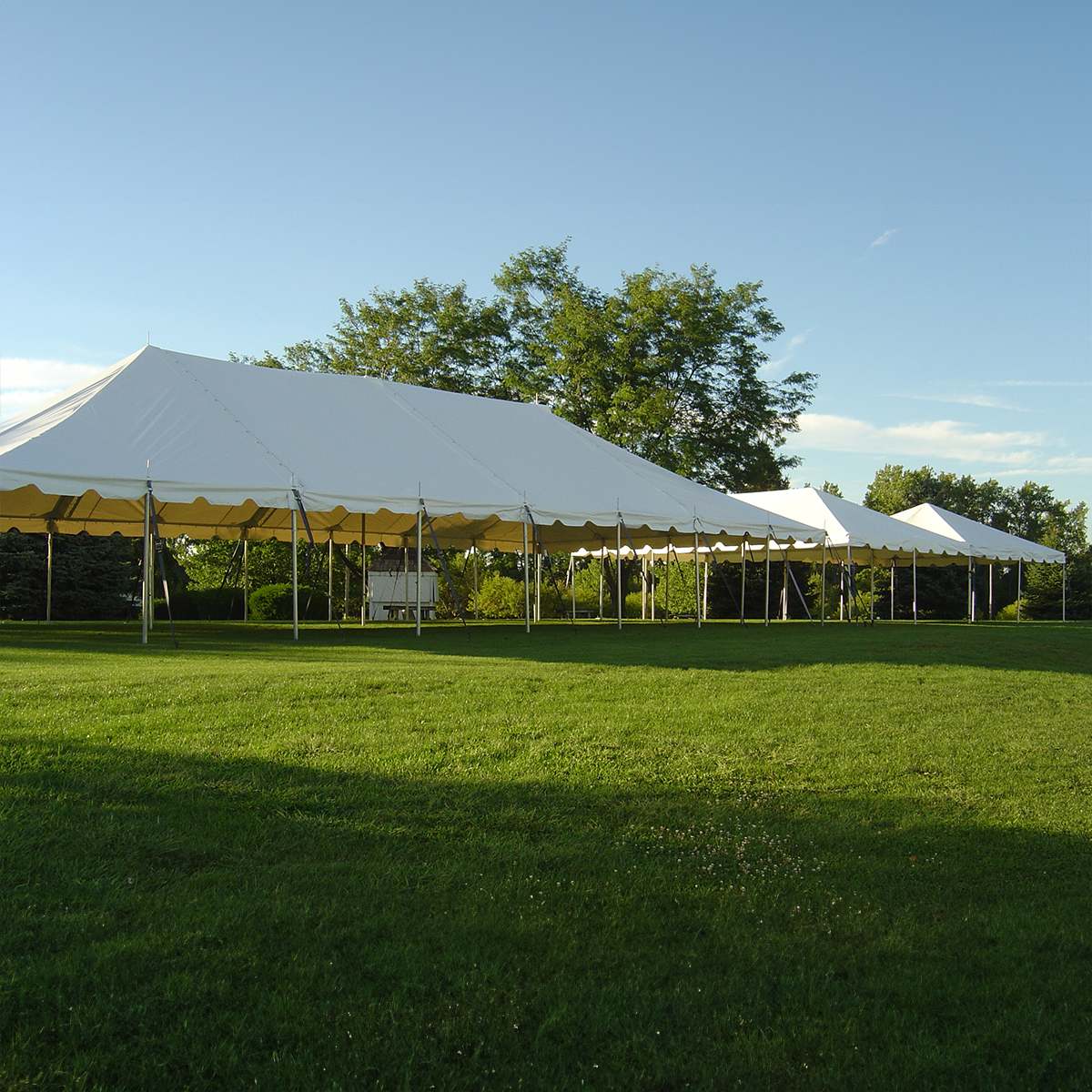
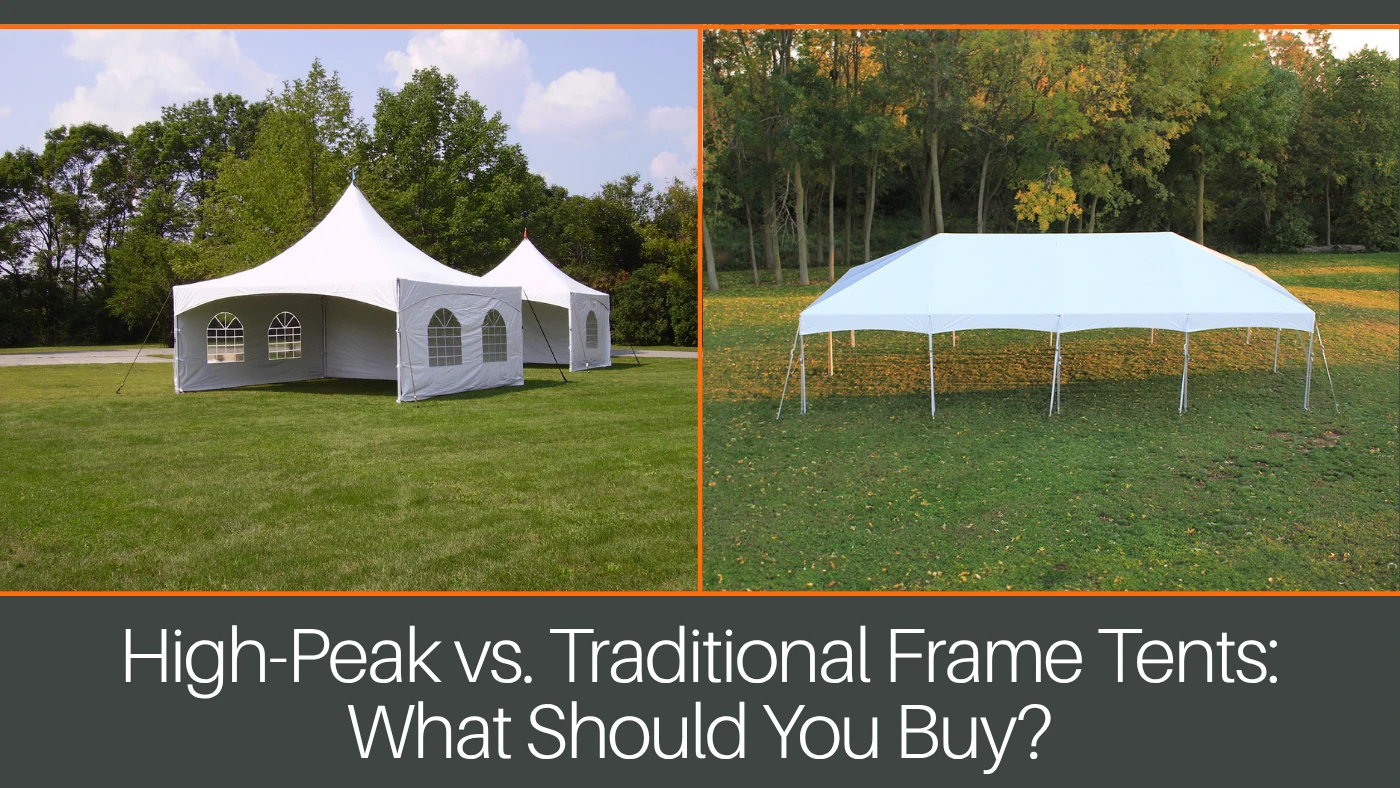
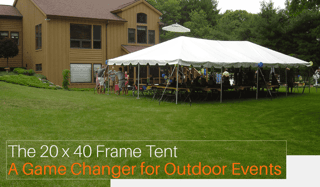
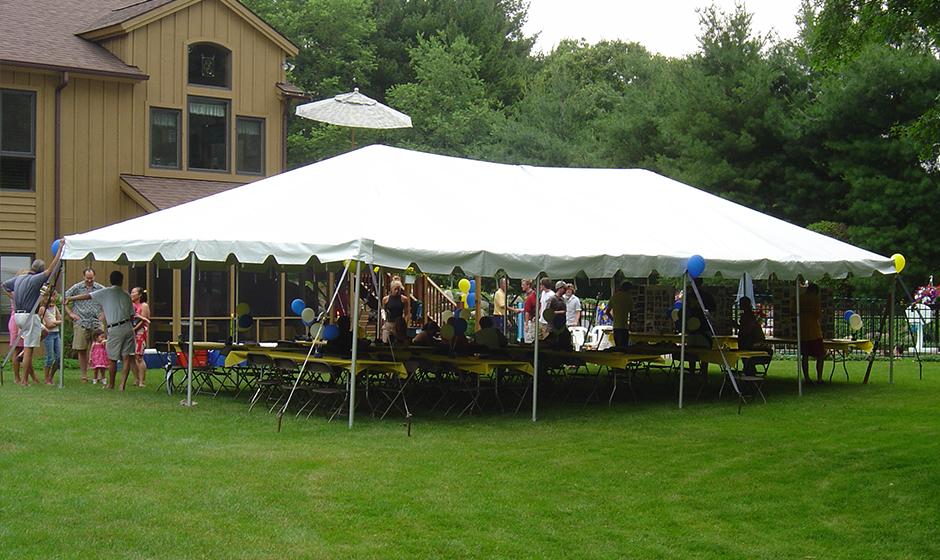
Frame tents are often selected for weddings that require open interior space. Because the roof is supported by the frame instead of ground-level center poles, customers have greater flexibility when arranging guest seating, dance floors, staging, catering stations, and entertainment areas.
That open floor plan makes frame tents especially useful for receptions where the layout needs to remain adaptable throughout the planning process. They're also a practical choice for venues where interior poles would interfere with the customer's preferred design.
However, eliminating center poles doesn't eliminate anchoring requirements. Frame tents must still be installed and secured according to the manufacturer's engineering specifications and the site's conditions.
Rental companies comparing different systems should understand the advantages and tradeoffs between frame tents and pole tents before recommending equipment for weddings with complex layouts.
High-Peak Tents for Smaller Wedding Spaces
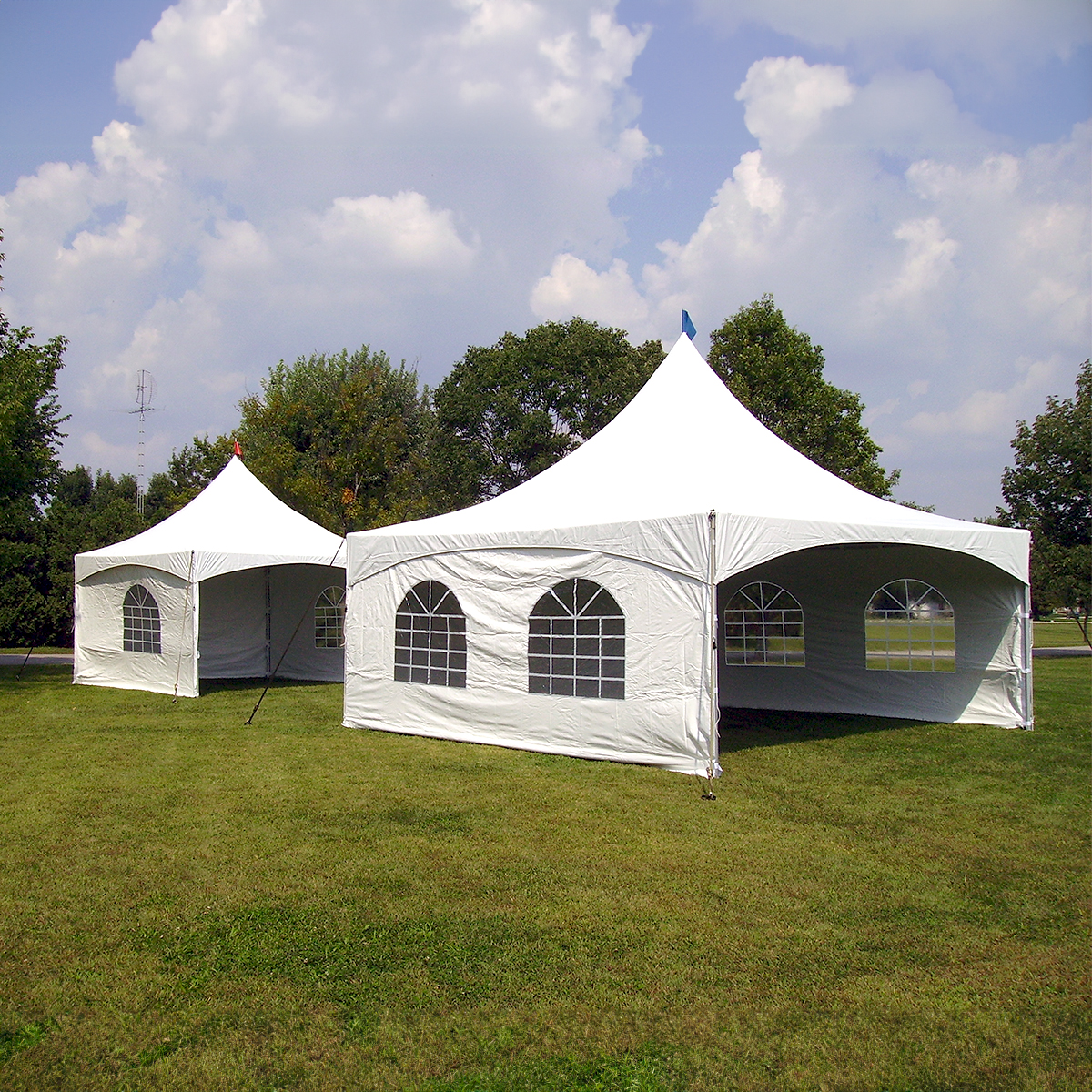
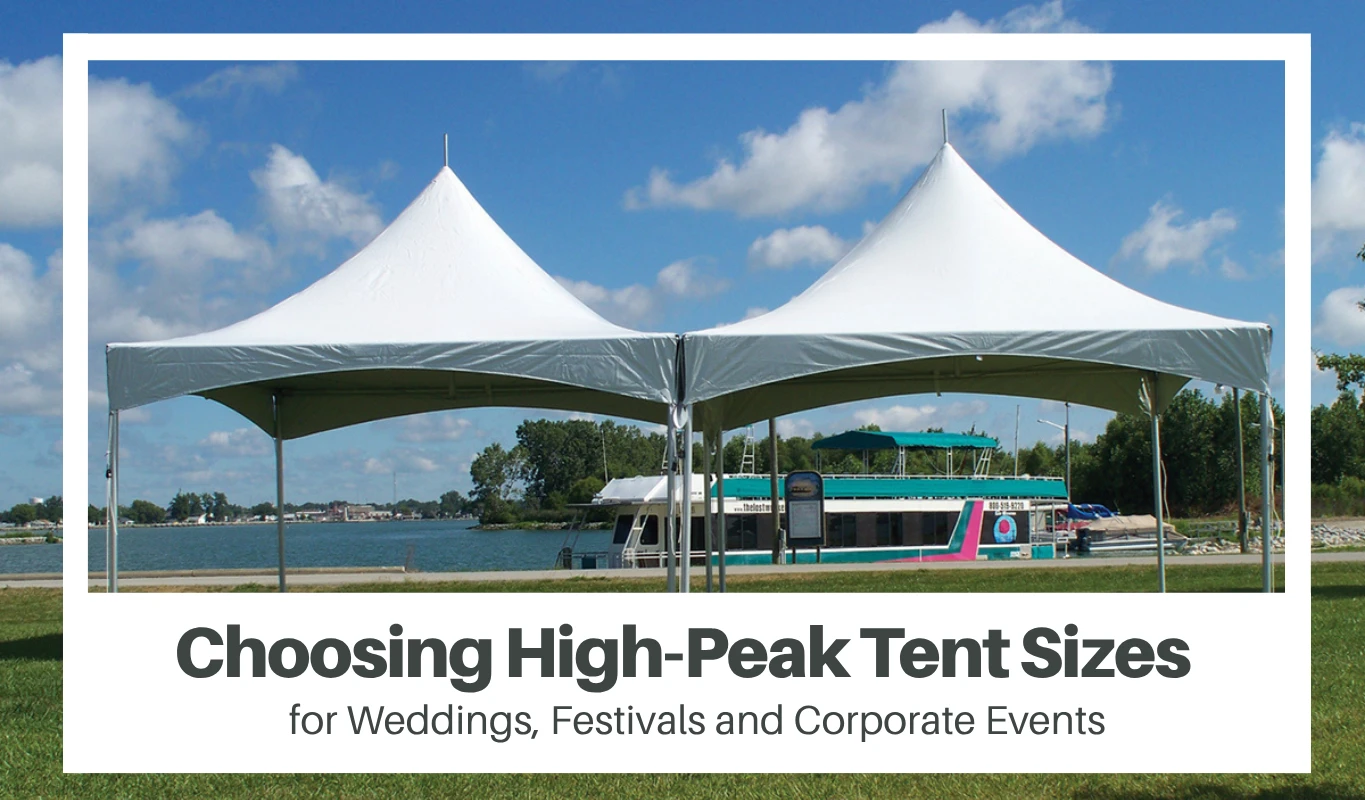
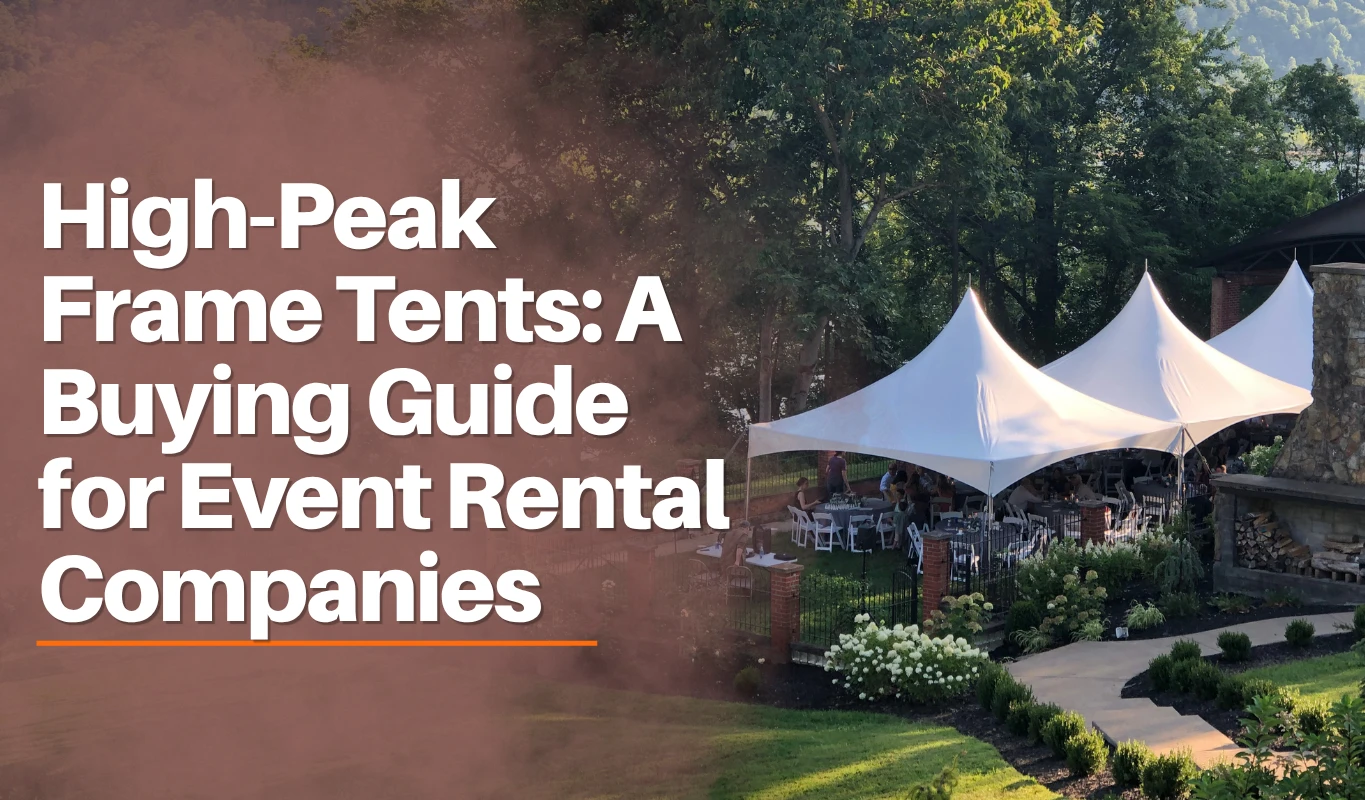
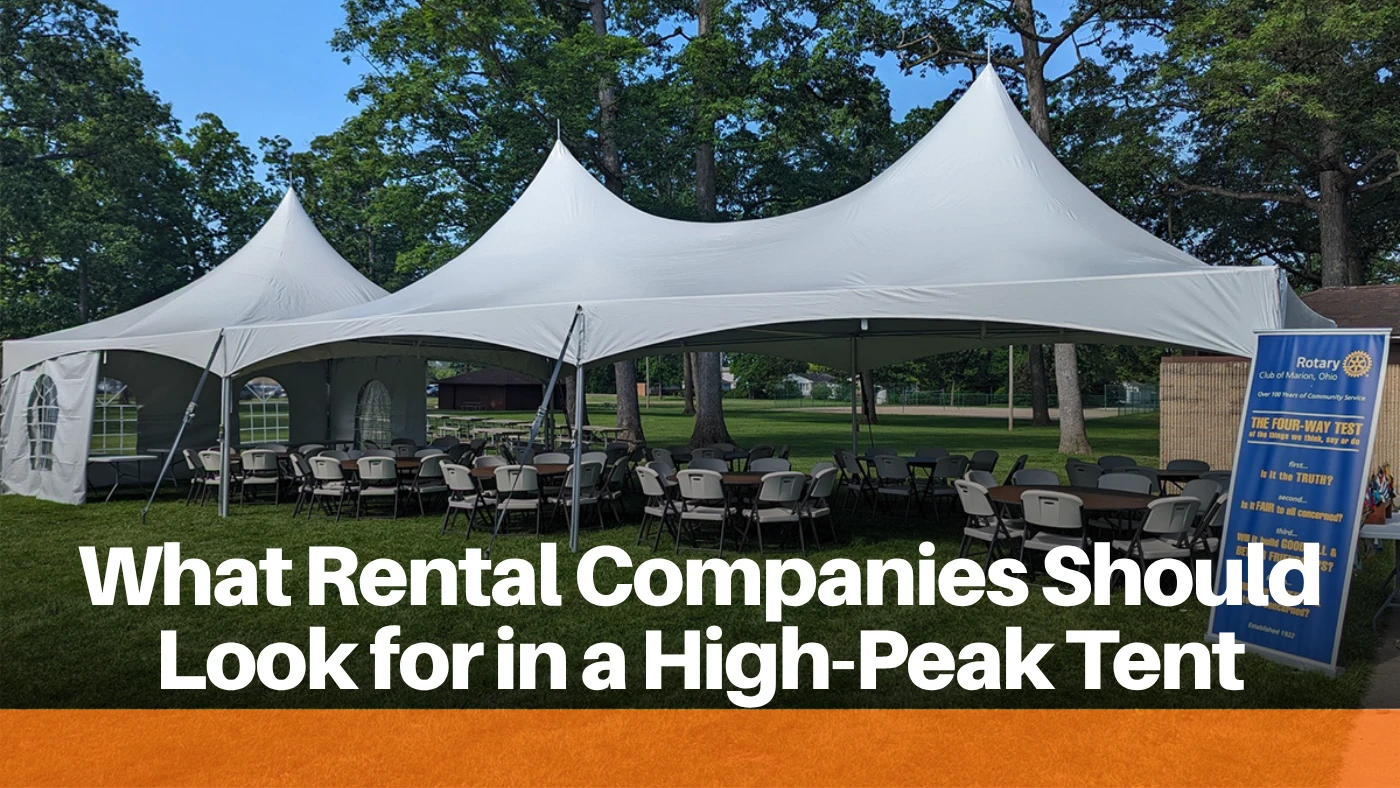
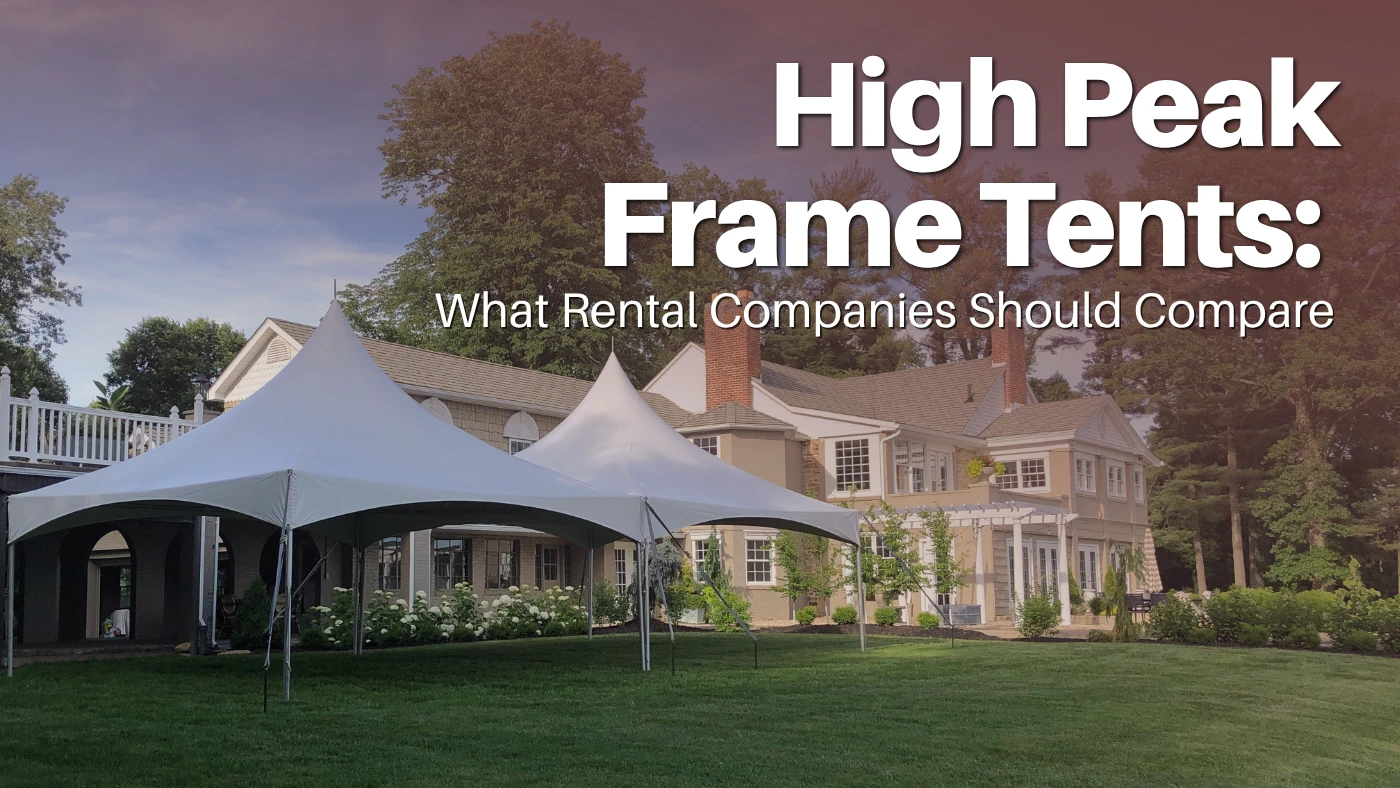
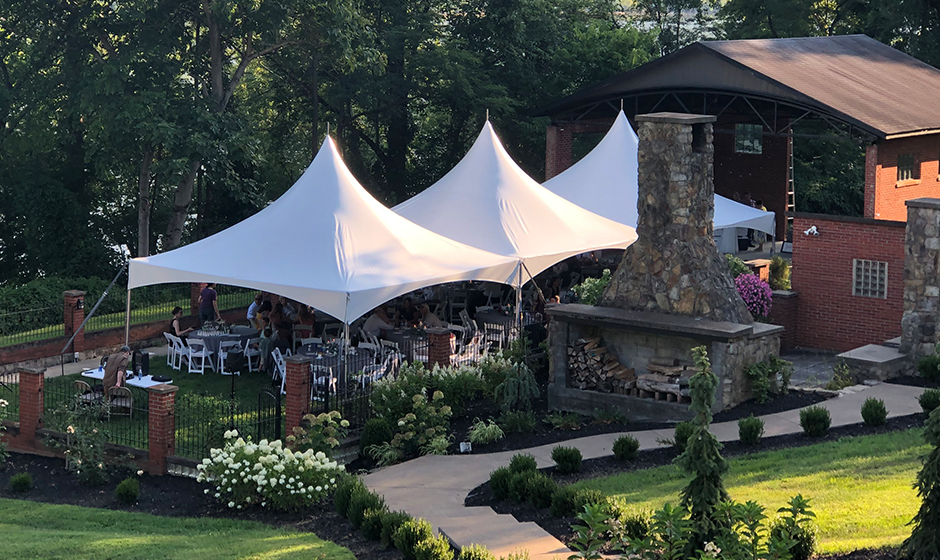
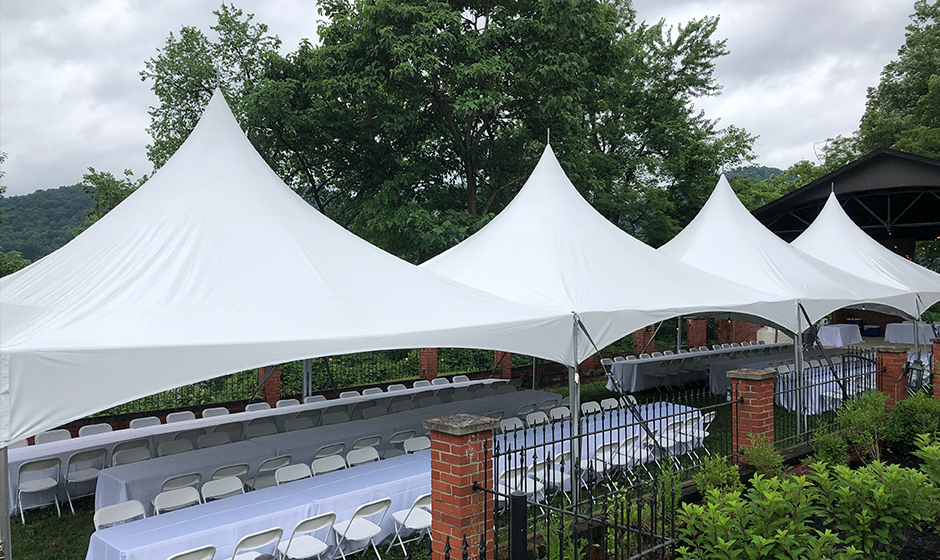
High-peak frame tents feature a raised center peak that creates an elegant roofline often associated with upscale outdoor events. They're frequently used for wedding ceremonies, cocktail hours, bars, welcome areas, and smaller reception spaces where appearance plays an important role.
For example, a 20x20 high-peak tent provides 400 square feet of covered space. Depending on the layout, it may work well for a cocktail reception, ceremony seating, or a dedicated bar area. Larger configurations such as a 20x40 high-peak tent, provide additional room, although furniture, walkways, and service areas must still be considered when determining how the space will function.
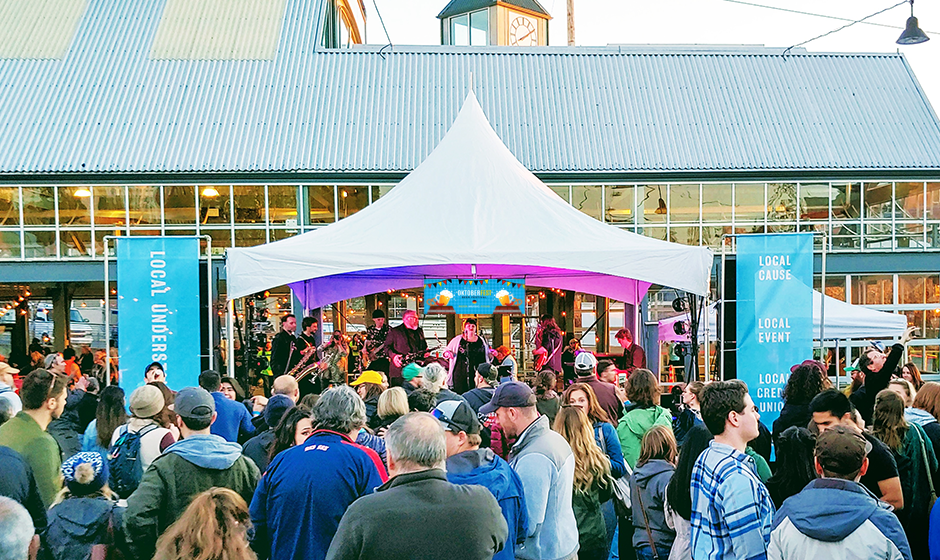
For rental companies, high-peak tents serve multiple event types, making them valuable additions when wedding demand overlaps with festivals, corporate functions, and private events.
Pole Tents for Traditional Wedding Settings
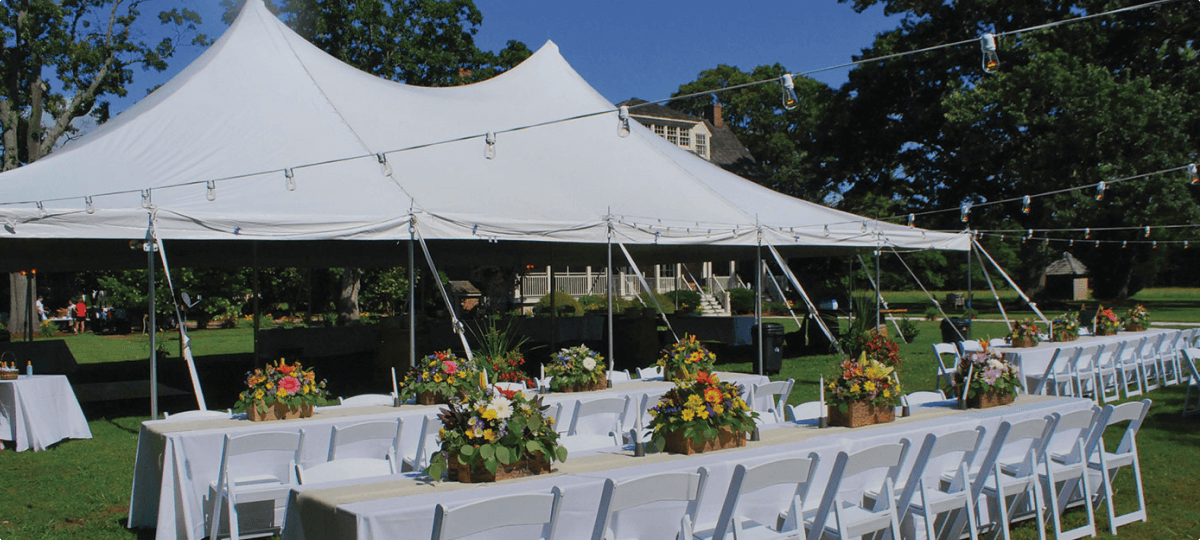
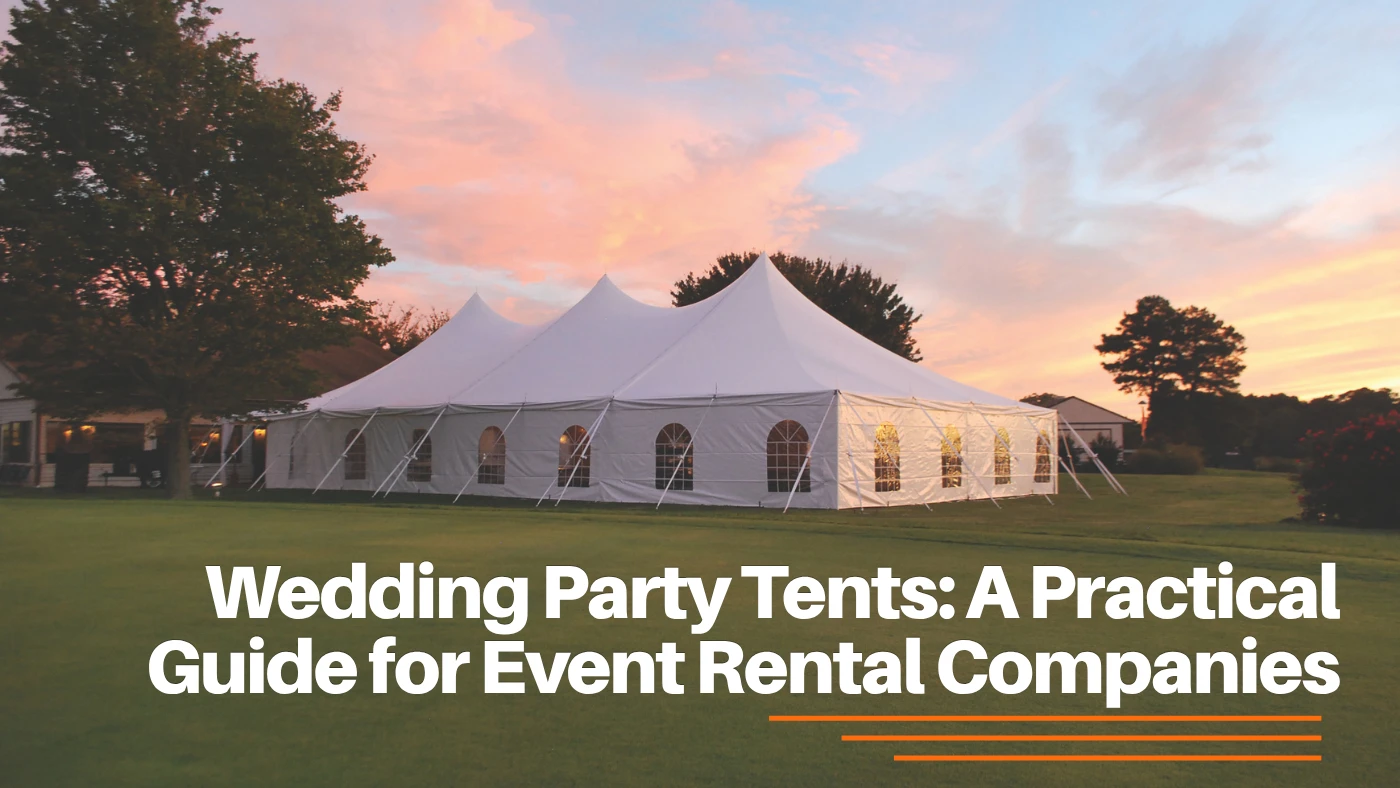
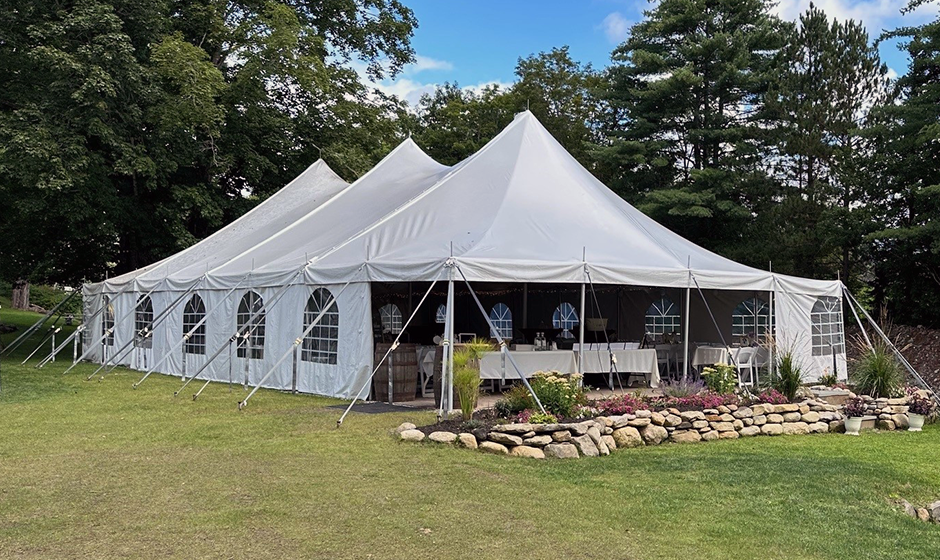
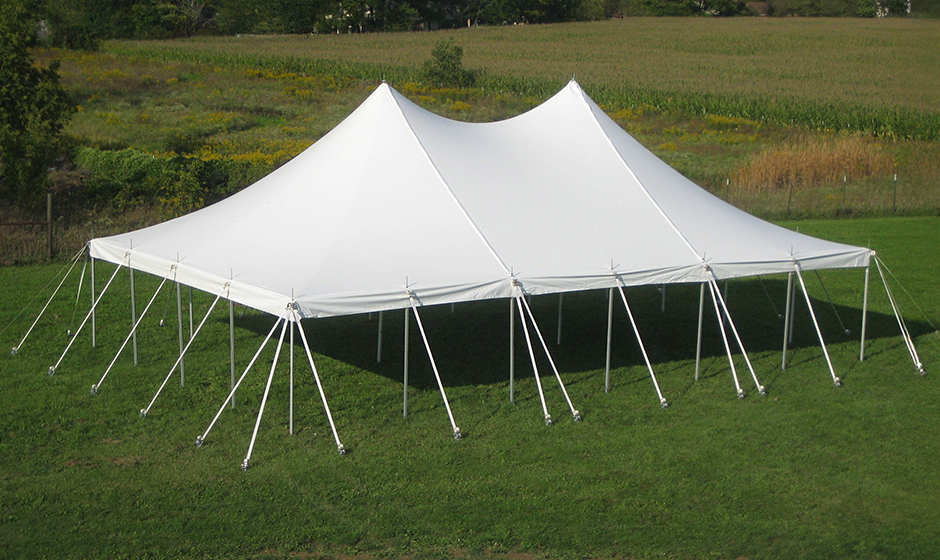
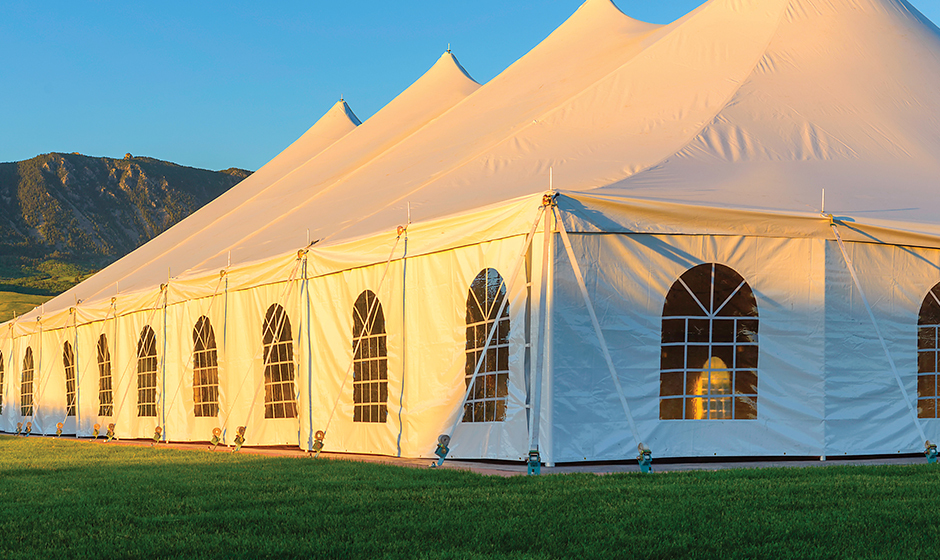
Pole tents remain one of the most recognizable choices for outdoor weddings, particularly at open grass venues where staking and guy lines can be installed according to the manufacturer's requirements.
Their sweeping peaks and traditional silhouette continue to appeal to couples planning classic outdoor celebrations. Larger pole tents can comfortably accommodate dining layouts, entertainment areas, and reception activities when the venue provides enough surrounding space.
The tradeoff is that center poles become part of the floor plan. Tables, dance floors, bars, and guest walkways must all be arranged around them, and the installation area must extend beyond the tent footprint to accommodate anchoring.
Pole tents can be an excellent solution when the venue supports them. The key is matching the tent to the actual wedding rather than assuming one style works best for every event.
How to Choose the Right Wedding Tent Size
Determining the correct tent size is one of the most important—and most misunderstood—parts of quoting a wedding rental.
A customer may request a tent for 100 guests, but that number alone doesn't tell you how much covered space they'll actually need. A formal seated dinner requires significantly more room than a standing cocktail reception, and features such as buffet stations, bars, lounges, entertainment, and dance floors all increase the required footprint.
Rental companies should begin with the complete event layout rather than selecting a tent based solely on guest count.
Consider the Entire Wedding Layout
Most wedding receptions require space for multiple activities happening simultaneously.
Before recommending a tent size, confirm exactly what will be placed underneath the structure.
- Guest seating: Tables, chairs, and circulation space.
- Dining and catering: Buffet lines, serving stations, beverage areas, and staff access.
- Entertainment: Dance floors, DJs, live bands, staging, or audiovisual equipment.
- Additional features: Gift tables, photo booths, lounge furniture, cake displays, and decorative installations.
Once these elements are included, the required footprint can become substantially larger than the space suggested by guest count alone.
For example, a 20x40 tent provides 800 square feet of covered space. While that may be appropriate for certain wedding layouts, it shouldn't automatically be recommended for a particular number of guests without reviewing how the space will actually be used.
Compare Common Wedding Tent Sizes
| Tent Size | Covered Area | Potential Wedding Application |
|---|---|---|
| 20x20 | 400 sq. ft. | Cocktail area, bar, smaller ceremony |
| 20x30 | 600 sq. ft. | Intimate gathering or reception area |
| 20x40 | 800 sq. ft. | Smaller reception or dining setup |
| 30x60 | 1,800 sq. ft. | Mid-sized wedding reception |
| 40x60 | 2,400 sq. ft. | Larger reception with dining and activities |
| 40x80 | 3,200 sq. ft. | Large wedding with multiple event features |
These examples illustrate common applications rather than guaranteed occupancy limits. Actual capacity depends on the tent system, furniture layout, required clearances, and local occupancy requirements.
For example, a 20x20 tent can accommodate different layouts depending on whether it's used for dining, cocktail service, ceremonies, or event support.
Accurate sizing helps rental companies avoid redesigning layouts or revising quotes after customers have already started planning around the original recommendation.
Consider the Wedding Venue Before Confirming the Tent
The venue can influence which tent style and size is practical, regardless of what the customer initially requests.
An open lawn may provide plenty of installation space, while a courtyard, private backyard, vineyard, or estate with landscaping can create significant restrictions. Trees, buildings, underground utilities, slopes, irrigation systems, and vehicle access all need to be evaluated before confirming a tent recommendation.
A site that appears large enough for the tent footprint may not provide sufficient room for the required anchoring system. This is especially important with pole tents, where stakes and guy lines extend beyond the covered area.
Ground Conditions and Anchoring
Rental companies should always verify the installation surface before selecting an anchoring method. Grass, gravel, asphalt, concrete, and other surfaces each present different installation considerations, and not every tent system is approved for every type of site.
The manufacturer's engineering and installation documentation should always guide the anchoring plan. Alternative anchoring methods should only be used when they comply with the manufacturer's requirements—not simply because traditional staking is inconvenient.
Weather planning should also be part of every wedding installation. Wind, rain, and changing site conditions can affect both setup schedules and event operations. Rental companies should follow published weather limitations and coordinate monitoring and emergency procedures with the event organizer.
Access for Trucks and Installation Crews
Wedding venues often place restrictions on supplier access. Some allow installation the day before the event, while others provide only a few hours on the wedding morning.
Before accepting the booking, confirm:
- Whether installation vehicles can reach the setup location.
- How far equipment must be carried by the crew.
- Whether forklifts or carts are permitted.
- If other vendors will be installing at the same time.
- Any venue rules regarding installation hours or noise restrictions.
These details influence labor planning, scheduling, and ultimately which tent configuration makes the most sense for the job.
Planning Reminder: A tent that fits the guest count isn't always the right tent. The venue, installation access, and anchoring requirements can be just as important as the square footage.
Build Wedding Packages Around More Than the Tent
A wedding party tent is rarely the only equipment included in a booking. Most customers also need tables, chairs, sidewalls, lighting, flooring, staging, or decorative accessories.
For rental companies, creating coordinated wedding packages can simplify quoting while helping customers understand exactly what's included. The key is building packages around equipment your business already stocks and services your crew can consistently deliver.
A smaller wedding package might include a high-peak tent, banquet tables, and white folding chairs. A larger reception package may combine a frame tent with flooring, sidewalls, lighting, dining furniture, and additional installation labor.
Tables and Chairs
Furniture has a direct impact on tent sizing.
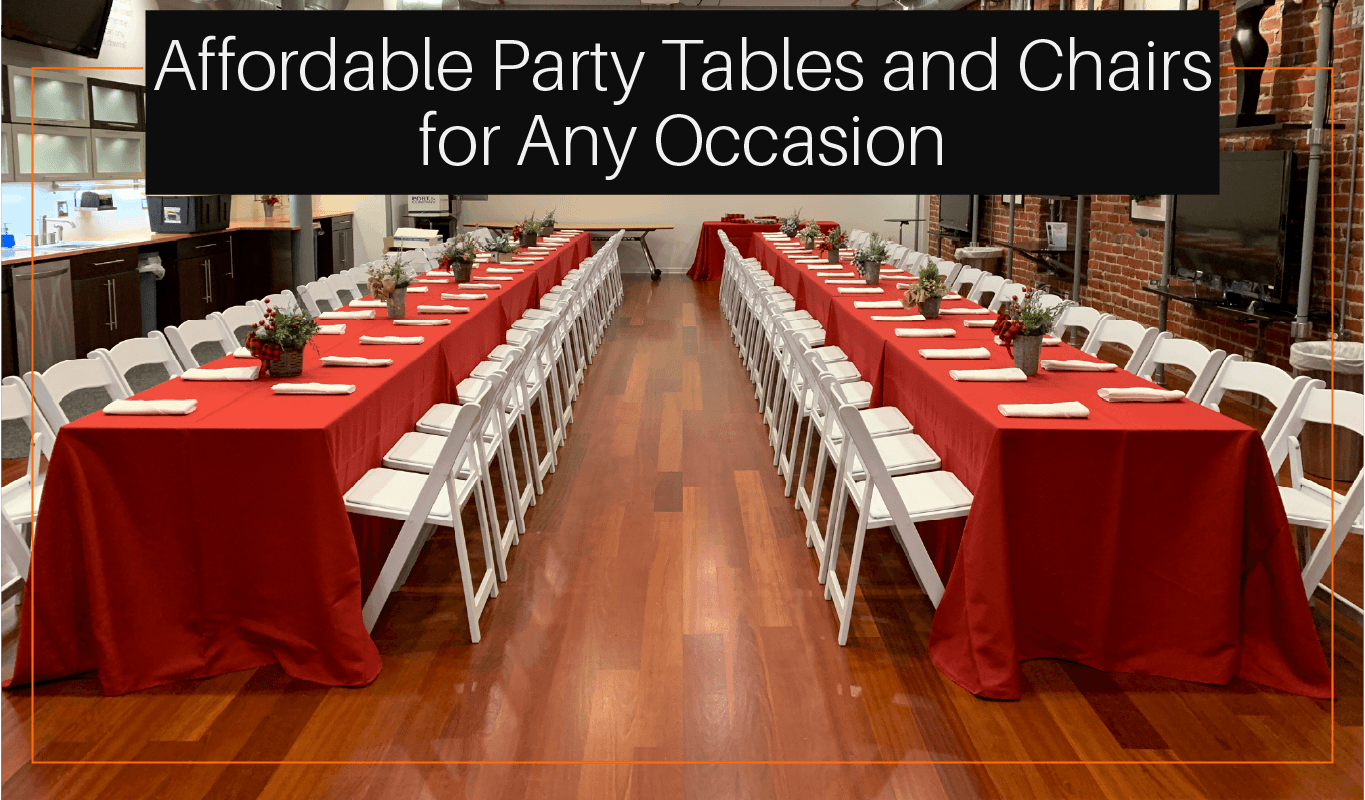
Round banquet tables remain one of the most popular options for wedding receptions, while rectangular tables are commonly used for head tables, buffet stations, family-style dining, or catering support.
Rental companies should consider how their furniture inventory complements the tent sizes they offer. A package built around white folding chairs and banquet tables may suit many weddings, while more formal events may require specialty seating or upgraded furniture.
It's equally important to remember that furniture increases transportation requirements, loading time, setup labor, and teardown work. Offering complete packages can improve customer convenience, but it also requires careful operational planning.
Sidewalls for Changing Conditions
Sidewalls help define the event space, increase privacy, and provide additional protection from certain weather conditions when used appropriately.
Different styles serve different purposes. Solid sidewalls create greater enclosure, while clear vinyl sidewalls allow guests to enjoy surrounding views while maintaining weather protection.
Rental companies should verify compatibility between the sidewalls and the tent system they intend to install. Sidewalls should never be viewed as a way to exceed the manufacturer's approved weather limitations.
Liners, Draping, and Decorative Features
Some couples prefer a simple white tent, while others envision an elegant interior with ceiling liners, draping, chandeliers, string lighting, or floral installations.
These decorative additions can dramatically transform the event space, but they also increase setup time and may affect structural loading.
A wedding tent ceiling liner can create a polished interior when it is compatible with the tent system and installed according to the manufacturer's recommendations.
Before approving decorative installations or suspended equipment, always verify what the manufacturer permits and whether additional engineering or installation considerations apply.
How Wedding Tent Pricing Affects Rental Inventory Decisions
Wedding tent pricing is often one of the first questions customers ask. For rental companies, however, pricing needs to reflect much more than the tent's dimensions.
A rental rate should account for the equipment supplied, transportation, installation, teardown, labor, maintenance, cleaning, storage, and any additional services included in the booking.
A wedding located ten minutes from your warehouse creates very different delivery costs than one requiring several hours of travel. Likewise, a straightforward installation on an open lawn generally requires less labor than a venue with limited vehicle access and restricted setup times.
Know the Costs Behind Each Package
When reviewing your wedding rental pricing, consider the complete cost of delivering the service.
That includes:
- Crew labor and travel time.
- Vehicle operation and fuel.
- Equipment preparation and loading.
- Installation and teardown.
- Cleaning and maintenance.
- Repairs and long-term equipment wear.
Accessories also influence pricing. A package that includes sidewalls, tables, chairs, lighting, flooring, and decorative upgrades requires substantially more labor than a tent-only rental.
Understanding what contributes to wedding tent costs helps rental companies create pricing that reflects the true scope of each project.
The objective isn't simply to offer the lowest quote—it's to provide a professional service that remains profitable while delivering the experience your customer expects.
Prepare Your Wedding Tent Inventory During the Off-Season
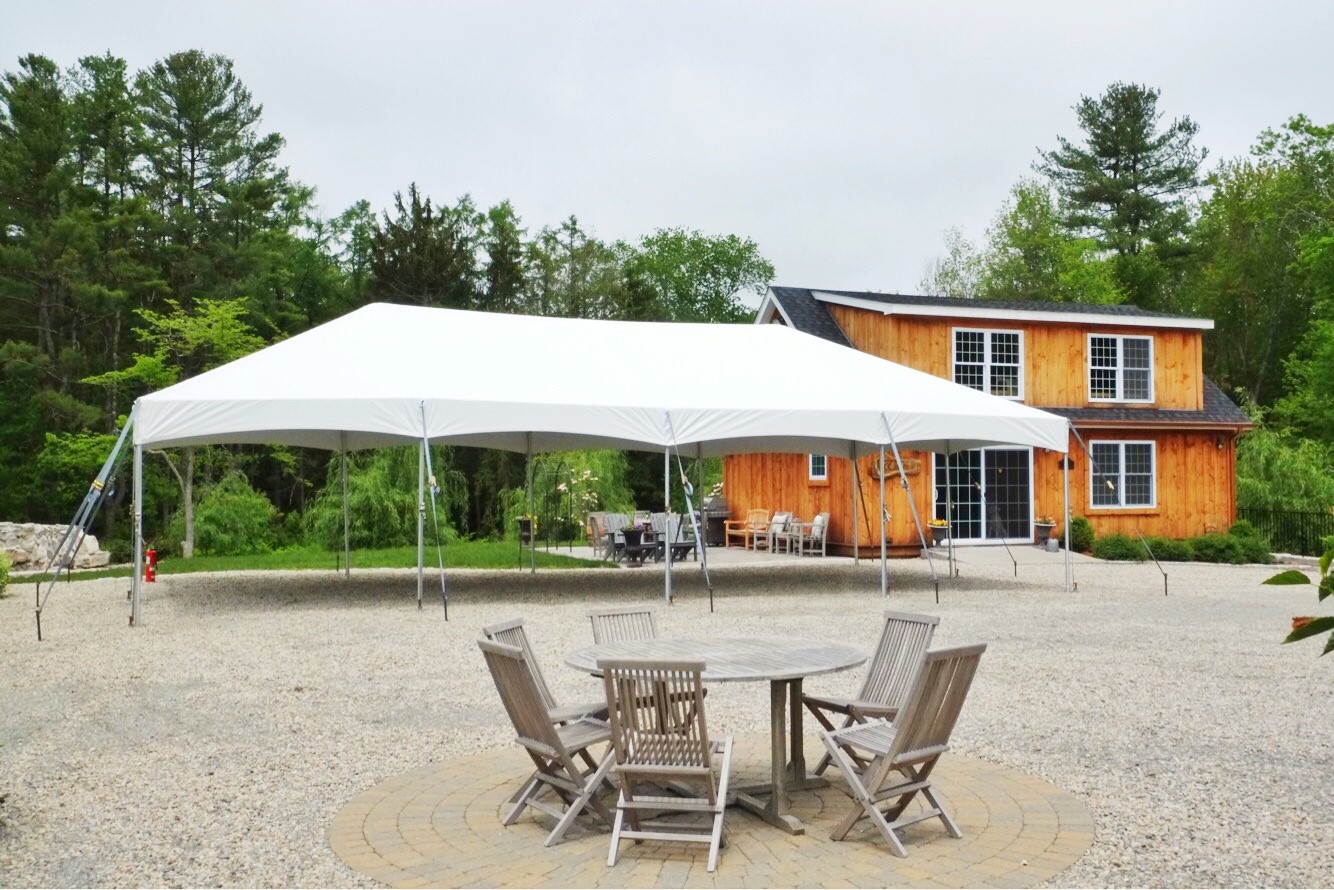
Wedding bookings often slow down during the winter months, making the off-season the ideal opportunity to prepare equipment before demand returns.
Rather than waiting until the first major wedding of the year, rental companies can inspect tent tops, organize frame components, identify missing fittings, complete repairs, and evaluate whether their inventory still matches customer demand.
This is also an excellent time to review last season's bookings and determine whether your existing wedding fleet supports the types of events you're quoting most frequently.
Review What Customers Actually Requested
Historical booking data often provides better purchasing guidance than product catalogs.
Look back at the previous wedding season and identify patterns in your completed jobs, successful quotes, and opportunities you couldn't fulfill.
Ask questions such as:
- Were larger reception tents requested more often than expected?
- Did customers regularly ask for high-peak tents for ceremony entrances or cocktail areas?
- Which tent sizes generated the highest rental frequency?
- Did you frequently subrent equipment from other rental companies?
- Were there bookings you declined because your inventory couldn't support the layout?
These trends can help determine whether expanding your inventory makes financial sense or whether maintaining your existing fleet should remain the priority.
Rather than trying to stock every available tent size, focus on the configurations that consistently generate revenue in your market.
Inspect Equipment Before the Next Season
Wedding tents are among the most visible pieces of equipment your company rents. Customers expect clean fabric, complete hardware, and professional-looking installations.
During the off-season, inspect each tent according to the manufacturer's recommendations.
This typically includes checking:
- Tent tops for stains, tears, mildew, or excessive wear.
- Frame tubing for damage or deformation.
- Fittings, straps, cables, and hardware for missing or worn components.
- Anchoring equipment for serviceability.
- Storage procedures to ensure tops remain clean and completely dry.
It's also a good opportunity to review the rental items that typically require replacement each season so you can order parts before the busy months return.
A well-organized warehouse makes loading faster, simplifies inventory management, and helps crews identify missing equipment before arriving at the venue.
Off-Season Advantage: Every repair completed during winter is one less emergency repair during wedding season when your equipment is booked every weekend.
Should You Add More Wedding Party Tents to Your Fleet?
Expanding your wedding inventory can open the door to more bookings, but purchasing additional tents isn't automatically the right decision.
Before investing in new equipment, evaluate how your current inventory performed throughout the previous season. Consider how often tents were rented, whether certain sizes remained in storage, and how frequently you relied on subrentals to fulfill customer requests.
A larger reception tent may allow your company to quote events you previously couldn't accommodate. On the other hand, adding several smaller high-peak tents may create more opportunities if your business specializes in intimate weddings or multi-tent venue layouts.
The right purchasing decision depends on the type of weddings your customers actually book—not simply the equipment available in a catalog.
Think About Storage and Long-Term Maintenance
Every additional tent requires warehouse space, transportation planning, maintenance, inspections, and replacement parts.
Different tent systems also use different tops, fittings, cables, anchoring equipment, and accessories. Before purchasing new inventory, determine whether the equipment integrates with your existing storage system and maintenance procedures.
If your business already operates a particular tent series, expanding with compatible configurations may simplify crew training, inventory organization, and replacement-part management. Compatibility, however, should always be confirmed with the manufacturer.
The objective is to increase your rental capabilities without creating unnecessary operational complexity.
Wedding Party Tents That Work for Your Rental Business
A successful wedding rental involves much more than supplying a tent. It requires selecting equipment that matches the venue, supports the customer's layout, and fits your company's installation capabilities.
Frame tents, high-peak tents, and pole tents all have valuable roles within a commercial rental fleet. The best choice depends on the wedding location, guest experience, installation conditions, available inventory, and the practical realities of your operation.
Before purchasing additional wedding tents, review last season's bookings, identify recurring requests, and determine which configurations will generate the greatest long-term value for your business.
CELINA offers commercial event tents—including frame tents, high-peak tents, pole tents, sidewalls, replacement components, and event equipment—to help rental companies build reliable, professional wedding inventories.
Build a Wedding Inventory That Books All Season
Explore commercial wedding tents, event furniture, sidewalls, and replacement components designed to support professional rental companies and outdoor event venues.
Frequently Asked Questions About Wedding Party Tents
What Is the Best Type of Tent for an Outdoor Wedding?
The best wedding party tent depends on the venue, guest count, and planned layout. Frame tents provide open interiors without center poles, high-peak tents offer an elegant roofline for ceremonies and cocktail spaces, and pole tents remain a popular option for traditional outdoor weddings where adequate anchoring space is available.
How Big Should a Wedding Party Tent Be for 100 Guests?
The answer depends on far more than guest count. Seating style, dance floors, catering stations, bars, entertainment, and walkways all affect the amount of space required. Rental companies should review the complete floor plan before recommending a tent size.
Are Frame Tents or Pole Tents Better for Wedding Receptions?
Both styles can work well. Frame tents provide unobstructed interior layouts, while pole tents create a classic wedding appearance with sweeping peaks. The right choice depends on the venue, anchoring requirements, available installation space, and the customer's preferred layout.
What Equipment Should Be Included in a Wedding Tent Rental Package?
A package may include the tent, installation, anchoring equipment, tables, chairs, sidewalls, lighting, flooring, and decorative accessories. The final package should reflect both the customer's needs and the rental company's available inventory and services.
Can Wedding Party Tents Be Installed on Concrete?
Some tent systems can be installed on concrete when an approved anchoring solution is available and the installation complies with the manufacturer's engineering requirements. Rental companies should always verify the site and use approved anchoring methods for the specific tent system.
How Far in Advance Should Rental Companies Prepare Wedding Tent Inventory?
The off-season is the ideal time to inspect tents, complete repairs, organize replacement parts, and review inventory before bookings increase. Preparing equipment early helps reduce delays and improves reliability throughout the wedding season.